How to increase your booking window with smart revenue management

SHARE:

For many hotels and resorts, shortened booking windows represent a significant challenge. Guests are waiting until the last minute to book, often holding out in hopes of a better deal or because travel plans have become more spontaneous.

And often, it works. As a property nears a low-inventory period, hotels will sharply reduce rates, reinforcing the guest’s belief that waiting until the last minute leads to savings. While this can fill rooms, it also puts pressure on your revenue strategy, limits your ability to forecast accurately, and may leave potential revenue on the table.

The good news? There are techniques you can deploy to help you extend your booking window, giving you more lead time, steadier occupancy, and healthier average daily rates (ADR).

Here’s how to make it happen:

1. Analyze historical data to understand your current window

Before you can extend your booking window, you need to know exactly what it looks like today. Use your PMS and revenue management tools to track:

  • Average lead time by season
  • Lead time by segment (corporate, group, leisure)
  • Market trends and competitor lead times

Understanding when guests actually book allows you to target specific opportunities for improvement. For example, you might discover that leisure guests in summer book 14 days out on average, while corporate travelers book 30+ days in advance.

2. Use targeted pricing to encourage early commitments

A dynamic pricing strategy can nudge guests to book sooner. Instead of offering the lowest rates at the last minute, flip the script:

  • Early-bird discounts – Offer slightly lower rates for guests who book a set number of days in advance. Target discounting just 25% of the discount you typically would offer to fill short-term need periods.
  • Rate fences – Create packages that add value for early bookers, such as breakfast or free parking.
  • Advance purchase offers – Require prepayment for the best price, locking in revenue earlier.
  • “Best Rates of” messaging - Announce your best rates of the season or even the year. Train your audience to understand that they won’t find a better rate than the one they are currently looking at at any other time of the year.

Pro tip: Make sure these rates are visible and compelling across all your distribution channels, especially your direct booking site.

3. Leverage your marketing calendar

Your marketing team can be a powerful ally in extending the booking window. Plan campaigns that create urgency for earlier booking:

  • Seasonal teaser campaigns – Build excitement months ahead of peak season.
  • Email drip campaigns – Nurture past guests with “plan ahead” messages.
  • Countdowns & limited-time offers – Encourage guests to book before the rate increases or the package sells out.

The key is to align promotions with booking behavior, launching them before your current peak booking window to push it earlier.

4. Offer flexible cancellation policies

One reason guests wait to book? Fear of losing money if plans change. Offering a flexible cancellation policy (within reason) removes this hesitation and encourages guests to commit earlier.

For example:

  • Offer a discounted, non-refundable early-bird rate alongside a slightly higher flexible rate.
  • Use tiered cancellation windows, more generous for earlier bookings, stricter for last-minute.

This balance protects your revenue while giving guests the confidence to book now instead of later.

5. Partner with groups and events

If your market hosts annual conferences, festivals, or sporting events, partner with organizers to offer exclusive rates for attendees. Groups tend to book earlier, which helps smooth occupancy and creates a base from which you can yield higher rates for last-minute demand.

6. Monitor and adjust in real time

Revenue management is never “set it and forget it.” Monitor your pace reports weekly (or even daily in high season) to see how your booking window is shifting. If pick-up is slow in advance, adjust your pricing, marketing push, or availability to encourage earlier commitments.

Why extending your booking window matters

A longer booking window gives you:

  • Better forecasting accuracy for staffing and inventory.
  • More opportunities to yield rates for last-minute demand.
  • Stronger cash flow from prepayments.
  • Reduced stress for operations teams.

When you combine smart data analysis, strategic pricing, and proactive marketing, you can nudge guests to book earlier, while still capturing late demand at premium rates.

Bottom line: Extending your booking window isn’t about pushing guests into early decisions. It’s about creating value, trust, and a compelling reason to plan ahead. With the right revenue management tactics, you’ll turn unpredictable, last-minute bookings into a well-paced stream of revenue that supports your long-term profitability.
Contact us today to start increasing your booking window.

[Case study] The hidden difference between social engagement and booking intent impacting your revenue

SHARE:

Not all warm audiences are warm in the same way. Most Meta retargeting strategies lump website visitors, past guests, and social engagers into one bucket. But booking intent is not evenly distributed across those groups, and treating them the same means the messaging is wrong for at least one of them.

Across a set of boutique hotel clients, we split high intent audiences from social engagement audiences and gave each group creative that matched how they actually interact with the brand.

The interesting part was not just the revenue attributed to each audience. It was what happened to overall performance once the messaging finally fit the behavior.

Full breakdown in the case study. 👈

What Google's Agentic Booking Test means for hotels

SHARE:

Google recently confirmed it has begun testing agentic hotel booking within AI Mode for a limited number of U.S. users. The announcement has generated a lot of discussion throughout the travel industry, but the implications extend well beyond another booking feature.

Here are the five things hoteliers should know right now:

1. This is Google's response to the rise of AI search

Over the past year, many in the industry have questioned whether travelers will begin planning trips in ChatGPT, Perplexity, Claude, and other AI assistants instead of Google Search.

This announcement suggests Google has no intention of giving up that position.

Rather than asking users to switch to a separate AI application, Google is embedding AI directly into Search through AI Mode and extending it all the way through the booking journey.

The goal isn't simply to answer travel questions. It's to keep travelers inside Google's ecosystem from inspiration to transaction.

Unlike Google, which is actively testing an agentic hotel-booking experience and developing lodging-specific commerce infrastructure through UCP, OpenAI has recently shifted away from making ChatGPT the native transaction layer for travel. ChatGPT remains a powerful discovery and planning interface, but its current model relies more heavily on travel partners, such as Booking.com and Expedia, to provide inventory and complete bookings. Google’s recent announcement shows a prioritization of agentic commerce, while OpenAI has deprioritized native checkout as its primary travel-commerce model in favor of app-based, partner-managed fulfillment.

What should hotels understand about Google’s agentic test? 

  • Google is bringing AI-powered planning and booking into the search experience travelers already use.
  • Rather than requiring travelers to adopt a separate AI tool, Google can retain the search, comparison, and booking journey within its own ecosystem.
  • This reinforces that AI search is likely to complement and reshape traditional search behavior rather than immediately replace it.
  • Hotels should expect travel research to become more conversational, personalized, and action-oriented.

2. Google is trying to own discovery - not become an OTA

Google has repeatedly stated it does not intend to become an online travel agency. Instead, its vision is to help travelers discover and compare options while allowing booking partners to complete the transaction and handle servicing.

Whether that strategy evolves over time remains to be seen, but it's an important distinction.

For hotels, this means existing distribution partners and booking engines remain central to the booking process.

What are the key takeaways for hotels regarding how Google wants to handle agentic bookings?

  • Google’s stated role is to help travelers find, compare, and select options, while booking partners complete the reservation and handle servicing.
  • Hotels’ existing booking engines, CRS providers, metasearch partners, and OTAs remain important parts of the transaction path.
  • The major question is not whether Google becomes an OTA; it is which partner’s offer, rate, and content Google chooses to surface. Make sure you are focused on optimization.
  • Hotels should continue prioritizing direct-booking readiness while maintaining accurate, competitive distribution across key partners.

3. Connectivity is becoming a competitive advantage

Perhaps the most important technical announcement is Google's Universal Commerce Protocol (UCP), which enables AI agents to complete transactions without sending users to another website.

That means booking engines, CRS providers, and distribution platforms will increasingly need to expose inventory, pricing, policies, and payment workflows in ways AI systems can consume.

Hotels with strong connectivity will be better positioned as AI-powered commerce continues to evolve.

What are key takeaways for hotels when it comes to agentic connectivity?

  • Agentic commerce for hotels depends on systems being able to share current availability, rates, room details, policies, payment information, and booking confirmation data.
  • Booking engines, CRS providers, channel managers, and other connectivity partners will play an increasingly strategic role in making sure hotels are eligible.
  • Hotels with outdated, fragmented, or inaccurate feeds may be less likely to appear correctly, or at all, in AI-powered booking experiences.
  • Inquire with your technology partners about their roadmap for Google’s Universal Commerce Protocol, AI booking integrations, and agent-referred booking reporting. Are they focused on AI agent readiness?

4. AI changes what "being discoverable" means

For years, hotels have focused on ranking well in search results and driving clicks to their websites. As AI becomes part of the booking journey, discoverability expands beyond rankings. Hotels will increasingly benefit from accurate rates, rich property information, structured amenities, policies, reviews, and high-quality content that AI can confidently interpret.

What are key takeaways for hotels to remain discoverable in the new agentic environment?

  • Traditional rankings and clicks still matter, but AI systems must also be able to understand and trust the hotel’s information.
  • Complete room descriptions, amenity details, accessibility information, guest policies, fees, packages, photos, and reviews will carry more weight in the decision path.
  • Hotels should make it easy for an AI to answer high-intent questions, such as whether parking is available, which rooms sleep a family of four, or whether the property is walkable to a local attraction.
  • Consistency matters: the same property facts should align across the website, booking engine, Google Business Profile, hotel metasearch feeds, OTAs, and CRS.

5. This is an early test - not a complete transformation

Google describes this as a limited U.S. test, and many details—including how broadly it will roll out and exactly how bookings will be processed, remain unknown. That means hotels don't need to overhaul their digital strategy tomorrow. However, the direction is becoming clear: AI is moving beyond helping travelers research hotels and toward helping them complete bookings.

What this means for hotel marketers:

  • The fundamentals haven't changed - optimizing for visibility (similar to today’s Map Pack and Local SEO) will still matter to win in this new agentic marketing environment
  • Hotels still need compelling creative, strong paid media, quality websites, competitive pricing, and excellent guest experiences.
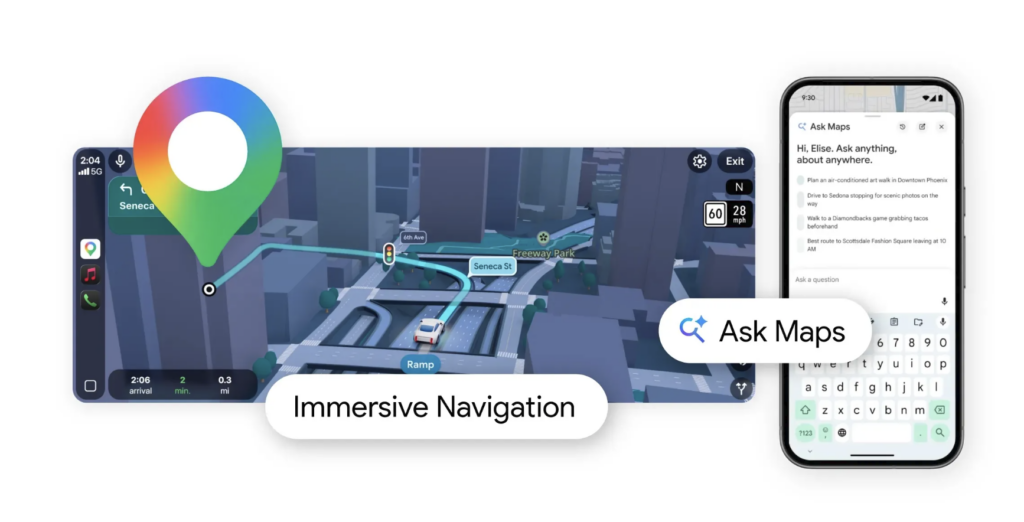
  • Google continues to push towards feed-based campaigns - the future of hotel marketing visibility and conversion will rely on adoption of connected feeds such as hotel metasearch. The best example of this in Skift’s article was the new “Ask Maps” feature (in addition to longstanding hotel metasearch ads). Our take: this will expand to additional ad placements and channels sooner rather than later; make sure you’re building a clean foundation now.
  • Data architecture and cleanliness remain vital to how your hotel can prepare for an agentic marketing future. Make sure you’re leveraging a hospitality data platform to turn insights into better optimization decisions to strengthen authority
  • Reviews and photos move further into the transaction path. Because the agentic flow is designed to surface reviews and room photos directly inside the booking decision (not just on a listing page), review management and visual content quality are now closer to a direct revenue lever than a reputation exercise.
  • Hotel content must become decision-ready. Consider calling out content that resolves the questions a traveler asks conversationally: “Is the pool heated year-round?”, “Which room accommodates two adults and two children?”, “Can I walk to the convention center?”, “Are resort fees included?”, and “Which rooms have a balcony?” 
  • Measurement is becoming a bigger blind spot as reservations move away from click-based attribution paths. Current reporting from Google and other agentic providers is lacking - without continued expansion from Google, Bing, and other agentic platforms with enhanced reporting, it will be even harder to attribute bookings to channels and campaigns.

What's changing is the way travelers interact with those assets. As AI becomes another interface for discovering and booking travel, structured data, modern connectivity, and high-quality content will become increasingly important components of a successful digital strategy.

The travel industry has spent the last two years asking whether AI would replace search. Google's answer appears to be something different: make AI the future of search itself.

Frequently asked questions about Google Agentic Booking

Is Google’s agentic hotel booking available to all travelers and hotels?

SEO helps hotels and resorts capture high-intent travelers earlier in their booking journey by improving visibility in organic search results. By aligning content with traveler intent, optimizing site performance, and targeting the right keywords, properties can reduce reliance on OTAs and increase direct bookings while improving profitability.


Will Google complete the reservation or send travelers to a booking partner?

The answer depends on the product experience. Google’s agentic hotel-booking test has limited public detail, so Google has not clearly explained every booking handoff or completion flow.skift
However, Google’s UCP for Lodging framework is designed to support direct, in-flow hotel reservations on Google AI surfaces such as AI Mode in Search. That does not necessarily mean Google becomes the seller of the reservation: the hotel, OTA, or other participating booking partner can remain the party completing and servicing the transaction.developers.google


Will hotels still be able to drive direct bookings?

Yes, at least under Google’s stated UCP model. Google says the business implementing UCP remains the merchant of record and retains its customer relationship, data, and post-booking experience, which creates a path for an on-brand booking engine to power an AI-assisted direct reservation.developers.google
That said, direct booking will increasingly depend on technical eligibility coupled with foundational optimization aimed at visibility, reviews, and reputation. A hotel’s rates, availability, room content, policies, images, and payment/booking workflow must be accurate and accessible enough for the AI experience to recommend and transact on its offer.


How will agentic bookings be tracked in analytics and attributed across channels?

This is one of the major concerns and blind spots hotel marketers should be aware of with agentic booking. There is not yet a standard public reporting model for Google’s limited hotel-booking test. Hotels should not assume that traditional organic, paid-search, metasearch, referral, or direct-channel reporting will fully identify AI-assisted bookings.skift


Will hotels have to pay for placement or commission?

Google has not publicly disclosed the commercial terms for its limited agentic hotel-booking test, including whether participation, placement, clicks, or completed bookings will carry a fee.skift


How does Google compare with ChatGPT travel booking?

Google is building agentic booking into surfaces where travelers already search and compare hotels, including AI Mode and Maps. Its UCP for Lodging initiative is designed for direct, in-flow reservations while allowing the participating business to remain merchant of record.developers.google

ChatGPT’s current travel approach is more partner-app based. For example, Expedia can show live lodging results, pricing, availability, and visuals within ChatGPT, then send the traveler to Expedia to complete the reservation. OpenAI also has an Agentic Commerce Protocol for embedded checkout, but it states that participating merchants, not OpenAI, validate and accept orders, process payments, and remain merchants of record.


What data should a hotel audit first?

Begin with the data most likely to determine whether an AI can confidently recommend and book the property:

  • Real-time rates, inventory, minimum-stay rules, taxes, mandatory fees, deposits, and cancellation policies.
  • Property facts, amenities, accessibility details, pet policies, parking, dining, pool/spa information, and location attributes.
  • Room-level names, occupancy, bed types, images, inclusions, and differentiators.
  • High-quality photos, current reviews, accurate business-profile information, and consistent facts across the hotel website, booking engine, Google surfaces, metasearch, OTAs, and CRS.
  • Offer and loyalty logic, including member rates, packages, promo rules, and ancillary products.

This is consistent with both Google’s emphasis on instant booking through UCP and OpenAI’s commerce requirements for refreshed structured data such as descriptions, pricing, inventory, media, and fulfillment details.


Creating accessible experiences: GCommerce’s approach to ADA and WCAG Guidelines

SHARE:

At GCommerce, we believe in creating digital experiences that are accessible and inclusive for all users. Accessibility is an important part of delivering exceptional online experiences and ensuring that websites can be used by as many people as possible, including individuals with disabilities.

To support these goals, we follow recognized accessibility standards and best practices, including the Web Content Accessibility Guidelines (WCAG), and incorporate accessibility considerations throughout our design, development, and maintenance processes.

While accessibility standards and recommendations continue to evolve, our approach is centered on creating user-friendly experiences that align with current industry best practices and support broad accessibility objectives.

Important note: GCommerce does not provide legal advice. Organizations with questions regarding legal or regulatory accessibility requirements should consult qualified legal counsel.

Our accessibility best practices

We incorporate accessibility considerations throughout every phase of a project, from design and development to ongoing maintenance. While we strive to follow recognized accessibility best practices, accessibility is an ongoing process that requires regular evaluation and continuous improvement.

In some cases, visual or interactive design considerations require balancing accessibility, usability, and creative objectives. When these situations arise, we work closely with our clients to evaluate options and make informed decisions that aim to create the best possible experience for the widest audience.

Accessibility during website development

Design phase

  • Contrast and visibility: We evaluate color contrast ratios for calls-to-action, navigation elements, and body copy using accessibility testing tools. When appropriate, we utilize image overlays and other design techniques to improve text readability.
  • Clear layouts and navigation: We design website structures to support intuitive navigation patterns and improve compatibility with assistive technologies.
  • Thoughtful animation: We avoid flashing or disruptive visual elements and favor subtle animations designed to minimize distraction and support usability.

Development phase

  • Semantic HTML: We implement semantic, well-structured HTML to improve compatibility with screen readers and assistive technologies.
  • Proper content hierarchies: Headings, forms, and content sections are organized using clear structural hierarchies to support accessibility and improve the user experience.
  • Logical navigation order: Page elements are developed in a logical sequence to support keyboard navigation and predictable interactions.

Content integration

  • Clear link styling: Links are differentiated through visual treatments such as color, underlining, and descriptive language to provide additional context.
  • Readable typography: Font sizing, spacing, and layout decisions prioritize readability across devices and user needs.
  • Alternative text best practices: We provide alternative text for images during website launch and recommend that clients follow accessibility best practices when adding new content after launch.
  • Accessible room content: For hospitality websites, we recommend that accessible accommodations be presented alongside other room types using consistent navigation structures, such as tabs, menus, or dropdowns, to support discoverability and usability.

Quality assurance

Accessibility testing

As part of our quality assurance process, we perform accessibility reviews using tools such as WAVE to identify potential issues and opportunities for improvement before launch.

Automated testing tools provide valuable insights, but accessibility also requires ongoing evaluation and consideration of real-world user experiences.

Ongoing accessibility support

As part of our Preventive Website Maintenance services, we provide ongoing accessibility support by:

  • Periodically reviewing websites using accessibility evaluation tools
  • Identifying newly introduced accessibility concerns
  • Notifying clients of missing or incomplete alternative text for newly added images
  • Recommending updates based on evolving accessibility best practices

Accessibility is not a one-time project but an ongoing commitment to improving digital experiences.

Platform-specific accessibility considerations

WordPress

We follow accessibility recommendations and best practices established by the WordPress Accessibility Team, including:

  • Semantic markup
  • Accessible navigation structures
  • Keyboard accessibility support
  • Clear content hierarchy and organization

Webflow

We leverage Webflow's built-in accessibility tools and checklists while incorporating additional accessibility considerations based on the unique requirements of each website.

PDF accessibility support

Accessibility considerations extend beyond websites to include downloadable resources such as menus, brochures, and informational documents.

We are happy to facilitate PDF accessibility remediation services. For more complex remediation projects, we work with trusted third-party accessibility specialists who can:

  • Assess document structure, tagging, reading order, and metadata
  • Improve compatibility with assistive technologies and screen readers
  • Apply accessibility best practices related to formatting, organization, and visual presentation

We coordinate communication with our third-party partners, obtain quotes for client approval before work begins, and provide remediation services at cost.

Summary

GCommerce is committed to creating digital experiences that are accessible, inclusive, and user-friendly. By incorporating recognized accessibility best practices throughout design, development, and ongoing maintenance, we help organizations improve usability and support broader accessibility goals.

Accessibility is an evolving discipline, and we remain committed to staying informed about emerging standards, technologies, and best practices.

If you would like to review the accessibility of your current website or discuss opportunities to improve accessibility for your users, our team is here to help.

Frequently Asked Questions About ADA and WCAG Guidelines

What is the difference between ADA and WCAG?

The Americans with Disabilities Act (ADA) is a U.S. civil rights law, while the Web Content Accessibility Guidelines (WCAG) are technical standards published by the World Wide Web Consortium that describe how to make digital content more accessible. WCAG is frequently referenced as a benchmark for digital accessibility, but it is a set of guidelines rather than a law. GCommerce follows WCAG best practices in our design and development work. For questions about legal or regulatory requirements that apply to your organization, we recommend consulting qualified legal counsel.


Can a website be certified as fully accessible?

No. There is no universal certification that declares a website permanently accessible. Accessibility is an ongoing process rather than a one-time milestone, because content changes, platforms update, and best practices continue to evolve. Automated tools such as WAVE surface many potential issues, but they cannot account for every real-world user experience. This is why we build accessibility considerations into every phase of a project and provide periodic reviews through our Preventive Website Maintenance services.


How should hotels present accessible room types on their website?

We recommend presenting accessible accommodations alongside all other room types using the same navigation structure, such as tabs, menus, or dropdowns, rather than separating them into a different section of the site. Consistent placement makes accessible rooms easier to discover, easier to compare, and easier to book. Clear descriptions and accurate alternative text on room imagery further support guests who use assistive technologies.


Quick-start guide to driving direct bookings through Organic Search

SHARE:

If you’re relying on Online Travel Agents (OTAs) to fill rooms, you’re not alone, but you are leaving revenue on the table. The real opportunity lies in owning your visibility, your data, and ultimately your guest relationships. That starts with a strong, intentional SEO strategy.

Search engine optimization for hotels and resorts isn’t just about ranking higher. It’s about attracting the right travelers, guiding them through a seamless digital experience, and converting that demand into direct bookings.

Let’s break down the SEO best practices that actually move the needle.

Why SEO matters more than ever for hotels and resorts

Today’s traveler journey starts long before they land on your website. They’re researching destinations, comparing properties, reading reviews, and evaluating value.

If your property isn’t visible during those early moments, OTAs will gladly take your place.

A strong SEO strategy helps you:

  • Capture high-intent travelers earlier in the funnel
  • Reduce dependency on third-party channels
  • Improve profitability by lowering commission costs
  • Build long-term brand equity and guest loyalty

And in a landscape where hotels are under pressure to prove ROI and optimize spend, SEO becomes one of the most efficient long-term investments you can make. 

1. Start with keyword strategy that reflects real traveler intent

Not all traffic is created equal. Ranking for broad, high-volume keywords is less valuable than capturing intent-driven organic searches that lead to direct bookings.

Focus on:

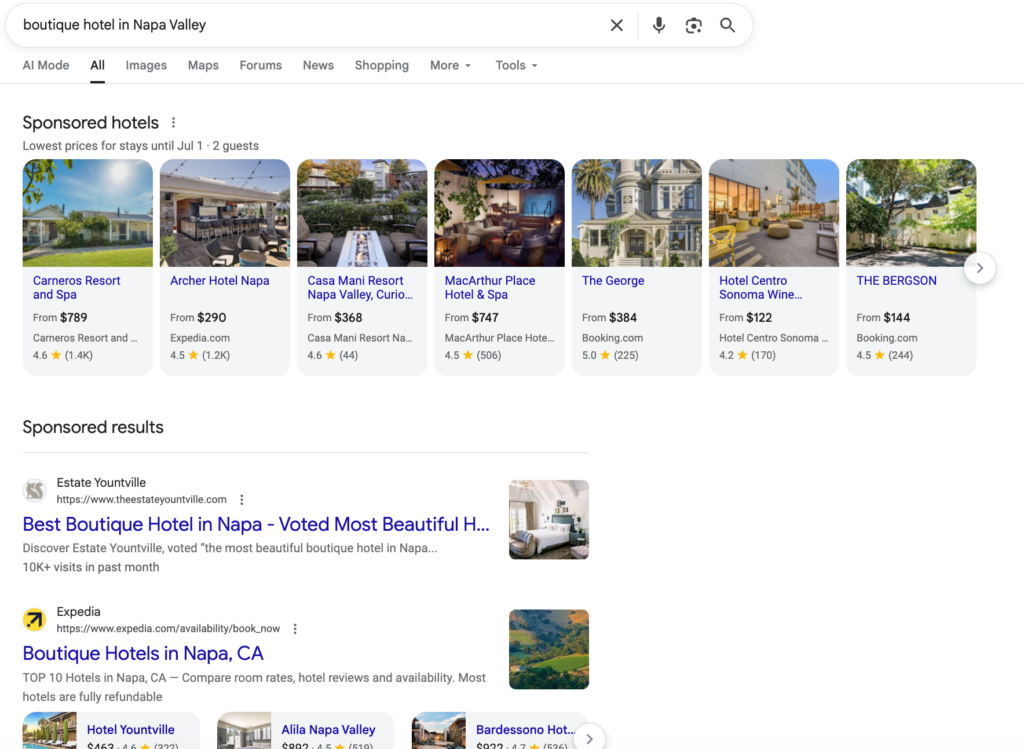
  • Location-based keywords: “boutique hotel in Napa Valley”
  • Experience-driven organic searches: “beachfront resort with spa in Maui”
  • Brand + non-brand combinations
  • Long-tail queries that reflect specific needs

The goal is alignment. Your content should match exactly what travelers are searching for at each stage of their journey.

2. Optimize your on-page SEO (the right way)

On-page SEO is where strategy meets execution. Small details here make a measurable difference in rankings and click-through rates.

Follow these fundamentals:

  • Title tags (55–60 characters) with primary keywords front-loaded
  • Meta descriptions (155–160 characters) with a clear call to action
  • Header structure (H1, H2, H3) that’s clean and user-friendly
  • Natural keyword placement—never forced or repetitive

The key is balance. You’re optimizing for search engines and humans. Over-optimization or keyword stuffing will hurt both.

These best practices ensure your pages are discoverable without sacrificing readability or brand voice. 

3. Create content that captures demand across the organic search funnel

Most hotel websites focus only on bottom-of-funnel pages (rooms, amenities, offers). That’s not enough.

To win in organic search marketing, you need content that supports the full traveler journey:

Top of funnel

  • Destination guides
  • Things to do in your area
  • Seasonal travel inspiration

Middle of funnel

  • Comparison content (why your property vs others)
  • Experience-focused pages (spa, dining, weddings)

Bottom of funnel

  • Room and offer pages
  • Booking-focused landing pages

This layered approach increases visibility, builds trust, and guides users toward booking directly.

4. Prioritize technical SEO and site performance

Even the best content won’t rank if your site isn’t technically sound.

Focus on:

  • Fast page load speeds (especially on mobile)
  • Mobile-first design
  • Clean site architecture
  • Indexability and crawlability
  • Secure browsing (HTTPS)

A slow or clunky website creates friction, and friction kills conversions. For more direction on how to prioritize technical SEO, check out this guide.

5. Optimize for local search and Google visibility

Local SEO is critical for hotels and resorts.

Make sure you:

  • Fully optimize your Google Business Profile
  • Keep NAP (name, address, phone) consistent across platforms
  • Encourage and respond to guest reviews
  • Use localized content and schema markup

When done right, this helps you dominate map results and capture high-intent travelers searching nearby or planning specific destinations.

6. Use data to guide organic search marketing decisions (not guesswork)

The most effective organic search strategies aren’t built on assumptions, they’re built on data.

Modern hospitality marketing requires:

  • Performance tracking across channels
  • Search trend monitoring
  • Content opportunity identification
  • Competitive benchmarking

When you centralize and analyze this data, you can continuously refine your SEO strategy and focus on what actually drives direct bookings.

That’s where a data-first approach becomes a true differentiator. Platforms that ingest and standardize marketing data across thousands of properties enable smarter decisions, faster optimization, and measurable growth.

7. Align SEO with your broader marketing ecosystem

SEO doesn’t exist in a vacuum. It should work in sync with:

  • Paid search and hotel metasearch
  • Content marketing
  • Social media
  • Email campaigns

When these channels are aligned, you create a unified experience that reinforces your brand and increases conversion rates.

This integrated approach is especially powerful in hospitality, where fragmented data and disconnected strategies often limit performance. Bringing everything together unlocks better visibility, stronger insights, and more efficient growth.

8. Design for conversion, not just organic search traffic

Getting users to your site is only half the battle. Converting them is what matters.

Make sure your website:

  • Has a clear, intuitive booking path
  • Highlights value over OTAs (best rate guarantees, perks)
  • Uses strong calls to action
  • Builds trust through visuals, reviews, and content

SEO should drive qualified traffic. Your website should turn that traffic into revenue.

Bringing it all together

Organic search marketing for hotels and resorts isn’t about chasing algorithms. It’s about understanding travelers, delivering relevant content, and creating a frictionless path to booking.

The properties that win are the ones that:

  • Think beyond rankings
  • Invest in data and insights
  • Build integrated, performance-driven strategies

Because at the end of the day, the goal isn’t just visibility.

It’s ownership of your traffic, your guests, and your growth.

Ready to increase direct bookings for your hotel or resort?

If you’re looking to turn your SEO strategy into measurable revenue, start with a data-driven approach that connects insights to action.

Explore how your property can capture more demand, and convert it into direct bookings now.

Frequently asked questions about organic search marketing

1. How can SEO help increase direct bookings for hotels and resorts?

SEO helps hotels and resorts capture high-intent travelers earlier in their booking journey by improving visibility in organic search results. By aligning content with traveler intent, optimizing site performance, and targeting the right keywords, properties can reduce reliance on OTAs and increase direct bookings while improving profitability.


2. What role does Google Hotel Ads and hotel metasearch play alongside SEO?

While SEO builds long-term organic visibility, hotel metasearch and Google Hotel Ads complement it by capturing demand at the decision stage. Together, they create a full-funnel hospitality marketing strategy that drives traffic, reinforces brand presence, and maximizes direct bookings across channels.


3. Should hotels manage SEO in-house or work with a hospitality marketing agency?

Many hotels and resorts benefit from partnering with a hospitality marketing agency or digital marketing agency that understands the complexities of hotel distribution, data, and traveler behavior. An experienced marketing agency for hotels and resorts can align SEO with broader strategies, such as paid media, hotel metasearch, and analytics, to drive measurable growth and increase direct bookings.


[Case study] Smarter campaign structure for stronger cyber sale results

SHARE:

Cyber season is no longer just a nice-to-have on the hospitality marketing calendar. It's one of the highest-stakes promotional windows of the year, and the gap between a well-structured campaign and a loosely assembled one is growing wider.


For Cyber 2025, we ran a structured test across a consistent group of hotel and resort clients to answer one question: Does building cyber promotions inside existing campaigns outperform launching net-new ones? 


The results were clear, and they have real implications for how hospitality brands should think about campaign architecture heading into 2026.

See what we discovered in our case study.

Frequently asked questions about cyber campaign structure 

Does this campaign structure work for properties running Cyber promotions for the first time?

It can, with some caveats. The core advantage of building Cyber promotions inside existing campaigns is access to historical performance data and established audience signals. If a property has never run paid campaigns before, that foundation doesn’t exist yet. For first-timers, the priority should be launching always-on campaigns well ahead of the Cyber window so the platform has time to learn and optimize before the promotional period begins. The structure works best when there’s something worth building o


How long should an existing campaign run before we add a Cyber ad set to it?

There’s no universal threshold, but campaigns that have fully exited the learning phase and have consistent delivery and conversion data make the strongest candidates. Generally, a campaign running for at least 60 to 90 days with steady performance gives the platform enough signal to work from. The more conversion data the campaign holds, the better positioned it is to optimize quickly when a new ad set goes live inside it.


What if our Cyber offer changed significantly from the prior year?

Offer changes don’t eliminate the structural advantage, but they do add a variable worth tracking closely. A meaningfully different offer, whether in discount depth, booking window, or terms, can shift user behavior in ways that make year-over-year comparisons harder to interpret. The campaign still benefits from existing audience data and delivery efficiency. Just build your benchmarks around the new offer rather than assuming prior-year conversion rates will carry over directly.


Keep Reading