Instagram’s Twitter Challenger ‘Threads’ Has Landed

SHARE:

Last month, we wrote about a new social media platform Meta’s Instagram was working on – a Twitter competitor called “Threads”. Over the last few weeks, we’ve seen more announcements around the new social media platform, and as of yesterday, it’s available to the public.

Threads is Meta’s newest product launch under the umbrella of the Instagram brand. It’s a text-based conversation app competing with Twitter and its slew of competitors that have come out since Elon Musk took over Twitter last year. With Meta’s Facebook and Instagram losing out to TikTok on time spent on social media, the company has been looking for ways to remain relevant.

What Is Threads?

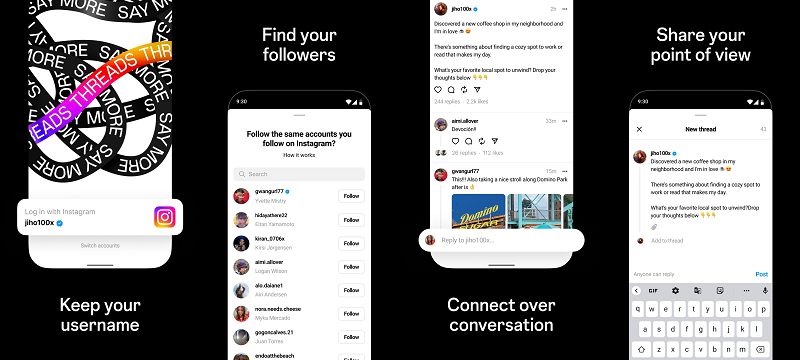
Meta has described Threads as a text-based app for conversations where you can talk directly with your audience & peers. Like Instagram, photos and videos can be shared, but unlike Instagram, text-only posts are also possible on the platform. The social platform is deeply integrated with Instagram - you’ll log into the new app using your Instagram login information and keep the same username between apps. Users can also follow all the accounts they follow on Instagram with one tap, allowing you to build an audience quickly.

With an emphasis on real-time moments, this new app breaks from the curated feeling of Instagram Stories and the Instagram Feed. This change allows brands to more authentically connect with their local communities and potential customers without the need to fit a heavily-curated feed aesthetic.
A New Era For Content Creation

With heavily curated content calendars acting as an essential part of organic social media for years, we think this social media platform will shine best for those who use it for timely property updates and organic interactions with communities, customers, and creators. 

While many of these property updates and interactions have long lived hidden beneath Instagram comments & soon-disappearing stories, a streamlined text-based feed allows people interested in your property to see everything that has been going on recently on property, questions and answers from other prospective travelers, and other local businesses you’re interacting with. All three of these give customers a clearer picture of your engagement with customers, the brand’s voice, and your hotel’s authority on things to do wherever your hotel is located. 

Sharing UGC will also take on a new life in this new social media platform. While before, we were only able to share stories that mentioned us on Instagram, on Threads, hotels will be able to share content that they are not mentioned in including posts about them and posts that their customers may be interested in. This is a great opportunity to share other company’s content to keep your brand top-of-mind while establishing yourself as a knowledge base for the area. Establishing yourself as a company who shares other’s content in the area could also incentivize them to share your content back, expanding your reach. 

How Can My Hotel Be Successful On Threads?

At launch, Threads doesn’t use hashtags or trending topics, removing some of the main discoverability tools on its main competitor, Twitter. The main methods of discoverability right now are through connecting with other users, users you’re already connected with on Instagram, and of course, an algorithm. At launch, Adam Mosseri, Head of Instagram, says that there is an algorithm that ‘lightly’ ranks posts. They’re also looking to highlight recommendations from accounts you don’t follow in your Threads timeline.

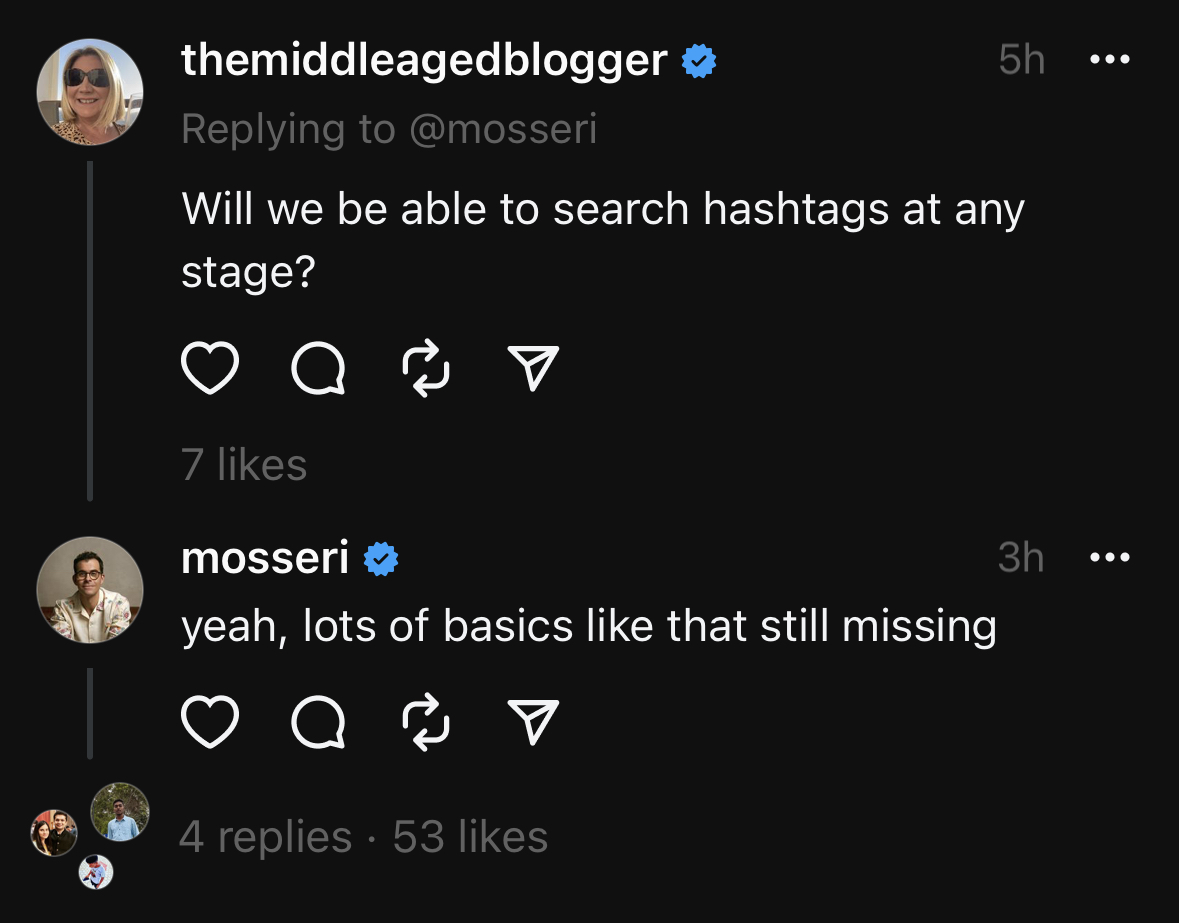
Hashtags, improved search, and trending topics all seem to be on the way, with Adam Mosseri, Head of Instagram responding to a user asking about hashtag search saying “Yeah, lots of basics like that still missing”. 
Advertising on Threads

At this time, there are no paid ads on the new social media platform, a nice refresher from the ad filled social media platforms we’re used to. However, Mark Zuckerberg had this to say about ads on the platform: “Our approach will be the same as all our other products: make the product work well first, then see if we can get it on a clear path to 1 billion people, and only then think about monetization at that point.”
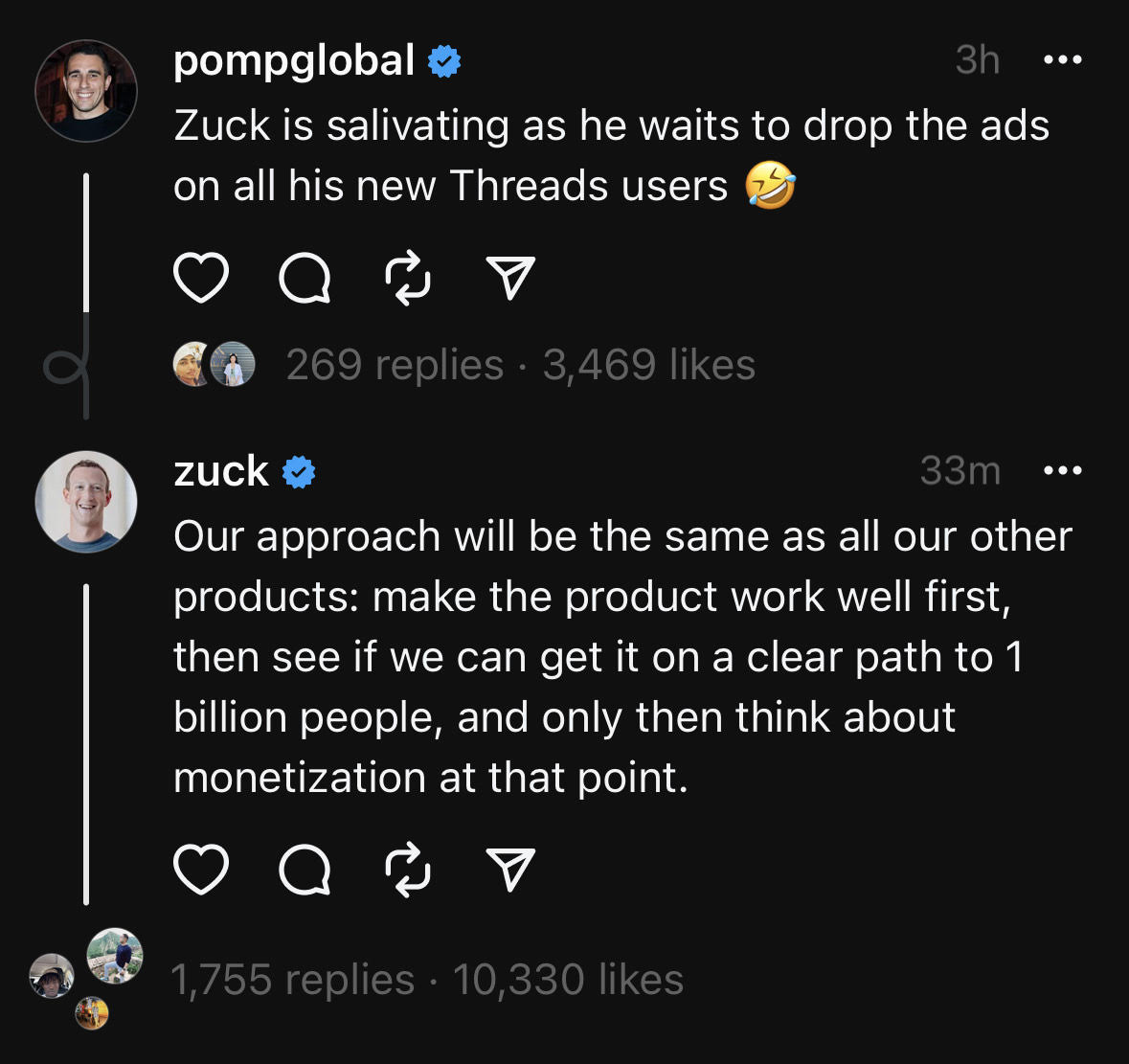
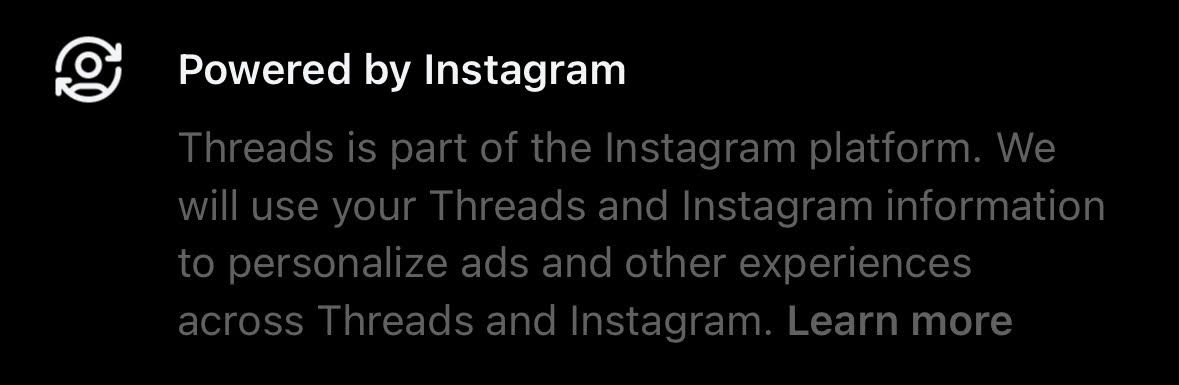
With 10 million users on Threads in the first 7 hours, Meta is well on its way to that point, but it may be a while before we see ads. In the meantime, the data collected from Threads may inform what ads you get served on other Meta platforms like Instagram and Facebook: “We will use your Threads and Instagram information to personalize ads and other experiences across Threads and Instagram”.
What Happened To Threads Being Part Of The Decentralized Social Media Universe?

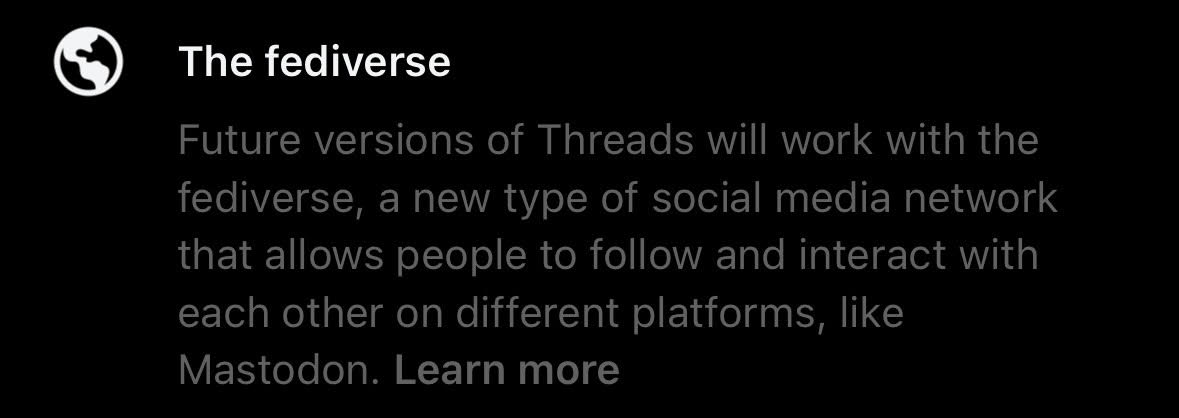
It’s true - the first reports on Threads earlier this year teased that it would be built on the ActivityPub platform. The ActivityPub platform is a standard that allows posts from one social media platform to be viewed and interacted with across a whole host of other platforms including Mastodon and PixelFed, similar to how you can interact with emails no matter where they came from.

At launch, this feature hasn’t been fully fleshed out in Threads, closing the social media platform off. However, this does seem to still be in the works and is something to look forward to in the future: 
How Can You Get Started on Threads?

You can get started with threads by visiting Threads.net or downloading the app on the App Store or Google Play Store and logging in via your Instagram account. 

Take a look around the new social media platform and introduce yourself. This is a great time to share some of your most successful Instagram posts to start building account history, along with sharing some new content so that your profile visitors have something to look at and know what kind of content they’ll be seeing going forward. Share your top recommendation for travelers in your area, a photo from a great spot to eat, and start interacting with those who are in your area! 


With a brand new social media platform here, we’ll be keeping an eye on any changes and updates we see – we’re sure there will be a lot of them. GCommerce will be hosting a webinar on getting started with Threads on August  17th, 2023 at 11AM MST. You can sign up to join the webinar here.
Hotel Metasearch Channels Overview

SHARE:

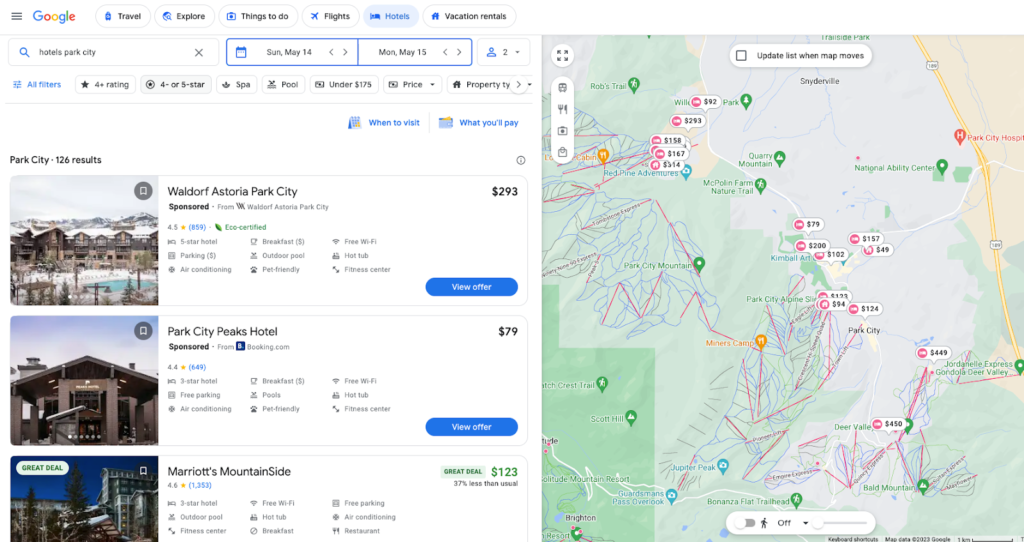
Overwhelmed with all the different metasearch options? Check out this quick-start guide to determine the best option for your hotel. 

Hotel Metasearch Providers: 

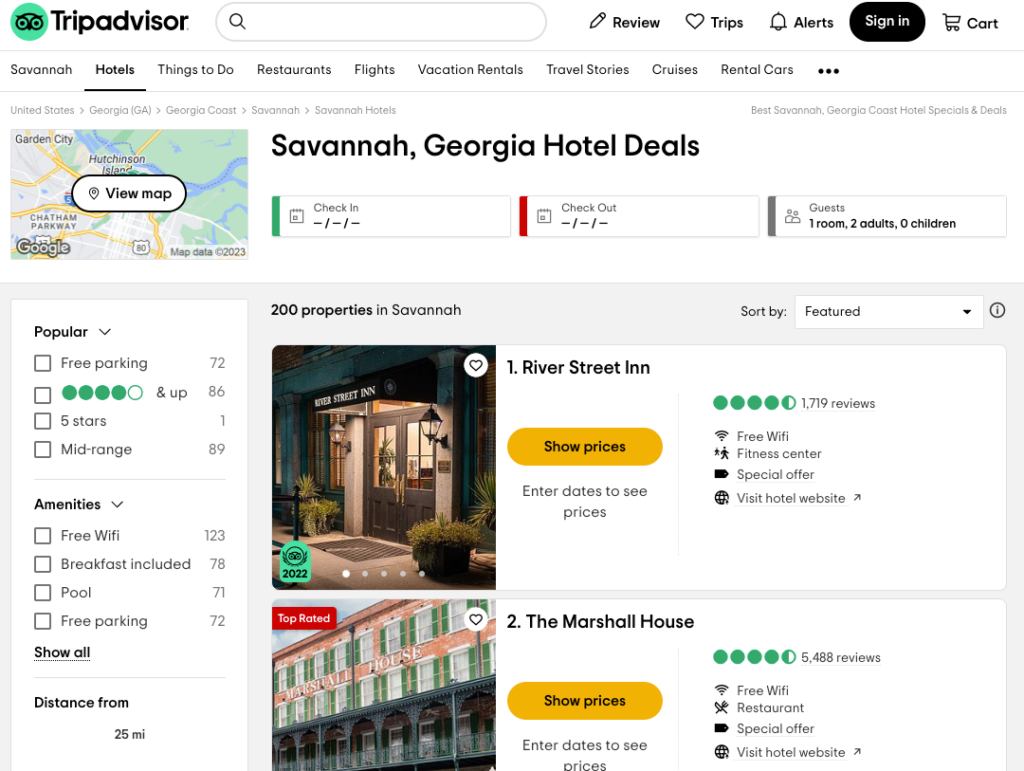
Google Hotel Ads

The king of metasearch for a reason. They dominate in terms of impressions, ease of access, and, therefore, reservation volume. That also means lots of competition, with often the highest CPCs of any channel. However, this should still be your top priority channel since you would be missing out on visibility on the most used search engine in the world.

TripAdvisor

#2 to Google for impression volume and conversions. TripAdvisor can be a great branding tool for destinations or activity-centric markets, especially if your property is geographically advantaged. While this channel may not have the visibility of Google Hotel Ads, impressions tend to be highly qualified since many people using TripAdvisor are in the active planning stages of their booking.

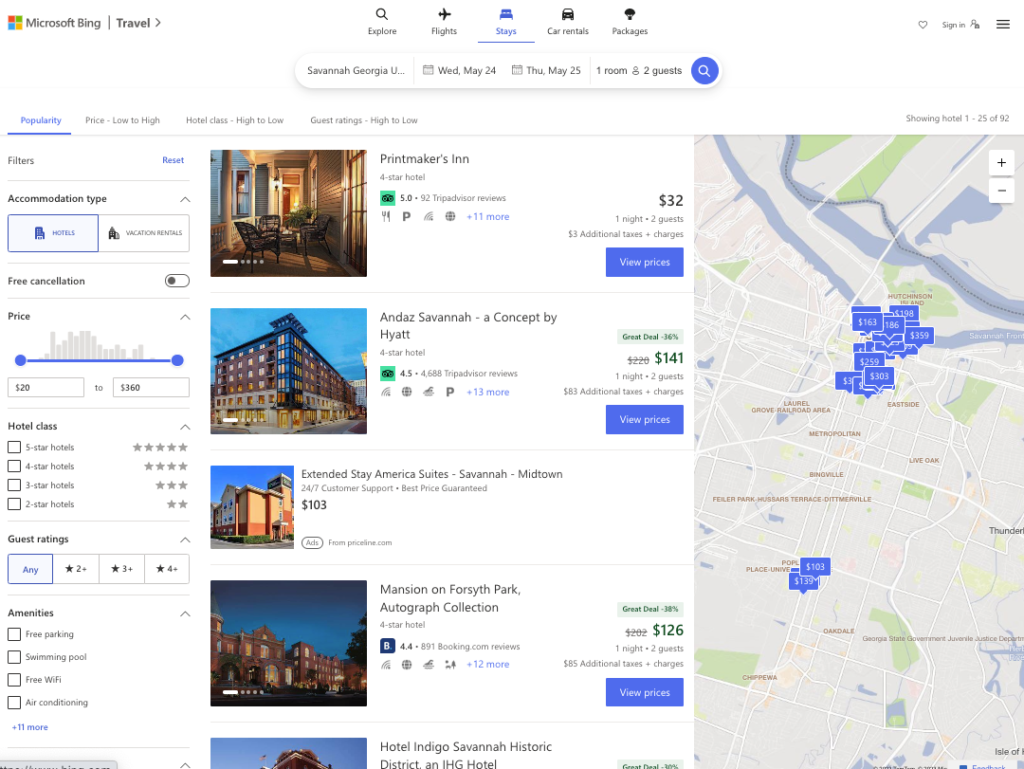
Bing

Great performance in terms of return on ad spend, but we often see low impression volume. They only capture a small fraction of the impression share Google receives. Bing can still be a great booster to your bottom line and should be included as one of your top 3 channels.

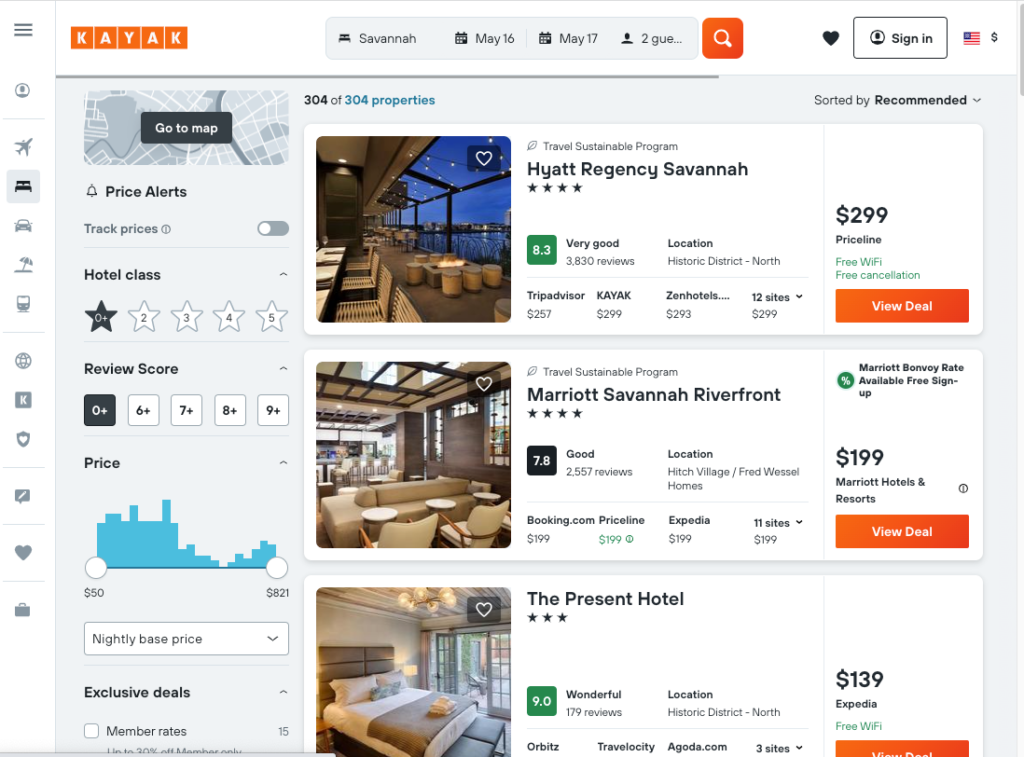
Kayak

Kayak offers the ability to book not just hotels but also flights, rental cars, full vacation packages, and even trains and buses. With so many options, many travelers use Kayak as a one-stop shop for their travel booking, making it our recommendation for your next metasearch channel.

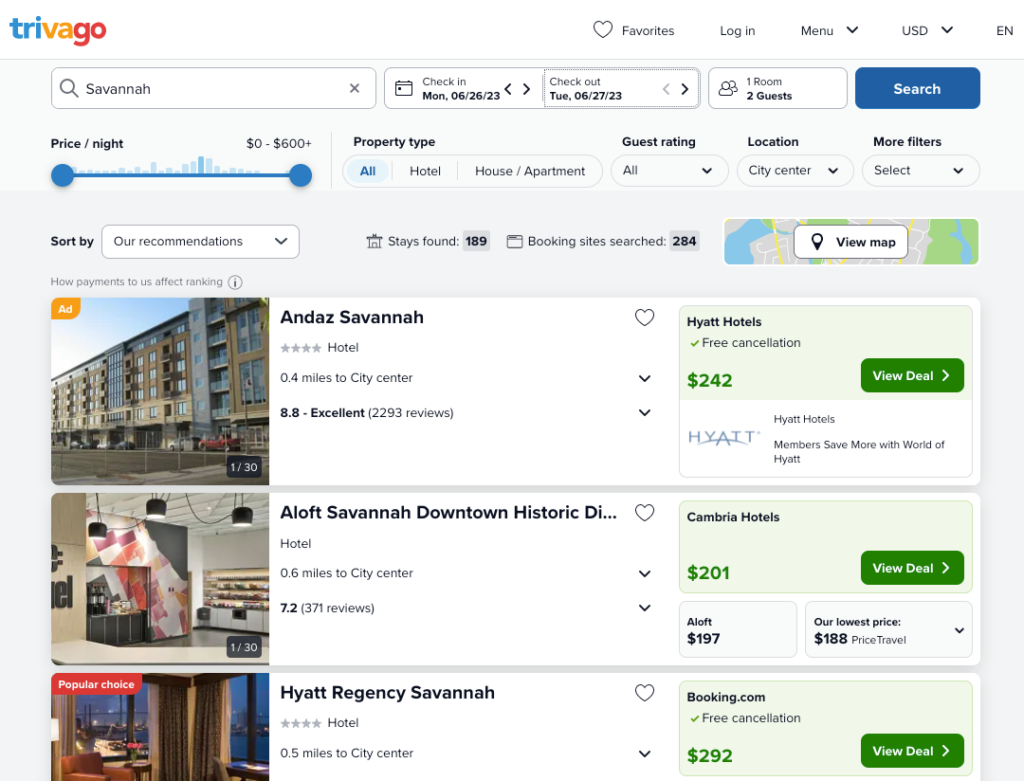
Trivago

Trivago aggregates multiple OTAs into 1 channel, including booking.com, Expedia, Priceline and more. Volume tends to be lower, but CPC also tend to follow. Another great option is to help drive the direct booking and cut out the OTAs if you’re present during a search.

SkyScanner

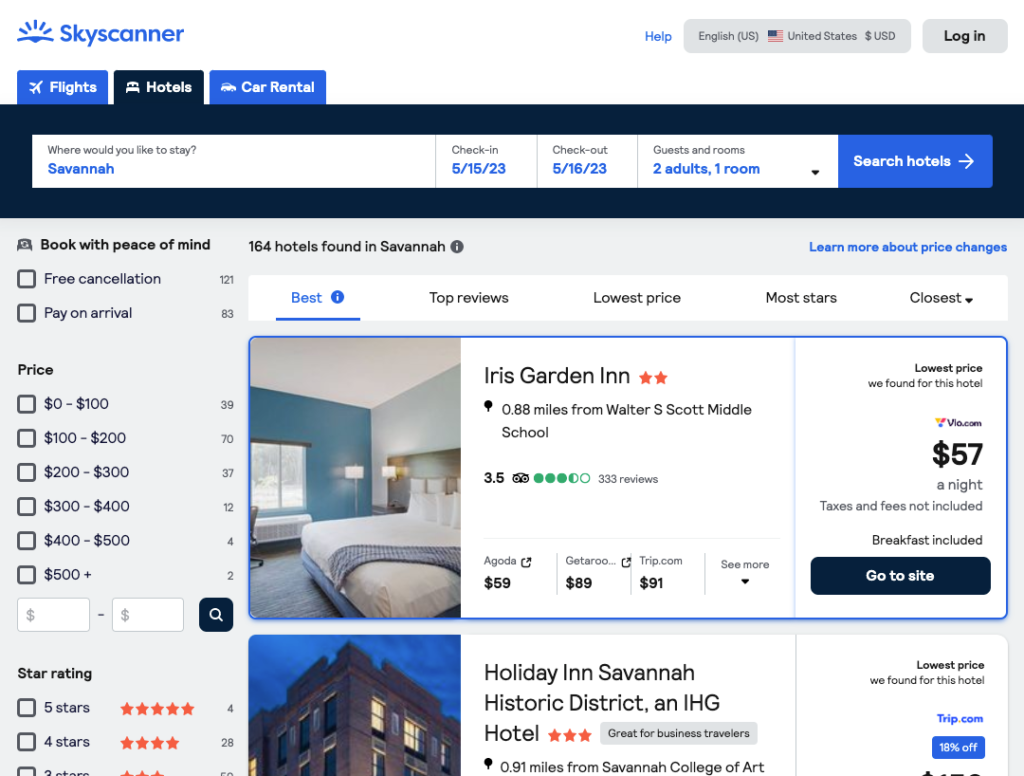
Another great direct booking tool, SkyScanner is designed as a travel search engine with the intent of cutting out the OTA. Conversions rates are fairly low in our experience, but increasing brand awareness can never be discounted.

This metasearch channel is mostly popular in the UK/European travel market. 

WeGo

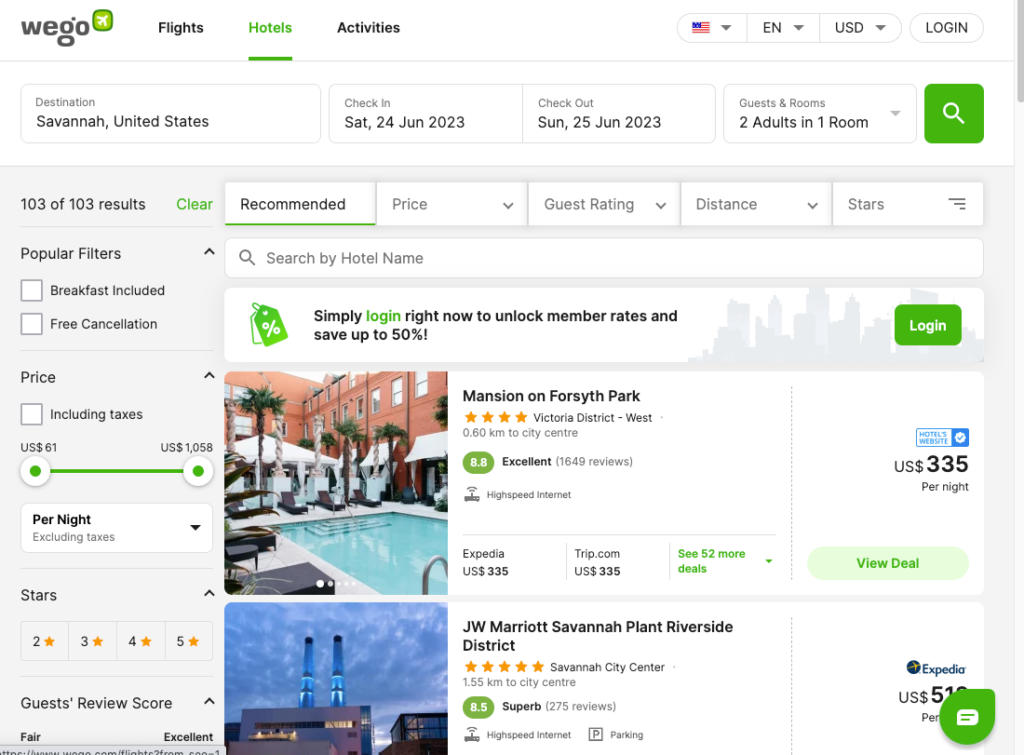
Headquartered in Singapore, WeGo is particularly important if you are focused on driving visibility and bookings from Asia and the Middle East. Another aggregator, WeGo, can drive bookings to the OTAs if you don’t have a presence to encourage direct bookings.

Takeaway

Google Hotel Ads is the number one channel you should be participating in for hotel metasearch as their reach and visibility are unmatched. TripAdvisor should be your second top priority as they tend to have the highest conversion rates outside of Google and good volume. If you have the budget or are dedicated to having the greatest visibility, It’s best to participate in a variety of channels and continually monitor performance to see which channel works best for your market and/or property. After all, why limit your hotel’s visibility when you can build brand awareness and drive direct bookings all at the same time?

If you need assistance in deciding what metasearch channels are best for you, let the experts at Metadesk help you.

New Hotel SERP Feature Alert: Google Property Promotion Ads Carousel is Live

SHARE:

At the end of 2022, Google announced that a new Property Promotion Ads carousel was coming to it’s mobile search results. Previously out in beta, the new Google Property Promotion Ads carousel is now live in the mobile and desktop search results. Are you seeing this in your hotel google searches yet? You can see the new feature in the below screenshot.

What are Property Promotion Ads?

Property Promoted Ads are a campaign type available within the Google Hotel Ads inventory space. It is a separate campaign type from standard Google Hotel Ads and does require a separate campaign type in order to run. These ads appear at the top of destination searches in the Google Travel Planner, Google Maps, and now directly at the top of the search results for hotel searches. 

Property Promotion Ads allow you to get in front of consumers when their shopping for hotels in a destination and tend to be higher up the funnel in their research process compared to standard Google Hotel Ads, which appear within a hotel’s knowledge panel or travel planner listing. Property Promotion Ads also tend to have higher CPCs since the inventory is in a premium position, which can also result in lower ROAS compared to standard Google Hotel Ads placements.

Where Did the Standard Text Based Paid Search Ads Go?

One important observation from the screenshot above is that there are no standard text ads shown above the hotel map pack. We’re only seeing the Property Promotion Ads carousel in this search for “Calistoga Hotels”. We did get standard text ads to trigger with other searches, including “San Diego Resorts”. The takeover of the top position on the Google SERP will have a huge impact on paid search advertising visibility and push hotels to shift their focus and media dollars to Google Hotel Ads and Property Promotion Ads, in particular, in order to maintain visibility for destination searches.

Google Now Showing Updated Search Filters for Hotel Searches

A secondary but essential update found with this new SERP for hotel searches is the new set of filters shown under the search bar. The search shown below for “Calistoga hotels” includes filter options such as “luxury”, “with hot springs”, “with spa”, “cheap”, and “with pools”.

It looks like Google is pulling in these new features directly from attributes available within Google Business Profile and proving once again how important Local SEO, especially your hotel’s Google Business Profile, is to visibility in the search engine results and to your Google Hotel Ads performance.

How can my hotel get started with Google Property Promotion Ads?

In order to run Google Property Promotion Ads, you first need to be live with Google Hotel Ads via a hotel metasearch advertising provider. It requires connectivity to your booking engine rates and inventory, along with campaign management and ongoing optimization.

Please reach out to our team of Google Hotel Ads experts at GCommerce for more information.

9 Best Practices For LinkedIn Advertising For Hotels

SHARE:

LinkedIn Ads is a great marketing tool to utilize for B2B or B2C companies to build leads, online recognition, share content, and more. LinkedIn Ads differs from other ad platforms because it focuses on specific audience targeting relating to job titles, education, company, or company size. It can be tricky to advertise on LinkedIn, but we have nine tips you can use today to improve and get the most out of your ads. 

  1. Keep In Mind Your LinkedIn Ads Audience Size

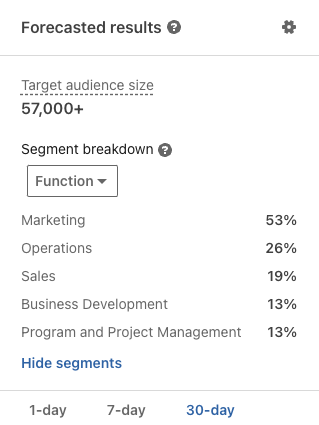
LinkedIn recommends keeping your audience size a minimum of 50,000-500,000 max. Anything larger than that will be too broad, making it difficult to find the right target audience for your hotel’s LinkedIn ads. 

  1. Location is Key for LinkedIn Ads

Location is a mandatory targeting field within LinkedIn Ads. You can get specific with a city or metropolitan area, or go broad with state or country. Utilizing the right locations will ensure your hotel’s LinkedIn ads are going to the right audience in the specific locations you are targeting.

  1. Avoid Hyper Targeting with LinkedIn Ads

It’s recommended that you don’t use more than three targeting segments with your hotel’s LinkedIn Ads campaign targeting. The campaign manager will show estimated reach and audience size while you build out your audience. An example of this would be using too many of the targeting segments in one LinkedIn ads campaign including job titles, companies, customer match lists, or educational segments. 

  1. Utilize LinkedIn Ads Campaign Demographics

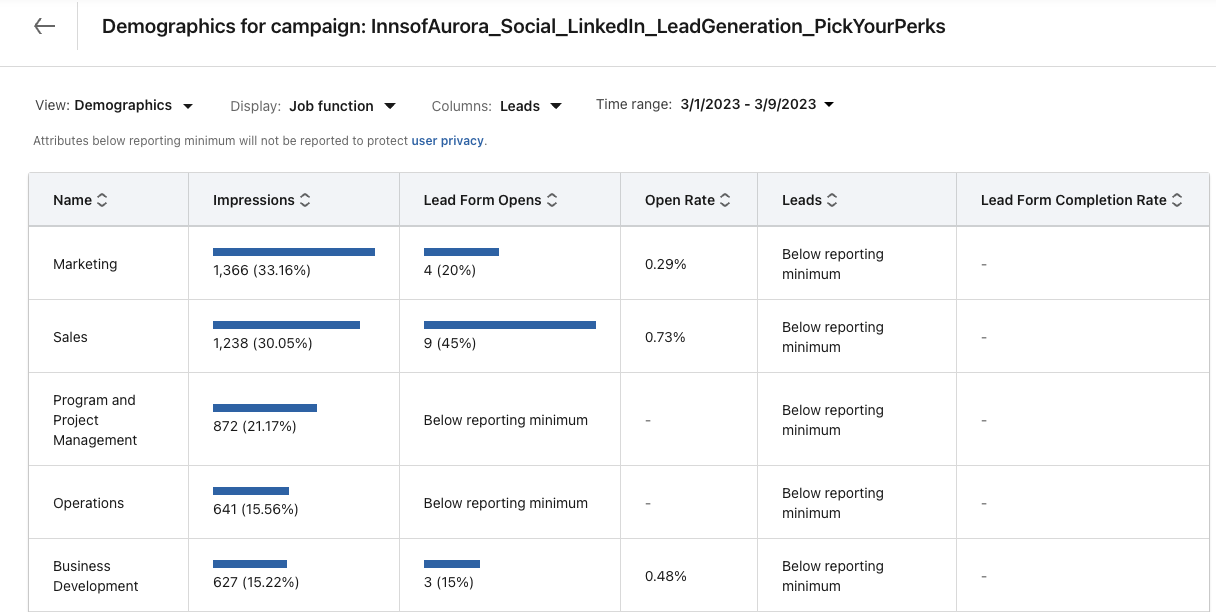
When you click into your LinkedIn campaign you can gain insights into your audience. Click the three dots to change it from performance to demographics. You can see who is clicking on your ads, impressions, opening lead forms, and see open rates. This will help you narrow down your audience and target people likely to interact with your ads. 

  1. Limit Your LinkedIn Ads Form Fields

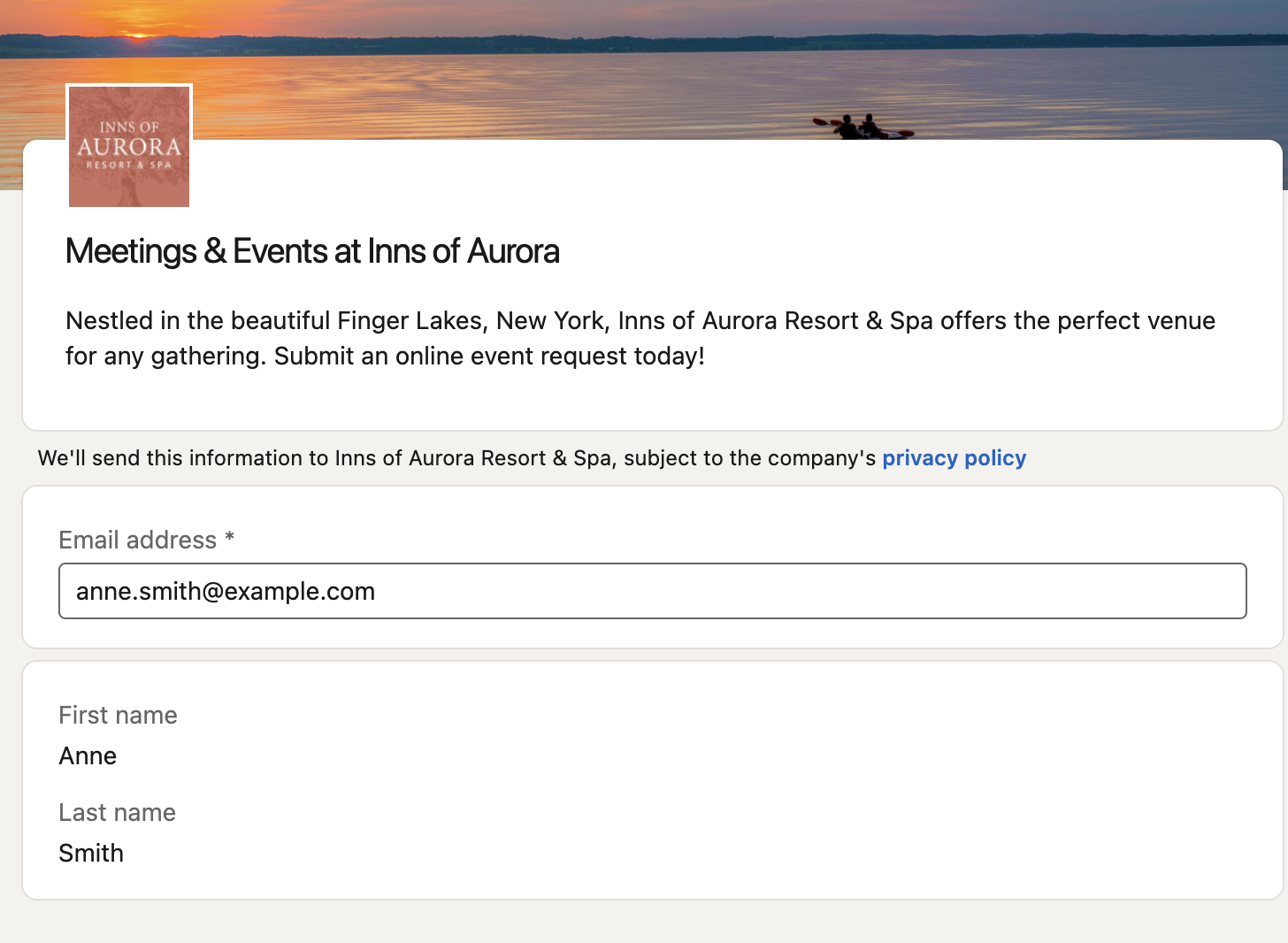
When you notice people are opening your form on LinkedIn, but aren’t submitting it, it likely means you have too many fields for people to fill out. It’s recommended you have only 3-5 fields within your LinkedIn forms. The least amount of fields to fill out the better. 

Pro Tip: Make sure to include location in your LinkedIn ads form so people know where you are located. 

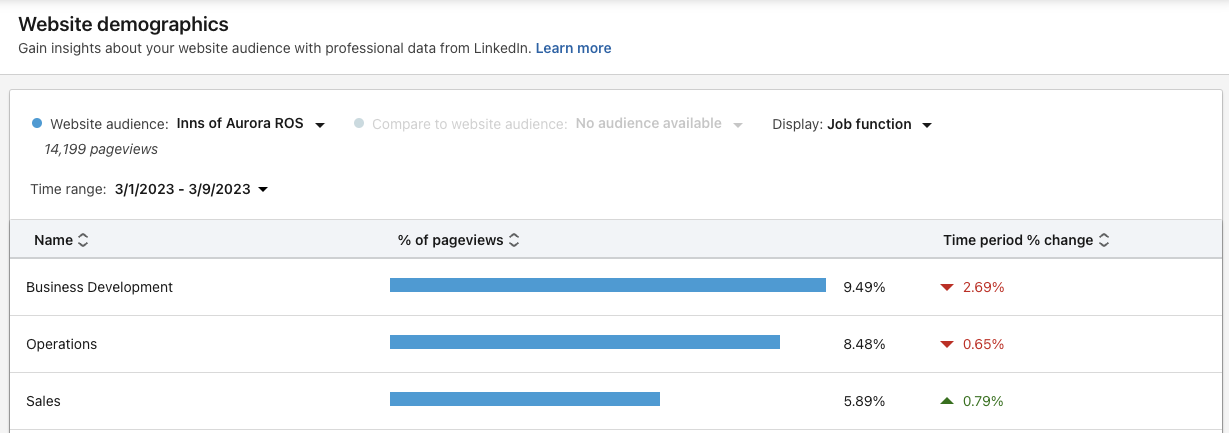
  1. Utilize LinkedIn Ads Website Demographics

On the left hand side of your LinkedIn ad manager you will see the Analyze navigation option. Click the dropdown then click website demographics. This will show you the types of people that are coming to your hotel’s website. This could be another great option in determining who your hotel’s target audience is on LinkedIn Ads. 

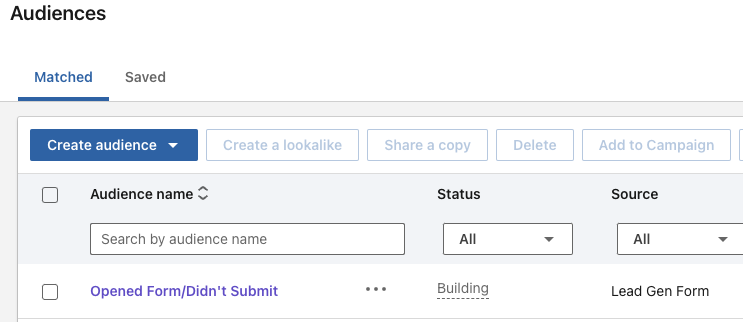
  1. Create LinkedIn Ads Matched Audiences

Matched audiences are a great way to use your business data and LinkedIn’s professional data within your LinkedIn ads campaigns. You can create retargeting audiences, contact targeting, account targeting and lookalike audiences. For example, you can create a retargeting audience of people who have opened a lead form, but didn’t submit. There are options to go back 30, 60, 90, 180, or 365 days. 

  1. Create At Least Five Ads Per LinkedIn Campaign

LinkedIn suggests having at least five ads in your campaign because studies have shown that advertisers generally see a 20% or greater improvement in click-through rate (CTR). LinkedIn can also recommend images you have uploaded to your media library based on relevance and performance of each image for your specific campaign.

  1. Craft LinkedIn Ad Copy Around a Clear Call To Action

Your LinkedIn ads should end with a clear CTA of what you want them to do next. Make sure your CTA matches the objective you originally selected. Effective CTA’s include “Register Now” or “Sign Up”. 

LinkedIn Ads is a great platform to utilize to reach potential customers who are interested in your product or service. These are just a few tips to get you started to be successful, but ultimately there will be a lot of testing and figuring out what will work best for your ads.

For more information about LinkedIn Advertising for hotels or getting started, reach out to us at GCommerce today!

Instagram’s New Twitter Competitor is Right Around The Corner. How Can You Prepare?

SHARE:

The world of social media feels like it’s always changing – especially right now. With Elon Musk taking over Twitter, Mark Zuckerberg pushing the metaverse (or trying to), and the meteoric rise of TikTok, there’s a lot to keep track of.

In addition to all the other changes we’ve had to deal with in the last few years, there’s one more on the horizon: a new social media platform from Meta. This new platform is very interesting, and provides for some clear advantages over other new platforms that have risen over the last few years, especially for hotels that have already built followings on Facebook and Instagram. We’re here to clear up as much as we can and help you prepare for its launch.

What is Meta’s Newest Social Media Platform?
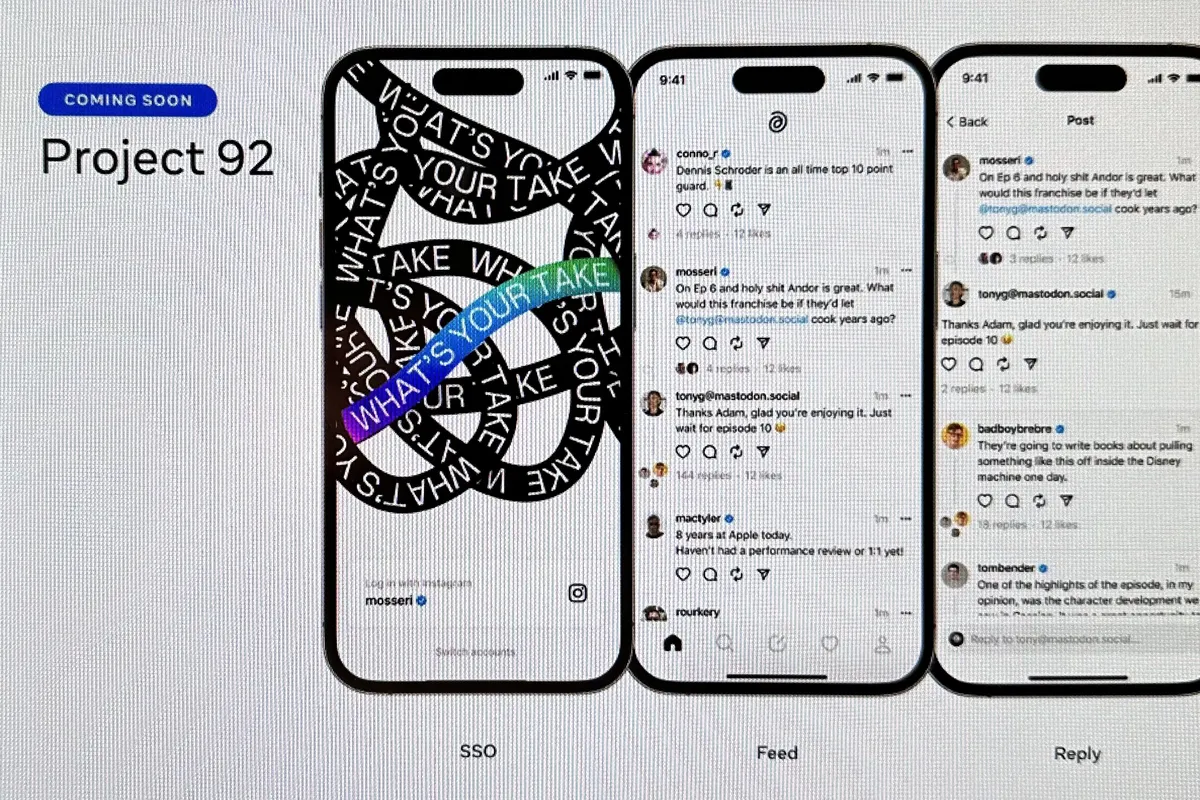
This new project from Meta is codenamed “P92” or “Barcelona” and was first reported on by Lea Haberman of marketing newsletter ICYMI. It’s the company’s response to Twitter, which has seen extreme turmoil since being purchased by Elon Musk in Fall of 2022. While Twitter’s stability has come into question and with TikTok facing statewide bans in states like Montana, Meta could be poised for success with this new platform, rumored to be called “Threads” according to The Verge.

Source: Lia Haberman

How Valuable Will Meta’s New Social Media Platform Be For Marketers?

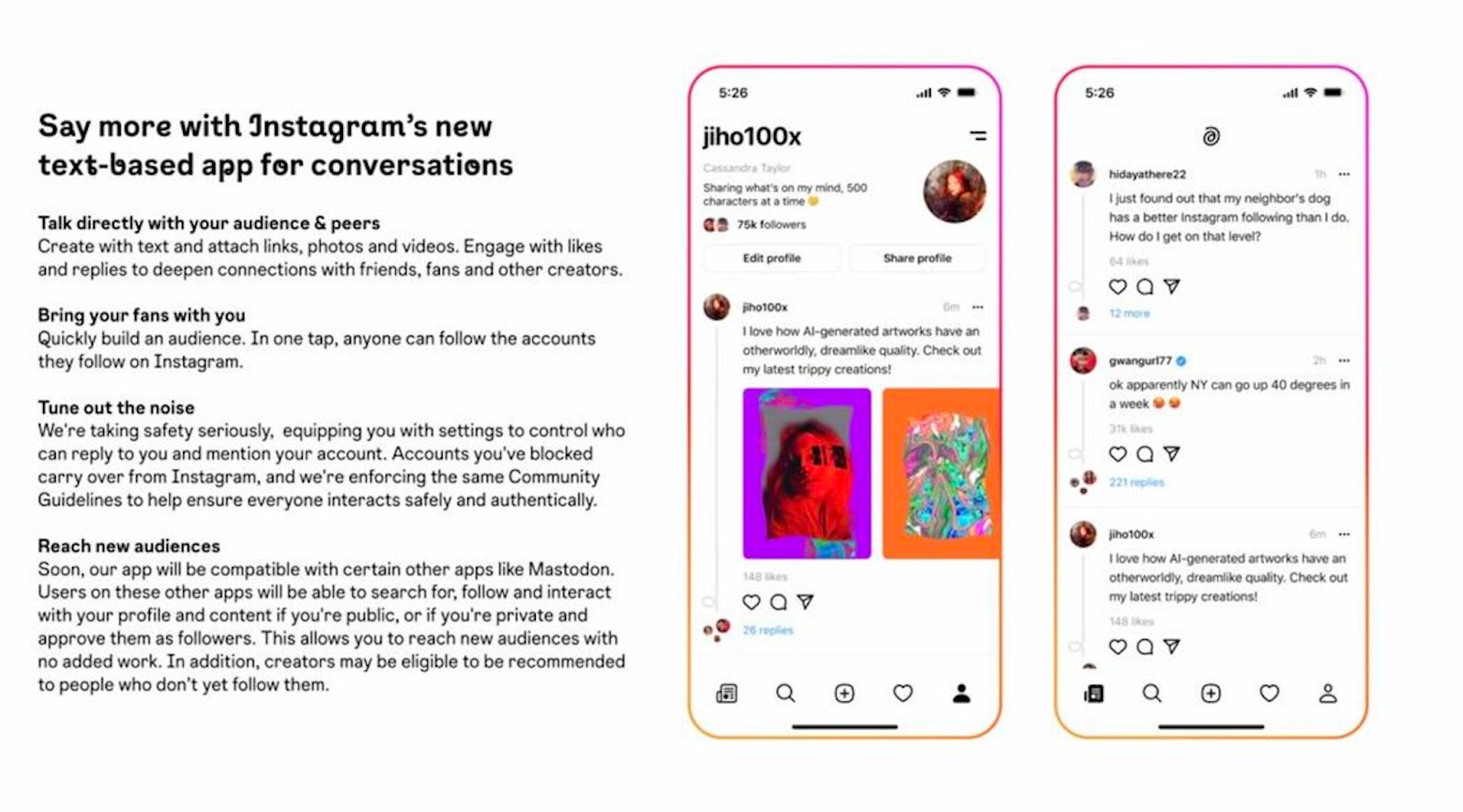
As TikTok user growth slows sitewide, Meta offers an attractive proposition: take your followers from Instagram with you to this new platform. According to a leaked graphic from Meta, “P92” allows you to bring your fans with you: “In one tap, anyone can follow the accounts they follow on Instagram”. This gives marketers a whole new way to reach the people that are already familiar with their brand, in a faster-paced, lower stakes environment where every post doesn’t have to be curated to fit your feed’s aesthetic. 

This new social media platform is also built on the decentralized ActivityPub platform, allowing users to connect with users cross platform from other Twitter-alternative apps such as Mastodon.social, a platform that crossed the 2 million user mark in December of last year. This gives your hotel a new way to reach users that avoid mainstream social media sites and privacy minded users that prefer open social media networks. 

Source: The Verge

What Kind of Content Should Our Hotel Be Posting?

While it’s impossible to know exactly what kind of content will reign king on Meta’s new platform, we can look at Twitter to get an idea about what kind of content to start planning for. 

  • Visual content that is easy to engage with will always be a good play online (hint: repurpose your hotel’s best Instagram posts).
  • Engage directly with customers and prospective customers - this is like responding to Instagram comments, but even more public since it’s not hidden underneath a post. This shows you care about guest experiences.
  • Engage with thought leaders in your community or industry.
  • Provide timely updates to local happenings like new businesses in your area, special events on and off property, and new improvements on your property.

The leaked slides also say you can “attach links”, something you can’t currently do on Instagram without linking to an external website through your bio. This could help marketers and creators drive more direct-response actions through social posts.

These are just some ideas to get you started thinking about what kind of content you’ll be posting on this new social media platform. Remember, the more high quality, useful content you post, the more your audience will see you as their go-to for their next trip and the more likely you are to reach new audiences that haven't yet heard of you.

When will Meta’s New Social Media Platform Be Released?

Meta has stated that the social media app will be launched “As soon as we can” with Lia Haberman teasing a late-June launch. 

Whether this new social media app is launched next week or later this summer, it could be a game changer for you and your hotel. Sign up for our newsletter to get continuing updates on the platform and even more tips when it first launches.

Flywheel News | May 2023 Hotel Digital Marketing News | GCommerce

SHARE:
  1. June Marks The Last Month Google Universal Analytics Will Process Data

As you read this, you’re currently in the last month that data will flow into your Google Universal Analytics account. If you don’t have GA4 setup by now, there’s a good chance you won’t have any analytics data available for your site for website traffic past June 30th. Reach out to GCommerce today if you’re unsure or need assistance on where to start with your GA4 setup.

  1. Google Ads Sitelinks vs Promo Extensions For Short Term Deals - What’s Better?

In the world of Google Ads, ad extensions (now referred to as assets) give your valuable extra real estate and call-outs in the SERP. But which ones are better for advertising your hotel’s short term/flash sales, sitelinks or promotion extensions? Read more in one of our recent tests.

  1. Google Marketing Live Focuses on AI in 2023

As the industry continues to lean into AI, Google’s Marketing Live 2023 seemed to focus solely on it’s investment of incorporating AI into all facets of it’s products. Exciting announcements included AI generated campaign builds, helping to automatically create text and images and better match messaging to search queries. We’re also pretty excited to test out the newest campaign types announced at GML23, most notably the Demand Gen campaign type which seems to target a social media style ad placement and “will show across YouTube Shorts, YouTube in-stream, YouTube in-feed, Discover, and Gmail to drive conversions”.

  1. Hotel Metasearch Channels Overview

Overwhelmed with all the different metasearch options? Metasearch marketing has been a proven way to increase bookings for your hotel, but there are many options in this space. Check out this quick-start guide to determine the best option for your hotel. Learn more here.

  1. How To Choose The Best Marketing KPIs

Not sure what KPIs you should be focusing on to judge the success of your hotel marketing campaigns? Read our blog post on how to choose the best marketing KPIs.

  1. Meta Announces AI Powered Ad Tools

Similar to Google’s use of AI, Meta is also incorporating AI into it’s platforms and tools to help provide more personalized advertising as well as give advertisers more text and image AI tools. Learn more here.

  1. FAQs for the Hotel Digital Marketer

Find the answers to some of the most commonly asked questions in hotel digital marketing in this insightful blog. What questions would you add to the list?

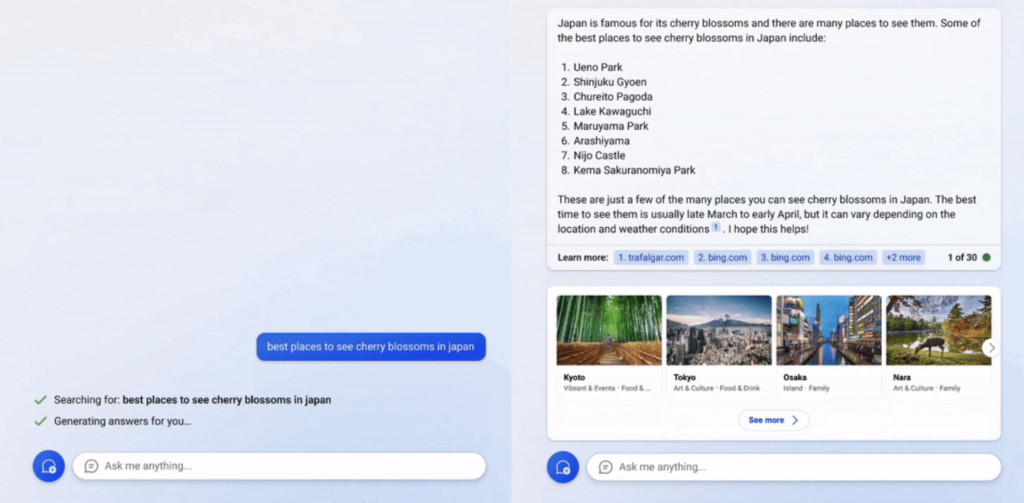
  1. Bing Chat Adds Visuals To Travel Queries 

Bing Chat has now added more visuals to travel queries with links directly into Bing’s Travel Planner.  Our hopes is that this means more impressions for the high ROAS yet low volume Bing Hotel ads placements. Learn more here.

Keep Reading