8 Holiday Marketing Tips For Hotels

SHARE:

With the holidays quickly approaching, it’s that time of year again to focus on your marketing, offers, services, and extras you will provide to potential customers. It’s easy to get stuck when trying to figure out new marketing strategies to stand out. We have a few ideas for you that could enhance your marketing game this holiday season. Here are 8 quick tips to keep in mind to boost your marketing efforts:

  • Create a Content Calendar - A content calendar can help you stay organized and plan posts, emails, and ads in advance so you don't fall behind. Every year, it seems the holidays, Black Friday, and Cyber Monday sneak up on us. Utilize a calendar to stay ahead of the game!
  • Leverage Email Marketing - Segment your email list and send personalized holiday offer emails. A/B test two different emails and engage customers with different subject lines, imagery, or various offers. This will help you understand your customers better and determine what makes them open your emails, engage, and convert.
  • Optimize Your Website - Include special holiday-themed banners, graphics, and landing pages. Make your promotions stand out for potential customers to take advantage of the holiday offers. Ensure your website is mobile-friendly for a seamless experience.
    • Offer Special Promotions - Black Friday, Cyber Monday, and the holidays are just around the corner. Customers are on the lookout for special deals that can save them money. Consider limited-time offers or flash sales for quick action.
    • Use Social Media Strategically - Create engaging and shareable holiday content. Promote your special offers in a creative way that leaves a lasting impression on people about your hotel and its offerings. Utilize reels, Instagram Stories, and videos to showcase your hotel, amenities, onsite dining, and local attractions. Be creative!
      • Use User-Generated Content - Encourage customers to share their experiences and pictures at your hotel on social media. This provides great coverage for your hotel and showcases real people's experiences. It will help others decide to stay at your hotel during the holidays. Ensure it's high-quality content that engages users.
        • Implement Influencer Marketing - Collaborate with relevant influencers to promote your special offers at your hotel. Influencers can create authentic content that resonates with their followers and can be an effective way to increase awareness of your hotel among a wider audience.
          • Optimize For Local SEO- Update your Google My Business listing with holiday hours and promotions. Use location based keywords to attract potential customers to your hotel or onsite restaurant.

          As the holiday season draws near, it's crucial to rev up your marketing efforts and take the opportunity to connect with potential customers. Standing out in the crowd can be a challenge, but with the right strategies in place, you can make a significant impact. From creating a well-organized content calendar to leveraging the power of influencer marketing, there are numerous ways to enhance your marketing game this holiday season.


          Remember, the key is to stay proactive, adapt to the changing landscape, and engage your audience in creative and meaningful ways. By implementing these eight tips, you can not only boost your marketing efforts but also create lasting impressions and build strong connections with your customers. Let GCommerce help you with your marketing efforts to achieve your goals this holiday season.

          Optimize Your Hotel's Website For Direct Bookings

          SHARE:

          Conversion Rate Optimization (CRO) is an essential aspect of marketing in the Hospitality Space. Its primary goal is to increase the effectiveness of your website in converting visitors into hotel guests. This process involves analyzing data, identifying areas of improvement, and implementing changes to improve the user experience, ultimately increasing the likelihood of conversion.

          In this blog post, we'll cover the fundamentals of CRO, explore advanced methods, and provide practical tips to help you enhance your website's conversion rates and boost your hotel's online revenue. Whether you're a hotel owner or marketer, the information shared here will help you optimize your website for maximum conversions.

          Understanding Conversion Rate Optimization

          Conversion rate optimization (CRO) is the process of optimizing a website's design, functions, and content to improve its ability to convert visitors into hotel guests. The ultimate goal of CRO is to maximize the number of website visitors who take a desired action, such as booking a room, filling out a form, or subscribing to a newsletter. To thoroughly analyze these goals, you will want to start off by looking at your website's traffic sources, bounce rates, and conversion rates. Once you have identified areas of drop-off, low engagement, and friction, you can start to form data-driven understandings of how your audience is interacting with your website to better navigate the CRO space so that you can make changes to your website and overall marketing strategies to improve performance. 

          Common CRO Methods

          There are several common CRO methods that businesses can use to improve their website's conversion rates. These include:

          • A/B Testing: A/B testing involves testing two web page versions to see which one performs better. This method involves splitting your website's traffic between two versions of the same page and measuring the conversion rates for each version.  
          • Heat Mapping: Heat mapping involves using software to track the movement of your website's visitors. It provides a visual representation of where users click, scrolls, and spend time on a page, allowing businesses to identify areas of interest and areas that need improvement. By analyzing heat maps, businesses can make data-driven decisions to optimize their website and improve their conversion rates.
          • Surveys: Surveys involve asking visitors to your website questions about their experience. This method allows you to gather feedback from your visitors and identify areas that need improvement.

          Advanced CRO Methods

          In addition to these common CRO methods, there are several advanced CRO methods that hoteliers can use to further optimize their website's conversion rates. These include:

          • Personalization: Personalization involves tailoring your website's content to meet the needs and preferences of individual audience segments. This can include displaying personalized accommodation recommendations or showing different versions of your website based on a visitor's location or browsing history.
          • Micro Conversions: Micro conversions involve tracking smaller actions that visitors take on your website, such as engaging with a certain piece of content, email, or by filling out a form. By tracking these smaller actions, you can gain detailed insights into your visitors' behavior and identify areas for improvement. Keep in mind that micro-conversions are important milestones to achieving macro-conversions such as hotel booking.
          • Multi-Touchpoint Analysis: Multi-touchpoint analysis involves tracking a visitor's journey through your website and analyzing the touchpoints where they interact with your brand. This method allows you to identify areas where visitors are encountering friction and make changes to improve their experience.

          Overall, CRO is an important component of marketing that can increase a company's ability to convert visitors into hotel guests. CRO involves analyzing data, identifying areas of improvement, and implementing changes to improve the user experience, ultimately increasing the likelihood of conversion. 

          Common CRO practices include A/B testing, heat mapping, user testing, and surveys, while advanced methods include personalization, micro-conversion optimization, and multi-touchpoint analysis. By leveraging these techniques, hoteliers can improve their website's conversion rates, increase engagement, and ultimately drive revenue. In conclusion, CRO is a vital strategy for any hotel looking to boost its online presence and drive conversions.

          A Hotelier's Guide To A Frictionless Customer Experience 

          SHARE:

          A Hotelier's Guide To A Frictionless Customer Experience 

          In an era where travelers increasingly rely on digital platforms to plan and book their hotel stays, providing a frictionless digital experience has become paramount for hoteliers. A seamless and user-friendly digital journey enhances guest satisfaction, builds brand loyalty, and ultimately boosts revenue. In this article, we will explore strategies that can help hotels achieve a frictionless digital experience, from online booking to post-stay interactions.

          User-Centric Design 

          Start by understanding the needs and preferences of your target audience. Conduct user research to understand their behaviors, expectations, and pain points. Use this information to inform the design of your digital presence and ensure your website is intuitive, user-friendly, and visually appealing. Ensure that users can easily find the information they need, such as room availability, rates, and amenities. Minimize the number of clicks required to access important content, and use clear and concise labeling for navigation menus and buttons.

          Embrace Responsive Design

          With the prevalence of mobile devices, it is crucial for hotels to prioritize responsive design. Ensure your website and booking platform are mobile-friendly, with layouts and features that adapt seamlessly to different screen sizes. A responsive design enables guests to make bookings and access essential information easily, regardless of the device they are using. Test your digital platforms across various devices and browsers to ensure a consistent experience for all users.

          Fast and Reliable Performance

          Ensure your digital platforms are fast, responsive, and reliable. Optimize page load times, minimize server downtime, and provide a smooth browsing experience. Slow-loading pages or technical glitches can lead to user frustration and abandonment. Regularly monitor and optimize the performance of your website to ensure a frictionless experience.

          Proactive Guest Support

          Offer prompt and efficient customer support on your website. Implement live chat functionality or chatbot assistance to address guest inquiries in real time. Provide clear contact information and ensure that support requests are responded to quickly and effectively. This proactive approach to guest support minimizes friction and enhances the overall digital experience.

          Utilize Customer Relationship Management (CRM) Systems

          Implementing a robust CRM system is crucial for hotels aiming to provide a frictionless digital experience. A CRM system enables hotels to gather and analyze guest data, allowing for personalized and targeted interactions. Building customer data profiles to reach and engage new or returning guests is an essential part of meeting modern-day consumer demands. The key to successful CRM implementation is to provide prospects and guests with the right information at the right time to ease friction and influence a designed outcome, such as a booking or package upsell. 

          Seamless System Integrations

          Integrate your digital platforms with other hotel systems, such as property management systems (PMS) and customer relationship management (CRM) software. This integration ensures seamless data flow and synchronization, allowing for accurate and up-to-date information across different systems. It enables personalized guest experiences, efficient operations, and effective communication.

          Streamline Booking Processes

          A vital step towards a frictionless digital experience is to simplify the booking process. Optimize your hotel's website to ensure a smooth and intuitive booking journey. Minimize the number of steps required for guests to make a reservation and offer clear and concise information about room types, rates, and availability. Implement a user-friendly calendar feature that allows guests to easily select their desired dates. Additionally, enable secure and hassle-free payment options, such as mobile wallets or stored credit card details, to expedite the booking process.

          Facilitate Feedback and Post-stay Interactions

          Encourage guests to provide feedback and reviews after their stay, both through online platforms and direct communication channels. Actively listen to guest feedback and respond promptly to any issues or concerns raised. Use this feedback to improve your digital experience and enhance guest satisfaction continuously. Additionally, consider offering loyalty programs or exclusive offers to guests who provide feedback, further incentivizing their engagement.

          In an increasingly digital world, hotels must prioritize creating a frictionless digital experience to meet the evolving needs and expectations of guests. By embracing responsive & intuitive design, leveraging personalization, facilitating post-stay interactions, and streamlining the booking process, hotels can ensure a seamless and enjoyable digital journey for their guests. Investing in a frictionless digital experience ultimately leads to enhanced guest satisfaction, increased loyalty, and improved business outcomes.

          What Is Hotel Metasearch?

          SHARE:

          Metasearch is an important piece of any successful hotel marketing strategy, but what is it? How does it work? Most people don’t know what a metasearch engine really does behind the scenes, but understanding metasearch can help you get the most out of your hotel’s marketing.

          What Is A Metasearch Engine?

          Before we get into hotel metasearch, let’s establish what a metasearch engine is and how it works. 

          At its core, a metasearch engine is an aggregator of data. Standard search engines browse for relevant results based on a search query, and give you a list of resources to find the information you need. Metasearch engines, though, scan through resources for you and instead give you a potential list of answers. Metasearch engines take care of research and organization, leaving you with an easily digestible and comparable list of information. 

          Think about search engines in terms of something a bit more familiar, like a library. A standard search engine is a lot like a library catalog. If you’re looking for the answer to a specific question, the catalog can help you find books relating to the general topic. However, metasearch engines are more like a good reference librarian, and they take things a step further. A librarian will use the same catalog to find relevant books, but they’ll also help you read through and interpret those books to give you a list of potential answers. 

          Both the catalog and librarian will help you find an answer to your question, but the librarian will save you time and effort by prioritizing and listing out the most relevant pieces of information, just like a metasearch engine. Both types of search engine have their time and place to shine, but metasearch engines can make information much more digestible and easier to compare, since they handle the research and organization for you.

          What Is Hotel Metasearch?

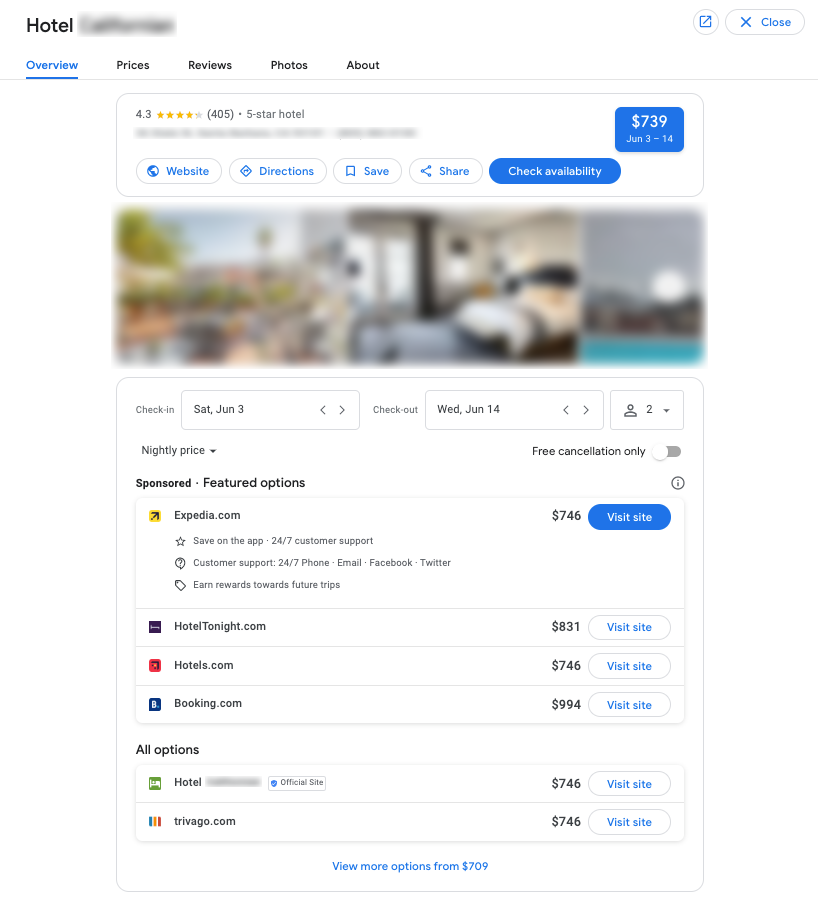
          Hotel metasearch engines are just like other metasearch engines, but with a narrow focus on rates, inventory, and availability of hotel rooms. Hotel metasearch engines generate a list of rate options for a potential guest to choose from, pulling real-time data from various sources including your CRS/booking engine and online travel agencies (OTAs).

          Hotel metasearch engines make booking a room quick and simple for guests, reducing the frustration and tedium that can come from manual rate shopping. Guests can also book with the confidence of getting the best deal, since rates are easily comparable in the side-by-side format of hotel metasearch engines. These engines can even automatically include discounted rates from exclusive packages and other offers, making it even more appealing for a guest to book through metasearch channels. 

          There are a number of hotel metasearch engines out there, including Google Hotel Ads, Kayak, and Trivago. Each engine works a bit differently, but they all share the same purpose of aggregating room rates from various websites into one list. Here’s an example from Google Hotel Ads, though most hotel metasearch engines have a similar look.

          To ensure that your official rates are included by these hotel metasearch engines, it’s vital that you connect with a metasearch partner. If you want to learn more, check out our post on metasearch basics. 

          Takeaways

          If you’re not on hotel metasearch, you’re missing out. Metasearch engines are more detailed than standard search engines, scanning through appropriate resources and pulling out a list of the most important and relevant information. For hotels, metasearch engines are able to provide a list of real-time rates to potential guests, simplifying the booking process and increasing the likelihood of a stay at your hotel. 

          If you’re interested in learning more about hotel metasearch or ready to partner, contact Metadesk.

          The Evolving Landscape of Performance Marketing: Embracing Change for Success

          SHARE:

          In today's rapidly evolving digital landscape, the field of marketing has undergone significant transformations. Among these changes, performance marketing has emerged as a dominant force. This data-driven marketing approach has revolutionized how businesses reach and engage with their target audience, delivering tangible and measurable results. 

          However, performance marketing itself is not immune to change. It is constantly transforming and adapting to the ever-evolving marketing landscape.

          Shift from Traditional to Digital Marketing Platforms

          Performance marketing previously relied on channels such as print, television, and radio. However, with our new digital marketing platforms, the focus has shifted toward online channels like search engines, social media, and email marketing. These digital platforms offer greater targeting capabilities, allowing marketers to reach specific demographics and track the performance of their campaigns more effectively.

          Rise of Marketing Data and Analytics

          Data and analytics have become the backbone of performance marketing. With technological advancements, marketers now have access to unprecedented data, enabling them to make informed decisions and optimize their marketing strategies in real time. By leveraging data analytics, marketers can analyze consumer behavior, identify patterns, and personalize their marketing efforts for maximum impact. 

          To optimize your business's data most effectively, ensure you have transitioned to GA4. 

          Integration of Artificial Intelligence and Machine Learning

          Artificial intelligence (AI) and machine learning (ML) have revolutionized performance marketing by enabling marketers to automate and optimize various processes. AI-powered algorithms can analyze vast amounts of data, identify trends, and deliver personalized consumer experiences. Moreover, machine learning algorithms can continually learn and adapt, enhancing campaign performance over time. Integrating AI and ML in performance marketing has significantly improved targeting precision and efficiency.

          Shift towards Personalization in Marketing

          Today's consumers expect personalized experiences from brands. Performance marketing has responded to this demand by delivering highly targeted and personalized messages. By leveraging consumer data, marketers can create tailored campaigns that resonate with individuals on a deeper level. Personalization not only enhances customer engagement but also improves conversion rates and customer loyalty. 

          Check out the power of community marketing in our latest webinar on specific ways to showcase this personalization for your property.

          Emphasis on Influencer Marketing

          Influencer marketing has emerged as a powerful tool within performance marketing. Consumers increasingly value recommendations from trusted individuals over traditional advertising. Influencers, with their loyal and engaged audiences, can drive brand awareness, generate leads, and boost conversions. Performance marketers are now partnering with influencers to leverage their reach and credibility, effectively reaching new and niche markets.

          The Growing Significance of User Experience

          User experience (UX) has become a critical factor in performance marketing. Businesses are realizing that providing a seamless and intuitive experience across all touchpoints is essential for success. Every aspect of the user journey affects performance, from website design to landing pages and mobile optimization. Performance marketers are investing in UX optimization to ensure a positive user experience that translates into higher engagement and conversion rates. 

          Performance marketing is undergoing a profound transformation driven by technological evolution and consumer expectations. Digital platforms, data analytics, AI, personalization, influencer marketing, and user experience are just some of the factors shaping the future of this dynamic field. 

          By embracing these changes and staying agile, businesses can leverage the power of performance marketing to drive growth, connect with their audience on a deeper level, and achieve measurable results in an ever-changing marketing landscape.

          Website Landing Page Best Practices For Hoteliers 

          SHARE:

          In the competitive landscape of the hospitality industry, hotels need to leverage every opportunity to attract and convert potential guests. One essential component is the hotel landing page. These dedicated web pages play a crucial role in guiding users through the guest journey, from initial interest to completing a booking. In this blog post, we will explore the importance of hotel landing pages, their key elements, best practices for design, and integration with digital marketing campaigns. 

          What Is a Landing Page?

          A landing page is a stand-alone web page specifically designed to capture the attention and prompt action from visitors. It serves as a dedicated entry point for users who click on a specific advertisement, search engine result, or marketing campaign. Unlike a website's homepage, a landing page is focused on a specific goal, such as promoting a hotel offer, package, or event or encouraging visitors to take a particular action, such as booking a room, signing up for a newsletter, or filling out a form. Landing pages are designed to be concise, persuasive, and highly targeted to maximize conversions and drive designed outcomes.

          Understanding the Importance of Hotel Landing Pages

          Hotel landing pages serve as the entry point for potential guests and are designed to capture their attention, engage them with persuasive content, and ultimately lead them to take action. They provide a focused and tailored experience, highlighting the unique selling points of the hotel and its offerings. By optimizing landing pages, hotels can maximize conversions, ultimately driving bookings. 

          Hotel Landing Page Best Practices 

          Best practices for a landing page involve optimizing various elements to enhance its effectiveness in capturing visitors' attention and driving conversions. Here are some key points to consider. 

          1. Call-To-Action

          Call to action is one of the most important features of any hotel landing page. Also known as CTAs, they offer actionable direction for the user. Without a clear CTA, users can be confused and as a result, you will see increased bounce rates, shorter sessions, lower conversions, and a less-than-ideal landing page experience. 

          1. Clear and Compelling Headlines 

          Headlines are essential components of any landing page. They quickly and easily tell the user what that landing page is about and can convey the value the page can offer them. Headlines also offer SEO benefits to help crawlers understand who the page is created for. 

          1. Social Proof

          Humans are social creatures who seek validation from others to make decisions. Visitors will look to others to make important decisions, such as booking a room. Make sure to include your hotel ratings and testimonials when it matters to page visitors the most. 

          1. Captivating Visuals 

          Users will look at graphics and pictures to help conclude if your hotel, packages, and amenities are the right fit for them. For most, pictures are more important than copy. So ensure you can tell a visual story alongside captivating and compelling copy.  

          1. Consistent and Compelling Copy 

          The text on the page matters. A lot. Unfortunately, we have seen too many hoteliers hire lackluster writers who do not convey the real value of their hotel. When it comes to good copy, it has to be concise, branded, and value-driven. Ask yourself, "Is my website copy true to my brand? Can it quickly convey value?" If you answer "no" to either of those questions, it is time to revisit your copy. 

          1. Intuitive Design

          Good design offers easy navigation and puts the right information in front of the user at times when it matters most. Good design will captivate your visitors and compel them to explore other parts of your website. This can establish strong relationships between you and your visitors. Ultimately resulting in lower bounce rates, greater conversion rates, and higher session duration times. 

          1. Don't Forget About Mobile 

          Mobile users have consistently been increasing over the last decade. Yet, the mobile user experience is still heavily neglected by hotels. If you are running any sort of social campaign, this is likely the very first user interaction. Make sure it offers a good user experience with these critical points: 

          • Responsive Design Elements 
          • Fast Load Time
          • Intuitive Mobile Navigation Layout

          Conclusion

          Hotel landing pages are crucial for attracting and covering potential guests in the competitive hospitality industry. These dedicated web pages serve as entry points, capturing visitors' attention and guiding them toward action. By creating well-thought-out landing pages, hotels can maximize conversions and drive bookings. Best practices for effective landing pages include clear CTA's, compelling headlines, persuasive and concise copy, social proof elements, captivating visuals, and straightforward & intuitive design. Following these practices helps hotels create engaging landing pages that drive conversions and achieve success in the hospitality industry. 

          Keep Reading