How A Full Marketing Funnel Helps Boost Your Facebook Ads

SHARE:

Have you ever wondered how both a prospecting and retargeting campaign can help move your potential customers through the funnel and eventually lead to conversions? Keep reading to learn how we use this in our Facebook ads and the results we have seen.

The marketing funnel starts at the top with awareness. Awareness campaigns help educate your audience on your hotel, product, or anything else unique about your company that will help you stand out from the crowd. Usually this can include amenities, activities, or experiences you offer at your hotel that will make it enticing for the next person to learn and eventually book with you. In awareness campaigns we utilize lookalike audiences which is a segmentation tool that finds people whose demographics and interests are similar to your current followers. We also use Adara audiences that have specific audiences that we can target based on their interests, hotel experiences, location, travel, and more. There is also detailed targeting and location targeting that helps us get the best results with our ads.
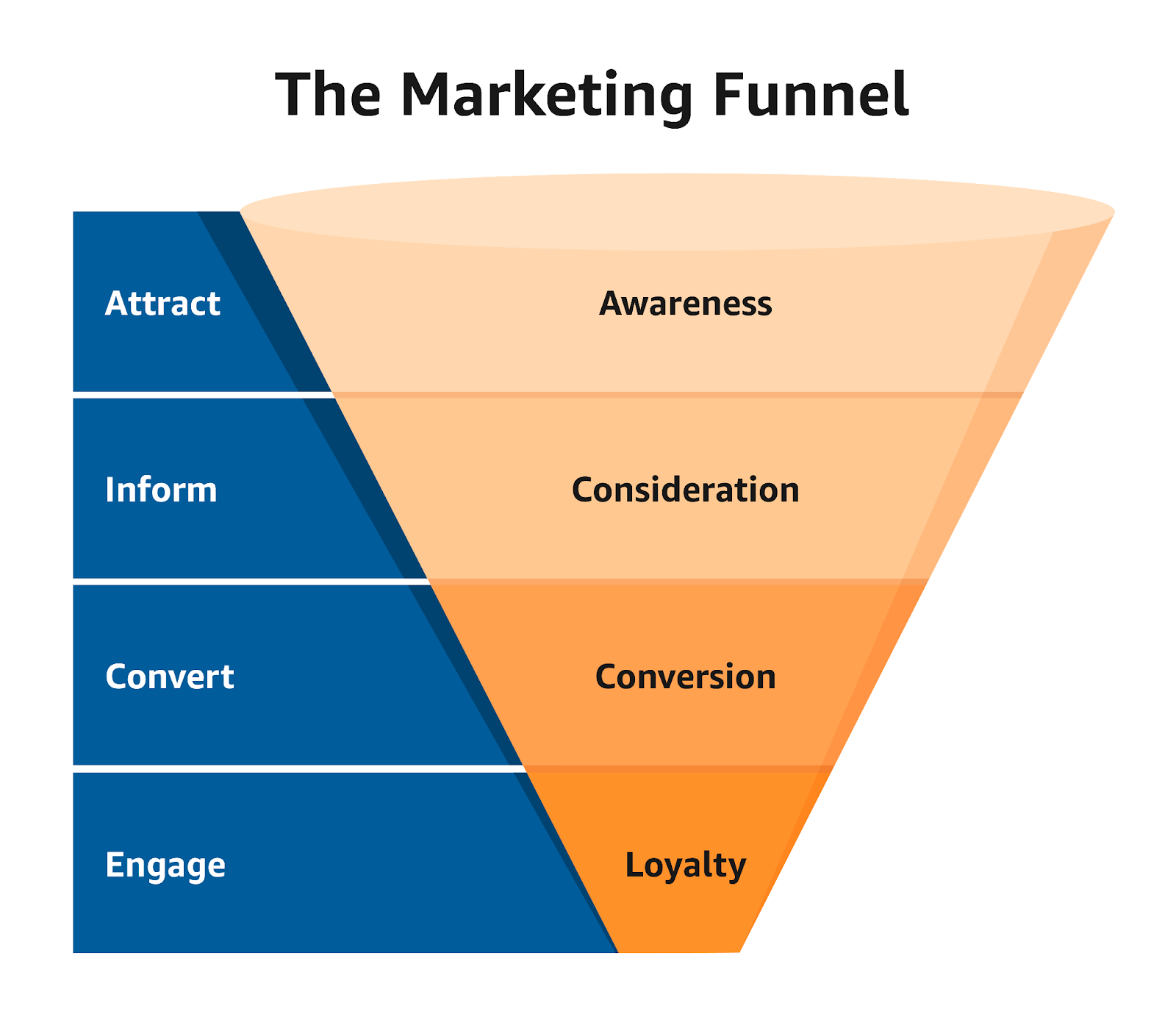
Then we go into consideration. Consideration can include ads or Facebook posts. You can go into more detail about your hotel, product, or service that will make your potential customer consider buying from you. 

Next, we try to convert our audience through Facebook ads. This is how we move people through the funnel to eventually booking with us. This would be in a retargeting campaign where we try to attract that user who showed interest and target them and remind them about us. In retargeting, we promote ourselves and usually offer some kind of incentive such as an offer, deal, or discount code to bring them in to eventually converting. When it comes to targeting we utilize website visitors, social media engagement, or customer lists to remarket to potential customers.

Lastly, we have engaging your audience on Facebook ads. This could involve customers interacting with your ads and leaving positive feedback about their experience with you or this could also include boosted posts on Facebook to get more engagement and interest in what you are promoting or offering. 

Below we will show some data from our hotels’ Facebook ads campaigns that use this full funnel approach and how it helps them move potential customers through the funnel and to eventually convert. The data is shown from the whole month of July. 
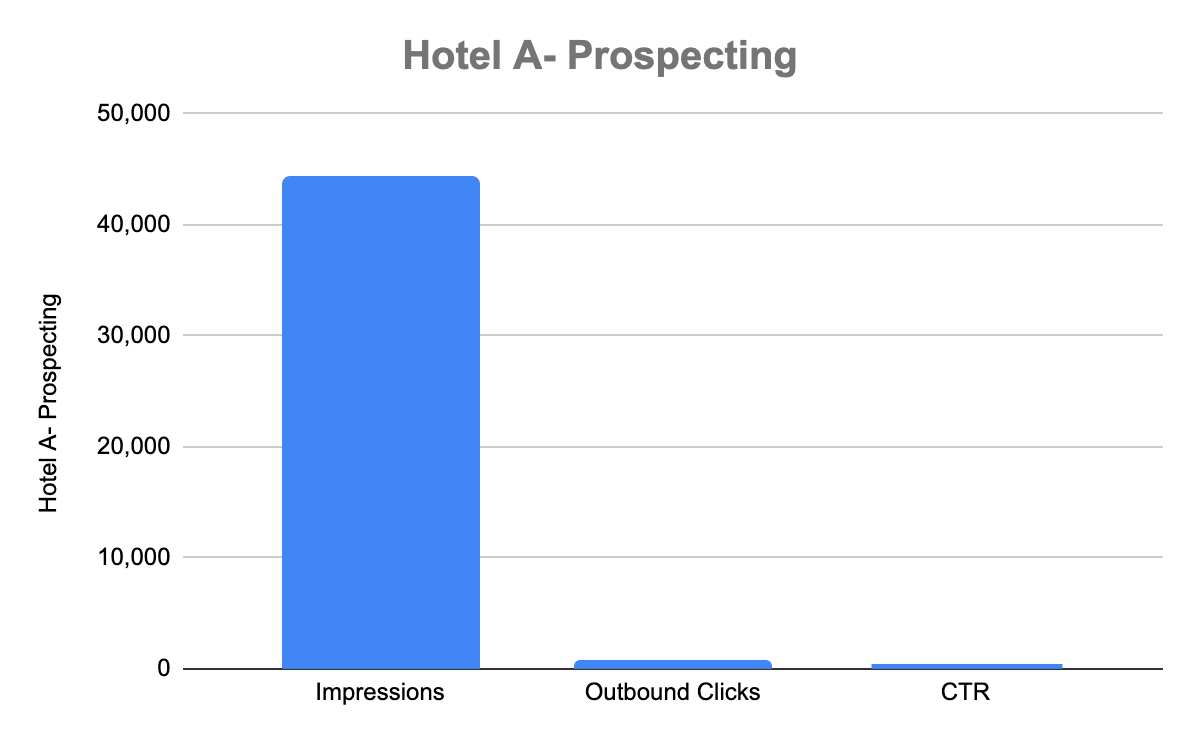
Hotel A received 44,036 impressions, 519 outbound clicks, and a 7.16% CTR. 
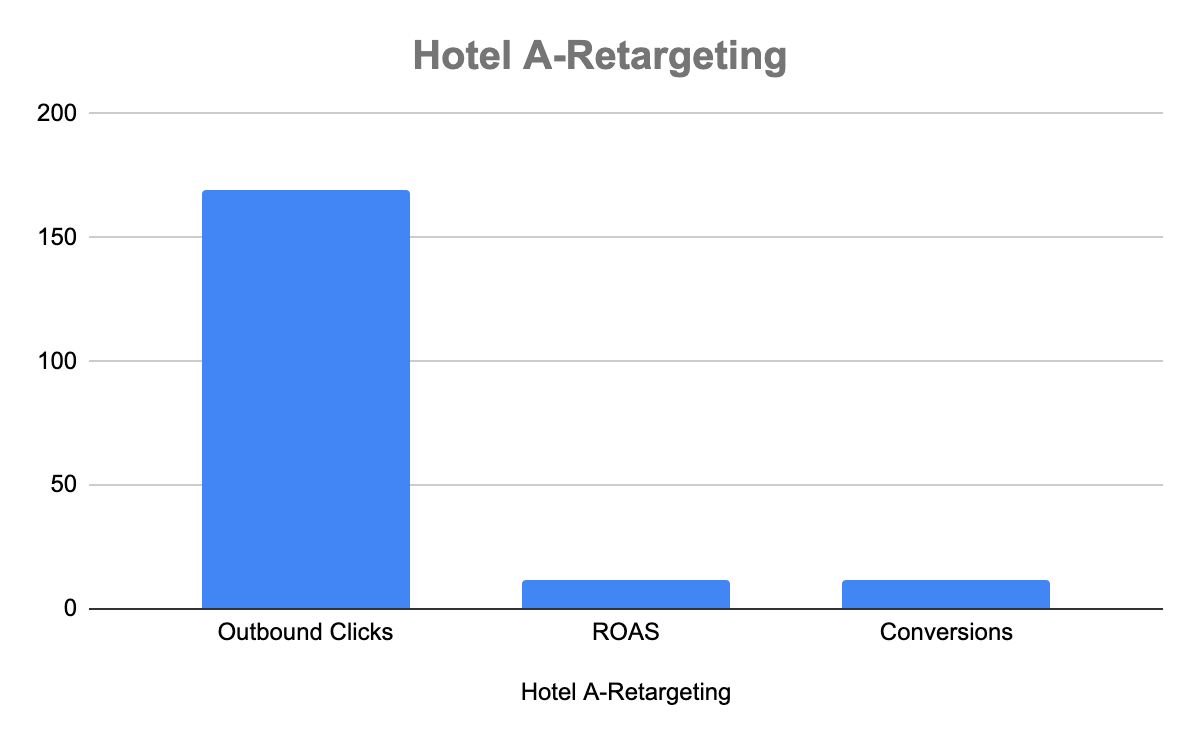
Then for retargeting we saw 169 clicks, 11.58x ROAS, and 12 conversions.

Then we move onto Hotel B that also uses this funnel approach. 
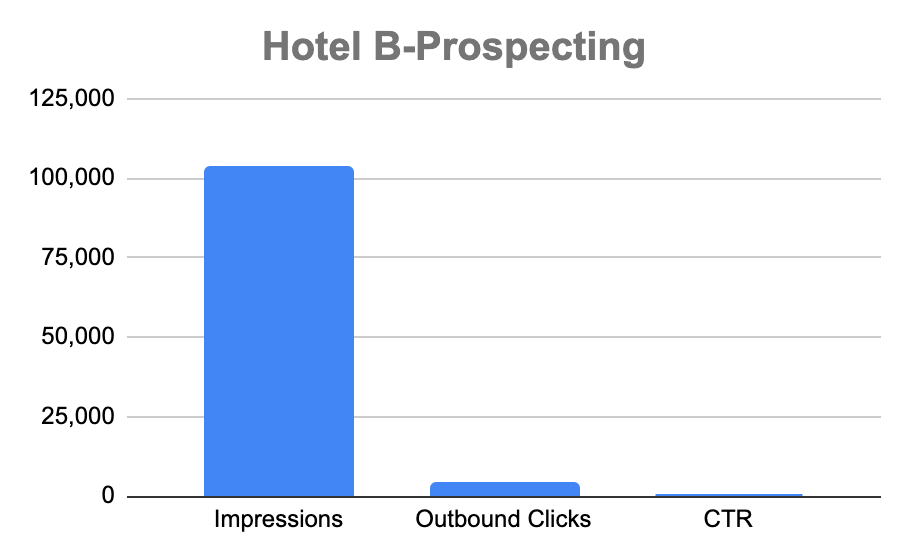
In this prospecting campaign we got 103,303 impressions, 3,943 outbound clicks, and an 8.58% CTR.
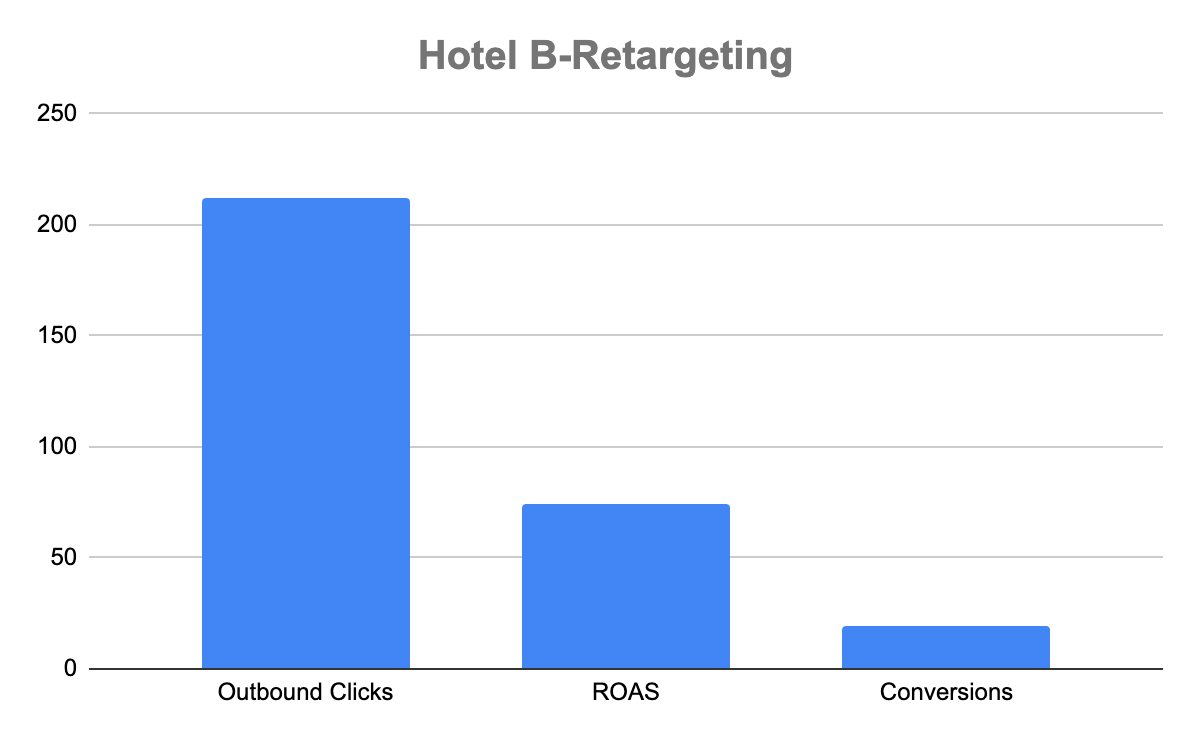
In retargeting we got 212 outbound clicks, 74.54x ROAS, and 19 conversions. 

How were both of these hotels so successful in their Facebook ads campaigns? First, they had their prospecting campaign. This campaign included details about the hotel, experiences, and special features. Then they had the retargeting campaign that features special events, promotions, or limited time offers to hook in their customer in booking with them. Then to keep engagement with past, present, and future customers they post regularly on their social media and utilize boosted posts that promote an offer or something that is exclusive to either educate their audience or remind them to book with them.

The marketing funnel approach works to move people through the funnel to converting with your hotel, product, or service you are offering. Make sure you stand out from the crowd and show off images of your property, special features, amenities, and exclusive offers. Is there a deal you are offering that you don’t want people to miss? Promote the deal, but also focus on the experience that someone can have at your hotel. What does it feel like to stay there? What experiences, adventures, or activities near your hotel are there for your guests? 

Hopefully this has provided a better understanding of the marketing funnel and how to best use it for successful hotel Facebook ad campaigns. Contact us today to get started on your hotel’s Facebook advertising strategy!

Best Practices for Facebook Ad Optimization

SHARE:

Facebook is not just a social site to connect with friends and family, it is now a platform used by many businesses to promote their products and services. Facebook Ads have proven to be one of the most effective ways to promote your business and get your CTA to the appropriate consumer. But, are you creating content for this platform that will be successful?

Download our free ebook that will tell you everything you need to know about Facebook Ad Optimization, including copy analysis and the value of successful Facebook Ads.

Download EBook

  • This field is for validation purposes and should be left unchanged.

4 Facebook Ads Best Practices For Images

SHARE:

Facebook advertising is currently one of the most popular ways to advertise. Why is that? Because, if you know how to create Facebook ad images that drive traffic to your primary business goal, they can be insanely effective. 

This article contains four best practices for creating and selecting Facebook ads images that will be creative and effective. In running large amounts of Facebook ads each year for our clients here at GCommerce Solutions, we took a look at the top performing Facebook ad images from the previous year to determine not only which types are performing well, but also the actual data that proves these best practices to be true.

Official Ad Best Practices From Facebook

  1. Opt into Facebook Campaign Budget Optimization

Campaign budget optimization (CBO) automatically manages your budget to allow for the best results. Daily budgets or lifetime budgets can be set for Facebook Ads campaigns, depending on your needs and how much you want to specify in your budget.

  1. Opt into Detailed Targeting Expansion

Detailed targeting expansion provides access for Facebook to reach a broader group of people than what you define in your targeting selections. Facebook is then able to make updates that reflect any findings for better performance outside of the defined targeting selections. 

  1. Opt into Automatic Placements for Facebook Ads

Automatic placements through Facebook increase ad exposure to best utilize the campaign’s budget. Depending on the settings of your campaign, automatic placements allow Facebook to expand the different channels your ads can be seen on. 

  1. Manage Your Facebook Ads’ Creative Fatigue

Creative fatigue is the result of your audience seeing the same images or videos too many times across your ads. This can lead to negative impacts such as lower engagement.

It is important to note some of Facebook’s general ad best practices to keep in mind before choosing your images. However, it may not always be enough to simply follow the ad best practices provided by Facebook. For example, utilizing budget optimization and automatic placements does not always lead to better results without also optimizing your ad images.

4 Facebook Ad Image Best Practices

1. Highlight Your Hotel’s Amenities In Facebook Ads

Does your property have a unique pool? Easy access to the beach? Beautiful surrounding scenery? Highlight it! It’s not always the rooms that drive guests to a specific hotel. In our research, ads with images of pools received a 30% higher CTR and 134% more clicks than non-pool ads running side by side.

2. Show Off Your Hotel’s Activities

Potential guests like to see what they will be able to do in the area while they are staying at your property. By highlighting things to do in your hotel’s Facebook ad images, these future guests can get a glimpse of activities that happen around the area. Based on our research, ad images that focus on activities have 154% higher engagement than ads with other images running within the same campaign.

3. Eat With Your Eyes

Whether a breakfast deal or various types of on-site dining, food sells. Posts that are about various restaurants where the focus of the ad is on the food itself drive guests to want to visit the restaurant. Outside shots of the restaurants are nice to add, but those focused on the food itself perform better. These food focused ad images have a 50% higher reach than those that aren’t food focused when run at the same time, side-by-side.

4. Don’t Keep the Property a Mystery

Having Facebook ads images that focus on the outside of the property can be eye catching and intriguing for potential guests. By seeing these types of images, guests are driven to the property’s website to learn more about where it is located, which can then result in them wanting to visit and stay at that property. These ads that focus on the outside images of the property have an 88% higher amount of clicks and a 35% higher CTR than ads with other images that are running within the same Facebook Ads campaign.

Hopefully this has provided a better understanding of what types of images perform well for Facebook ads for your hotel. Remember that not all best practices are the same across the board, so it is important to test and analyze what does well for you and among your audiences. And don’t be afraid to test new images for new campaigns – you never know what may perform well for you! Contact us today to get started on your Facebook advertising strategy!

Your Guide To Facebook Ad’s "Learning Limited" & How To Beat It

SHARE:

It seems like each week Facebook is releasing new updates to their ads platform, stronger guidelines to protect user privacy, and more optimization capabilities than ever before. If you are a fellow advertiser on Facebook, you are no stranger to A/B testing and the never-ending journey of finding the optimal targeting, ad copy, imagery, and headline combinations. 

However, the quest for continuous improvement could also be leading to the demise of your Facebook ad performance. Enter: the Facebook Learning Phase.

What is the Learning Phase In Facebook Ads?

The Facebook Learning Phase is the time period where Facebook is using its machine learning capabilities to optimize your results. This is achieved by Facebook showing your ads to different audiences, at different times of day, and within different ad placements to determine the optimal delivery system. 

Facebook has a lot to learn about new ads, and during this Learning Phase Facebook performance is not considered stable. It’s recommended that Facebook advertisers spend no more than 20% of their budget in the learning phase, as those ads usually encounter a higher CPA.

When Does the Facebook Learning Phase Occur and How Can You Exit?

The Facebook Learning Phase occurs whenever a new adset is created or a significant edit has been made. Edits that will force your ad sets into the Learning Phase are listed below.

Campaign

  • New campaign
  • Budget
  • Bid amount
  • Bid strategy

Ad sets

  • Targeting
  • Placement
  • Optimization event
  • Adding new creative
  • Bid strategy
  • Bid amount
  • Budget
  • Pausing for over 7 days

Ads

  • Any change (imagery, copy, URL, etc.)

When Will Your Ad Set Exit the Learning Phase In Facebook Ads?

Once your Facebook ad set performance is considered stable, you will exit the Learning Phase. Stable performance generally means that your ad set has received around 50 optimization events within a 7-day period. Your optimization event will depend on what you have set at the ad set level. This could be 50 purchases, 50 leads, 50 landing page views, 50 add-to-carts, etc. Whichever one you choose, your optimization event should be congruent with your performance goals.

If your Facebook ad sets don’t generate enough optimization events within that 7-day period they will be launched into the dreaded Learning Limited phase.

What Does it Mean to be Stuck in Facebook Ads’ Learning Limited?

When your Facebook ad sets are stuck in Learning Limited, it means you haven’t generated enough optimization events to exit the Learning Phase and become Active. For many advertisers, the Learning Limited Phase is a limbo that should be heavily avoided. Not only will your Facebook ads have a higher CPA, but they won’t be fully optimized toward the best-performing audiences and placements. When Facebook doesn’t have enough data, it can’t accurately predict the best ad placements and positioning which could make your performance suffer.

How To Fix Learning Limited in Facebook Ads

While the Learning Limited phase can be hard to exit, it’s not impossible. Facebook has outlined a few tips that could help catapult your ad sets into the active phase.

Tip 1 - Avoid Excessive Edits In Your Facebook Ads Campaigns

Making constant changes and edits to your Facebook Ads campaigns is easily the No. 1 mistake most advertisers make when it comes to being stuck in Learning Limited. Every time you make an edit, the system essentially has to start over. So while you think you are improving your campaigns by making optimizations, you are actually further delaying your exit from the Learning Phase and wasting valuable ad dollars.

However, this is not to say you should never optimize your Facebook campaigns and make edits. On the contrary, testing new creatives, ad copy, and targeting is how Facebook learns about your ad performance. Testing is essential to performance success. The key is to simply find the balance between making changes and letting your campaigns simmer. 

At GCommerce, we are constantly optimizing our ads and running A/B tests, but last year we found that we were stuck in Learning Limited a lot. We discovered that the main cause was excessive editing. At this discovery we implemented new procedures to only edit campaigns once per week (in most cases) and with this change we quickly saw that we were able to exit the learning phase quicker. 

Tip 2 - Combine Facebook Ad Sets

Are you running multiple ad sets within your Facebook Ads campaigns? This could be keeping you in Facebook’s Learning Limited. When too many ad sets are run at once they begin to take away from each other. This results in less deliveries for each ad set, longer time spent in the learning phase, and more budget spent on unstable ad sets.

Instead, if you are running multiple ad sets with similar targeting or audiences, Facebook recommends combining these into one ad set with a larger budget and audience to deliver to. Larger audiences will give Facebook more options for delivery which can help you exit the learning phase and Learning Limited much quicker.

If you are unable to combine ad sets, try increasing your current audience size by adding in more interests, geographical locations, or other targeting capabilities or taking away harsh parameters that might be restricting your deliverability.

Tip 3 - Increase Facebook Ad Campaign Budget

While this option is certainly not always an option, the number one recommendation to remove your ad sets from the Learning Limited phase is to increase your Facebook budgets by at least 25%. Most advertisers don’t have the ability to increase budgets at whim, but if you are able to this can help with exiting the Learning Limited phase.

Tip 4 - Change The Facebook Ads Campaign Optimization Event

If you’ve tried all the tips above, you could consider changing the event you are optimizing for altogether. If you are optimizing for purchases, but can’t get 50 purchases in a 7-day period, try changing that event to something higher up in the funnel like initiates check-out or add-to-cart. The further down the booking funnel you go, the lower your conversion events will be. Changing to a higher-funnel event will allow you to generate enough events to exit the Learning Limited phase. Note that you cannot change the optimization event on a published Facebook ad set, you will need to duplicate your existing ad set for this.

Final Takeaways on Facebook’s Learning Phase & Learning Limited

We’ve covered a lot in this blog post, and managing the Facebook Learning Phase and Learning Limited can be overwhelming for a lot of advertisers. There is no right way to create success with your Facebook campaigns. Ultimately you need to evaluate your own campaign performance and define what success means to you. It’s important to also take these Facebook phases with a grain of salt; you might be stuck in  Learning Limited, but maybe your performance is the best it’s ever been and you are showing a high ROAS. It’s very possible to maintain successful campaigns without being fully optimized and stable. 

Let the experts at GCommerce help get your Facebook advertising to where it needs to be. Connect with us today for more information!

Google Expanded Text Ads Discontinued

SHARE:

Google recently announced yet another fundamental change to their paid search advertising product - the discontinuation of Expanded Text Ads.

Right now, there are a few different ad types available on Google Ads. Each ad type is automated in some way, but Expanded Text Ads offer some of the most direct control available on the entire platform. 

Expanded Text Ads allow advertisers to choose a particular combination of headlines and descriptions to show up in a search, providing a great opportunity for very specific messaging and branding. However, creating and editing Expanded Text Ads will no longer be supported as of June 30, 2022. 

With Expanded Text Ads disappearing, search marketers will now have to focus their efforts on Dynamic and Responsive Search Ads. These ad types still allow marketers to write copy and choose messaging to some extent, but the opportunity is smaller than that of Expanded Text Ads. These more automated ad types remove the ability to choose exact combinations of copy, relying far more heavily on machine learning and other AI in the interest of improved ad performance. 

But is it actually worth it?

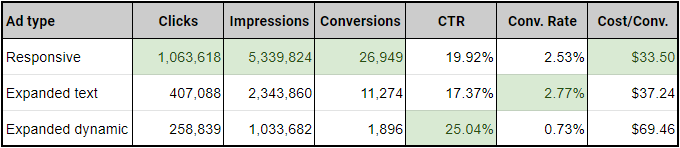
Based on this sample of our client data, it seems like more automated ad types do indeed perform better in almost every way. Even when Expanded Text Ads perform the best, they aren’t very far ahead. With this information, it’s easy to understand why Google is moving away from Expanded Text Ads. Even if the platform pushes Responsive Ads more often, the interaction rates between these two types are pretty similar. Since Google is already interested in automation, the performance of Expanded Text Ads likely isn’t significant enough to keep them around.

However, it’s impossible to predict how this decision will actually affect performance in the long run. Maybe we’ll see a massive boost for Responsive Search Ads without the added competition of new Expanded Text Ads. Maybe users will see lower returns until Google’s AI learns how to deal with the new landscape. Maybe there won’t be a significant change at all, and we’re all just overreacting. 

In any case, marketers have no control over the decision. This will be an adjustment for all of us, and reactions have been sort of a mixed bag. Here’s what our search marketing team has to say about the upcoming Google Ads update.

“New standards and best practices will emerge as the industry figures out how to manipulate Responsive Search Ads effectively. It’s just a matter of keeping up with the changing landscape.”

- Cat Jones

“I’m pretty excited about what this means for the future. Change is the backbone of marketing, and this is just another opportunity for us to flex our problem-solving skills and adapt to the unknown.”

- Alex Scharpf

“The removal of Expanded Text Ads is an exciting new challenge. Advertisers will have to explore the best ways to optimize Responsive Search Ads, allowing for more variables and opportunities for testing.”

- Mike Orrison

“I think this is just the latest in a long trend from Google. Learning how multiple Responsive Search Ads interact within a singular ad group should be something all search marketers explore and test as Expanded Text Ads are phased out.” 

- Patrick Buckner

“The only concerns I have are the lack of robust reporting and slightly less control that come with Responsive Search Ads. I'm hoping that Google will continue to build out its reporting capabilities prior to the sunsetting of Expanded Text Ads in 2022.”

- Lisa McGivney

“Responsive Search Ads have always been a means of testing new headlines and descriptions, and they’ve provided valuable knowledge as to what works and what doesn’t. If control becomes a challenge, we can still implement qualities of Expanded Text Ads in our Responsive Search Ads.”

- Alex Horrocks

“If needed, we can force Expanded Text Ads into a Responsive Search Ad by pinning specific headlines and descriptions. Unless the pinning function goes away or changes, I can't disagree. The change gives us more options and ways to test all at once; I guess we’ll see how it all goes in 2022.”

- Jael Dugdale

We can speculate about the future, but no one knows for sure what the upcoming Google Ads update will mean for the industry. This isn’t the first time Google has made a move towards automation, but every new change brings new challenges. For now, GCommerce Solutions will continue to learn and evolve in order to provide the best possible results for our clients. Contact us for more on our thoughts and plans for the future.

Your Hotel Has No Vacancy, What Is The Best Digital Marketing Strategy?

SHARE:
  • No vacancy sign

Many hotels are seeing a huge bounce-back in demand and occupancy this summer as travelers take advantage of openings from restrictions and take those long-awaited trips. If you are a fortunate hotel that currently is at full occupancy, what should you be doing with your marketing? Should you decrease your budgets? What type of messaging should you be focusing on? In this article we will talk about some relevant examples from the past and provide some suggestions on how your hotel can best market at times with full occupancy.

Examples From Seasonally Closed Hotels

In thinking about this, it seems very similar to the seasonal properties that GCommerce has worked with nearly since our existence. Many destination properties in the northeast, mountain locations, near the arctic circle, etc. generally close down for up to half the year. During this time, they do not accept guests and therefore they have some similarities to when guests are unable to book at a hotel that does not have capacity. Traditionally, many hotels would discontinue marketing their properties during these times, but we always strongly recommend against that. The reason is that many of those destinations have a long booking window where people do a lot of research prior to booking. This is another similarity if your hotel is at capacity. Due to increased demand and limited availability as the hospitality sector continues to recover, people are increasing their booking windows and doing more research prior to booking with some experts recommending any travel from now to 2022 should start to be planned now.

Hotels Get More Revenue When They Market With No Availability

Over the course of time, we’ve done a lot of research to see if hotels perform better when they market when they are closed. Should we be running marketing when hotels have no availability? The results below are from GCommerce clients in the years preceding the pandemic and any impacts on demand that may have caused and show years in which we marketed while they were closed compared to the previous years when they did not.

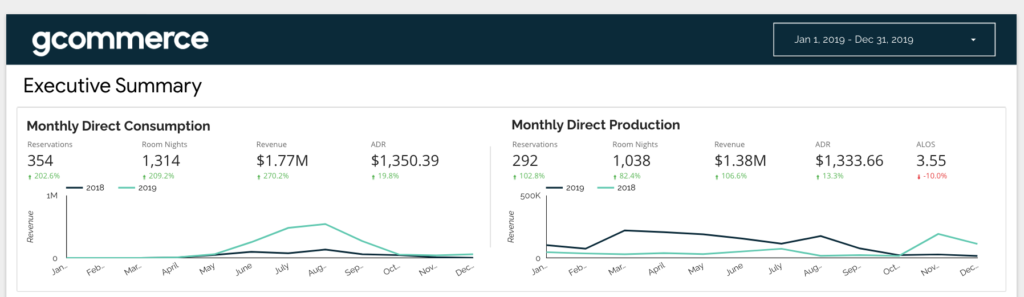
With this particular hotel, they only reduced their budget by about 30% from their high season to their completely closed season leading up to 2019. In 2018, they ran no marketing at all while they were closed. You can see the huge jump in produced revenue and how quickly they got a start to the year as people were booking early.

Screenshot of monthly data from 2019

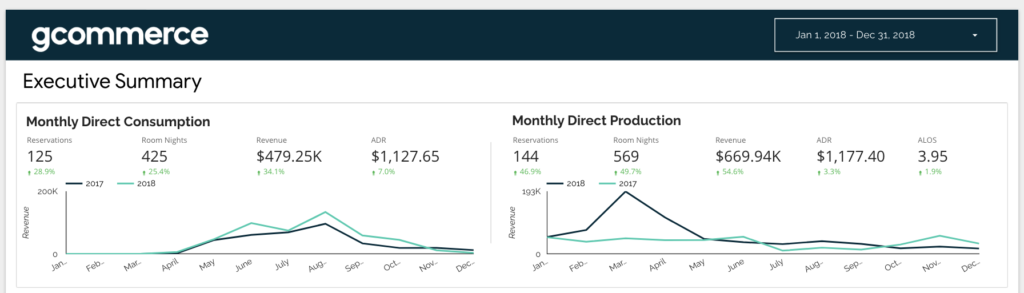
This hotel ran no marketing in 2017 but reduced their budget 50% from their high season to their completely closed season leading up to 2018. Again, we see a large jump in produced revenue at the start of the year before the hotel is even accepting guests and their consumed revenue was able to outpace the previous year.

Screenshot of dashboard showing monthly production data for 2018

How To Interpret This Data For Marketing While Hotels Are At Full Occupancy

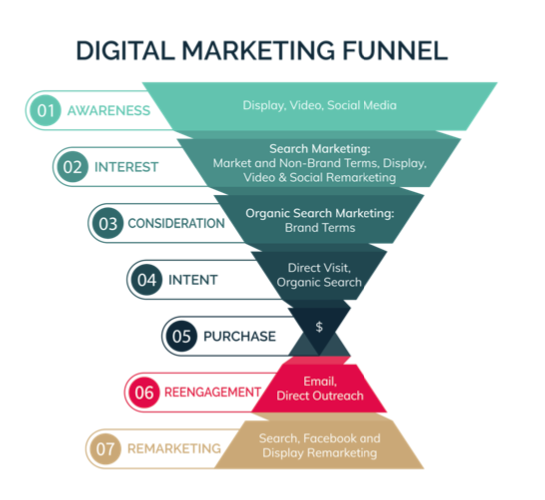
Both of these hotels had something in common in that they didn’t start accepting guests until it got warm enough for people to travel to those locations. Hotels at full capacity should have a similar idea for when they have openings. If your hotel is completely booked through the summer, but you’re in need of mid-week bookings in the fall, that is something you can start targeting with your media. If we are still 3-4 months out from the need period, your hotel guests are probably still in the awareness or interest phase. Understanding that you should be targeting that part of the marketing funnel allows you to utilize the right platform and proper messaging to try and target that audience.

Sales funnel visual

Target Hotel Guests For Future Reservations

With the example hotels above, we started our off-season marketing in November and December the year before focusing the majority of our budget on display and Facebook ads geared towards attractions in May when the hotels typically started accepting guests. As we moved through the winter, we shifted more of our budget down the funnel to paid search marketing campaigns, and remarketing campaigns to target users who had been to the website with intent and did not end up booking. With such a large start in produced revenue, the hotel quickly had most of their major weekends and the summer booked by February or March. This allowed us to completely shift our marketing back towards Display and Facebook targeting the need periods later in the fall.

By increasing our budgets year-over-year with marketing during closed periods, both of these hotels were able to completely transform their targeting and bring in substantially more direct revenue, rather than relying on Online Travel Agencies. They also didn’t have to play “catch-up” through the year by spending more during the high-demand summer months to try and fill in those demand areas later in the fall and shoulder-season.

Hotels at full occupancy are in a similar position, they have the opportunity now to either:

  1. Shut down marketing due not being able to accept reservations
  2. Shift their marketing efforts to target need periods in the future

Which one will you choose? If you picked option 2, congrats, you’re going to position your hotel for success in advanced bookings which not only help you get reservations on the books for future months but also help you achieve the goal of a lower cost per acquisition like we prove in this recent blog post on fighting OTAs for direct hotel bookings. Now, here’s where we break down a few suggested methods to helping to drive advanced purchase bookings and fill up your future need periods:

  1. Set up custom audiences targeting website visitors looking for stays during your future need periods/specific advance dates
  2. Shift more budget towards top of funnel awareness campaigns across Facebook, Display and Paid Search
  3. Promote packaging, offers and messaging geared towards travelling during seasonal or future need periods
  4. Evaluate target audiences that travel during those need periods, if you’re looking to target during the school year you might have to shift your targeting, messaging and packaging away from families and towards couples and empty nesters for example. Dive into your 1st party data to identify common themes among travelers during those need periods from previous years
  5. Utilize audience tools such as Adara to target specific in-market audiences looking for travel to your market 60 to 90+ in advance of travel dates 
  6. Set up lifecycle email campaigns through Navis or Revinate to target guests that stayed during those months in previous years
  7. Launch metasearch advertising on channels such as Google Hotel Ads and Tripadvisor, where the majority of bookings are for stays 30+ days in advance

Still thinking about cutting back on media spend? If you still decide your business needs to cut down on media spend in the short term, consider shifting some of that budget towards the production of video and image assets for use in future marketing campaigns. Video continues to drive enhanced performance across channels including Display, YouTube, Facebook and many hotels still lack quality video assets.

No matter how your hotel is performing in the short term, it is always important to consider long term goals with your marketing campaigns and budget. If you have additional questions on how your hotel can best position itself for short term as well as long term direct booking strategies, please reach out to GCommerce. Our team of hotel direct booking experts are standing by to help.

Keep Reading