Should You Market Your Hotel as Haunted? Discover the Benefits, Drawbacks, and Year-Round Considerations

SHARE:

The allure of haunted hotels is undeniable. From eerie ghost sightings to tales of restless spirits, a haunted reputation can draw in curious guests looking for a unique thrill. But should you embrace the supernatural and promote your hotel as haunted year-round? While many historic properties, such as the Stanley Hotel (famously linked to The Shining), have thrived by embracing their haunted histories, it’s not a decision to take lightly. Here are the pros, cons, and key considerations to help you decide if marketing your hotel’s ghostly side is the right move.

Pros of marketing a hotel as haunted

1. Capitalize on the unique history of your hotel

Many hotels, especially older ones, have intriguing backstories. By promoting ghostly encounters or unexplained phenomena, you can offer guests a deeper, more immersive experience. This can lead to greater interest in your hotel’s history, transforming it from a simple place to stay into a destination for history buffs and paranormal enthusiasts alike.

2. Attract niche markets to your hotel

There’s a dedicated audience for ghost stories and paranormal experiences. People travel from all over to stay in hotels with a haunted reputation. Not only do these guests pay for rooms, but many are also willing to shell out extra for ghost tours, special haunted packages, or even ghost-hunting equipment rentals. Embracing your hotel’s haunted status can unlock a niche market that’s ready to pay more for a memorable (and spooky) stay.

3. Leverage haunted packages as a year-round appeal

While fall is typically associated with all things spooky, hauntings aren’t tied to a particular season. You can leverage your haunted reputation year-round by offering themed experiences, such as winter ghost retreats or summer night tours. This could help you drive traffic during the slow season and keep guests coming back no matter the time of year.

4. Build unique haunted experiences that differentiate your hotel

A haunted hotel opens up a world of possibilities for crafting engaging guest experiences. Whether it's guided ghost tours, paranormal investigations, or interactive storytelling sessions around a fireplace, you can offer unique packages that set your hotel apart from competitors. These experiences could become a regular part of your business, adding value and keeping guests intrigued.

Cons of marketing a hotel as haunted 

1. Haunted experiences are not for everyone

Not all guests are thrilled by the idea of spending the night in a haunted room. Some travelers may find the idea unsettling or be completely turned off by ghost-related themes. It’s essential to know your audience—are they the type who would enjoy a paranormal adventure, or would they be more likely to cancel their reservation if they hear about your haunted history?

2. Dark hotel histories may backfire

Not all hauntings are playful or lighthearted. If your hotel’s ghostly tales stem from violent or tragic events, marketing these stories could be risky. Darker histories may alienate guests or even lead to negative press. It’s essential to strike a balance between sharing intriguing stories and avoiding ones that could be perceived as distasteful or upsetting.

3. The risk of being seen as a gimmick

In some cases, promoting a haunted hotel may come off as nothing more than a gimmick. For skeptics or those uninterested in paranormal activity, the idea could feel forced, leading to frustration or negative reviews. If your haunted reputation doesn’t feel authentic or well-researched, it might backfire.

4. Negative reviews if guests aren’t spooked

Do your hauntings happen often enough to build a sustainable narrative? If ghost sightings or unexplained events are rare, guests may be disappointed if they don’t experience anything during their stay. Managing expectations is key. Guests should feel like they’re getting a legitimate experience rather than being sold on something that rarely happens.

Key considerations before marketing a hotel as haunted

1. Know your hotel’s audience

Understanding your guests is critical. Are they likely to be excited by ghostly tales, or would they prefer a peaceful, relaxing getaway? One option is to survey current or past guests to gauge their interest in paranormal themes. Their feedback can help guide your decision on whether to embrace your haunted reputation.

2. Craft authentic, well-researched stories of your hotel’s hauntings

If you choose to promote hauntings, make sure the stories you share are well-researched and frequently reported. Avoid embellishing too much—guests will appreciate an authentic experience, even if the hauntings are subtle. Dive into the history of the spirits that may linger on your property. Who were they? How often are they "seen" or "heard"? What is the nature of the encounters? Vivid, real stories will be far more engaging than fabricated or over-the-top ones.

3. Consider the year-round appeal of haunted hotel experiences

Hauntings don’t have to be limited to October. Consider building packages or seasonal experiences that capitalize on ghostly themes throughout the year. Winter ghost retreats, spring paranormal investigations, and summer night ghost hunts could help keep guests engaged during different seasons. Flexibility is key to maintaining interest and appealing to a wider audience.

4. Balance hotel guest expectations

If you choose to market your hotel as haunted, be transparent with your guests. Some may want to know exactly what they’re signing up for, while others may prefer not to know the details. Offering different packages or room options—such as “haunted” and “non-haunted” sections—could be a creative way to appeal to both thrill-seekers and those who just want a comfortable stay.

So, to haunt or not to haunt?

In the end, only you know your property and your audience best. Whether or not you choose to embrace your hotel’s haunted history, there’s potential to craft unique experiences that keep guests engaged and coming back. If ghosts aren’t your thing, you can still explore partnerships with local haunted attractions, offering your hotel as a comfortable and safe base for those seeking thrills elsewhere.

Remember, being haunted isn’t a one-size-fits-all approach, but with careful planning and attention to your guests' desires, you can strike the right balance between spooky and serene.

 A collection of our haunted hotel properties

Here is a list of some of our renowned hotels known for being haunted, showcasing how they've woven their ghostly past into their identity—ranging from full immersive experiences and featured in their history to subtle mentions in their FAQs.

Remember, crafting unique experiences with careful planning can strike the right balance between spooky and serene. Let's talk about your next project.
Inbound - Report From the Field Day Two

SHARE:

By the afternoon of Day 2, Inbound becomes an exercise in mental stamina.  So. Much. Marketing.  

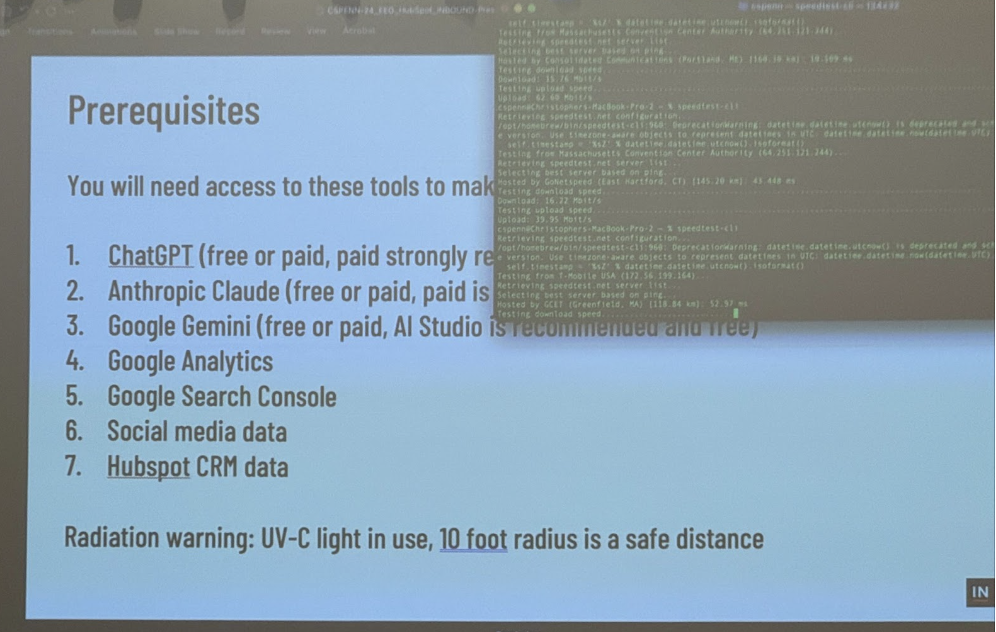
Whereas the first day was full of big concepts and big ideas, day two seemed more about getting down to business.  The first session of the day had some prep work on the screen when we walked in:

Hopped up on coffee and adrenaline, we followed along as the speaker used generative AI to map a data-driven customer journey.  He followed it up by building target customer personas and drafting new ads meant to plug holes in the customer journey.  Our notes are a fever dream of multi-modal AI prompts.  

For lunch, we enjoyed a bite-sized discussion with Kara Swisher talking about the dangers and promises of emerging technology.  Kara is a scion in the technology industry and her trademark combination of wit and insight were as advertised.  

Then it was back to the heavy content, as speakers tackled everything from SEO to attribution modeling.  

Of particular interest to us and our clients was the impact of AI on SEO.  It is clear that AI is eroding search traffic.  When potential guests search for content relevant to a hotel, the in-browser AI often provides effective answers, eliminating the need for the user to visit the property website.  We attended several sessions from industry leaders on how to break through the paradigm and rank within the AI answers.  This is the new frontier of SEO, and one thing is clear; entirely new tactics will be required to achieve relevance in an AI-driven world.

We learned about the new buyer journey, how to more effectively use creative in LinkedIn, how to integrate emerging technology responsibly and how to balance media across social advertising channels.  Our collective notes have reached 47 pages, and we still have a day to go.  Inbound is bountiful.

*No AI was harmed in the composition of this blog post.

Inbound - Report From the Field Day One

SHARE:

Day one is in the books for GCommerce and our partners at Inbound.  As expected, AI is in the spotlight as the technology moves from aspirational to operational.  The pace of innovation is exciting and daunting.  Moore’s law states that computers double in power every 18 months.  Today we learned that AI models are doubling in capability every 6 months.  It reminds us to never get stuck building future strategies on the limitations of today.

Transformational marketing technology is making its way into the hands of marketers at companies of every size. We learned how prospecting has gone from a human-led exercise in futility to an AI-led process of precision.   We learned how conversion-rate optimization can take on new meanings as technology enables the connection of dynamic guest profiles to their website experience - with jaw-dopping results.  We learned how AI will graduate in the coming year from accelerating our marketing organizations to transforming them.  The future is truly boundless.

Our love of Inbound can be described in this dichotomy.  While our heads were spacewalking in the stars, we were also grounded with content that can help us, and our clients, tomorrow.  No development necessary.

Google announced exciting new AI-driven ad targeting, available to those who know how to access it.  We heard compelling statistical data about what makes a successful email campaign, from headline to copy to imagery (quick takeaway - the hospitality industry has a LOT to learn).  We learned about how understanding psychological triggers can allow us to reposition copy for success, and how to build more efficient LinkedIn campaigns.  

Finally, we were grateful to hear that the issues our industry has with attribution tracking are not ours alone.  As browsers continue their regulation and relegation of cookies, the systems we have all relied on for tracking are breaking at their core.  Not only that, the traffic sources that have been a near constant for a decade are degrading.  From the opening session with the CEO and CTO of HubSpot, we heard that search volume will drop 25% in the next two years thanks to AI.  Social traffic is plummeting, in no small part because those channels are suppressing content that contains outside links (they want to protect their walled gardens).  

We concluded the day with a feast for the ages with our close partners - all of whom experienced Inbound for the first time.  We talked about our takeaways and how we all planned to prepare for 2025 budgets.  Most of all, we bonded over stories of hospitality, the industry we all love, newly relevant in the world of Inbound.  
If this all sounds like too much fun for us to have alone, sign up to learn more about our plans for Inbound 2025 and how you can join. 

Why Inbound: A Hotel Marketer’s Guide

SHARE:

It’s the evening before Inbound 2024, and as I sit in my Boston hotel room, I’m reflecting on the impact this conference has had on me and GCommerce over the years. I attended my first Inbound in 2016. At the time, GCommerce was a much smaller organization, and investing in educational conferences was pretty new to us. And all we knew about Inbound was that it was one of the largest marketing conferences in the world (even at that time), and that we wanted inspiration from outside our industry to ensure we stayed on the cutting edge of digital trends and consumer behavior. What we found exceeded our expectations and made our annual attendance more of a pilgrimage than a perfunctory event.  

To be clear, Inbound is hosted by Hubspot, and it is primarily a B2B-focused event. So you might think, “How is this relevant to hotel marketing?” The best way to explain it is by way of a few examples. 

Example #1 - The rise of voice search

Over the years in digital marketing, we’ve been faced with a few highly memorable changes in our space. One of the most transformative moments I recall was the rise of mobile and voice search. In 2015-2016, “search” as we knew it fundamentally changed.

Google Voice Search

Google announced a faster and more accurate acoustic model for voice search and dictation on Android and iOS devices. 

Amazon Echo

The Amazon Echo became the first mainstream smart home device in 2015. 

Voice search on remote controls

Some Sony remote controls released in 2015 had a voice search function that could be activated by pressing and holding the microphone button. 

Local voice search

Mobile searches surpassed desktop searches, which led to an increase in local voice search. This allowed retailers and marketers to target ads to local search users, even in specific geographic areas.

Inbound education

In 2016, two separate speakers provided a deep dive into voice search.  One of the speakers charted the rising impact of voice search and forecasted its importance for future marketing relevance. The other provided an educational deep dive, where she used examples from her role marketing a regional healthcare provider to demonstrate actionable tactics to better optimize for voice.

What did we do?

With the learnings from Inbound, we doubled down on our local SEO efforts for our hotel clients. We also refined our schema markup process and worked with each hotel in creating an FAQ page that would be easily crawlable lending itself to common voice searches.

Example #2 - Creating a frictionless customer experience

While not necessarily a novel concept, in 2019, Inbound’s content really leaned into the idea that you needed to remove all points of friction during the sales journey for your business. That includes:

- All pricing online

- all products free to try

- no forms or gates in front of content

- no custom contracts

- no hidden pricing

- all purchasing made simple

- underpinned with great service

Humans shy away from friction, so prioritizing a frictionless experience would, in turn, mean more happy customers.

Inbound education

One speaker, in particular, challenged us to rethink the friction we all accept as “standard” in the travel purchase journey.  In a motivational keynote, they talked about mapping every hurdle a consumer must jump to do business with a company and how they were able to break those barriers and unleash customer loyalty.  

What did we do?

In a lot of ways, this helped me shape the initial vision for Metadesk. Metasearch advertising has always been mysterious and complicated for hotels. And secondary to driving direct bookings, our mission with Metadesk has been and continues to be lifting up the curtain on how metasearch works, how to optimize for better performance, and how to make it easier, plain and simple.

Removing friction isn’t a one-time project. It requires a constant feedback loop and investment in the refinement of your business, product, or offering.

Example #3 - Understanding and marketing to GenZ

Also, in 2019, GenZ was starting to enter the workforce, in addition to our own research. They were seeking genuine relationships with brands, requiring marketers to dust off their storytelling skills and not solely rely on really good targeting.  We had to begin thinking about relevance again, how our brand is uniquely meaningful to our customers.  And we had to do so with authenticity and integrity.  

Inbound education

The main stage featured a panel of journalists and tastemakers that spoke exclusively to the GenZ audience.  They made clear that most marketers were falling into a trap - we expected the behavior of GenZ to be reasonably similar to Millenials when nothing could be further from the truth.  These were novel ideas at the time, presented by the ultimate subject matter experts.

What did we do?

The good news in all of this is that we are all in the travel industry - one of the most personal, emotional, and meaningful consumer categories on the planet.  We have the ability to tell meaningful and transformative stories; we just need to renew our commitment.  Remember, to be appealing in this reimagined world, we also have to be intimate and personal, which requires an emphasis on 1st party data acquisition - something we’ve all been talking a lot about for the last few years.

Example #4 - AI -> Present day

Flash forward to last year, Inbound 2023, Generative AI took our world by storm. We saw more advancements in technology in a 1-year time-span than we had seen in the previous decade. Frankly, as a digital marketer, it was exciting and incredibly exhausting to keep up. With that said, I was truly moved by Yamini Rangan’s keynote as she spoke about how AI can and will help us all reconnect. Since COVID, GCommerce has become a fully remote company, and maintaining our culture and what makes us a great place to work has been a daily exercise. Hearing AI used in a way that wasn’t just for the sake of being able to say we use AI, but to aid in our mission to cultivate genuine relationships with our hotel clients and, in turn their relationships with their guests - it was reinvigorating. If you haven’t seen Yamini’s keynote, I highly recommend watching it on YouTube.

Inbound education

AI was the main headline of Inbound 2023 and guidance on how to use AI showed up in multiple sessions. During one particular educational session, the speaker introduced the verbiage “Multi-modal AI, which covers not just text but also video and photos.  They also confirmed that people still want to interact with people and we need to make sure any AI we use is natural and not advertised.

What did we do?

The good news is that AI and ML weren't brand new to us. In particular, we’ve been leveraging ML for the last decade to manage our media campaigns on behalf of our hotel clients. We did take away several use cases where we can use Generative AI to cut down on menial tasks and give time back to our team to focus on more strategic work. From testing ad copy to on-page SEO, we’ve learned (like many others) that the secret is to combine the power of AI with human expertise. And the result is magic.

Why Inbound?

So, 8 years later, we’re hooked, and it’s not just because we love visiting Boston (we do) and love being around other experts in our field (we do). It’s because Inbound is so in tune with the major developments in the marketing world and how consumer behaviors are changing at a global scale. 

We’re pretty sure we know what the major theme of Inbound 2024 is going to be, and you’ll have to stay tuned to see if our predictions are correct. More to come soon!

How to Advertise for High ADR Hotels on Facebook and Instagram

SHARE:

Oftentimes, hotel marketers are challenged to show a strong ROI on paid media for properties with a high ADR. We've found that social media advertising lends itself for bringing the property experience to life, and when combined with a little bit of ingenuity and knowing where to find the luxury audience, you can successfully generate strong a ROAS.

Learn how we increased bookings for this luxury property with Facebook and Instagram advertising in our most recent blog.

Leverage different ad types

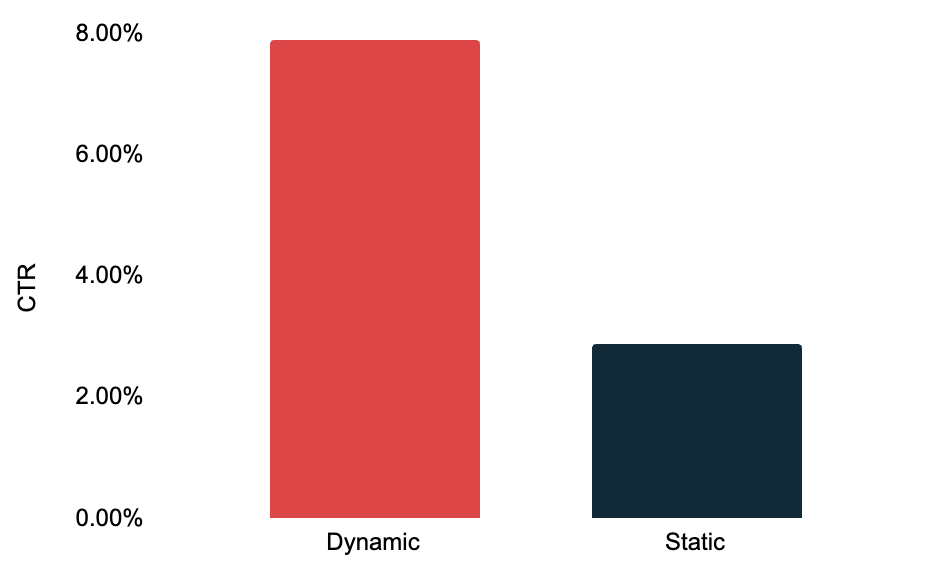
One of our first tests utilized dynamic ads, where we used multiple images, videos, and headlines that were optimized by users based on how they would interact with the ads. We saw incredible results with this ad type shown below:

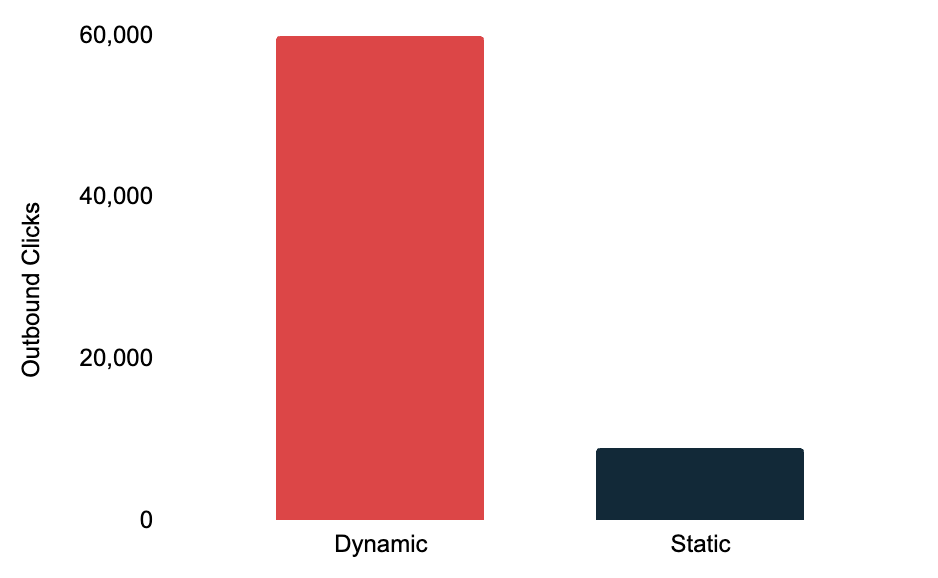
We compared dynamic ads to static ads by click-through rate. As you can see, we got a 7.89% CTR with dynamic ads and a 2.87% CTR with static ads. Both of these click-through rates are incredible and above our general goal of 1%, but we found that when we used dynamic ads, there was a higher response rate and better interaction among the prospecting audience.

We then compared outbound clicks between dynamic ads and static ads. We found that there were a lot more clicks with dynamic ads than there were with static ads, most likely because dynamic ads tend to be more personalized and interactive for the user.

What helped these dynamic ads succeed was not only using multiple images but also multiple videos. Video advertising is becoming increasingly more popular, where the user can see the full experience of the hotel, rather than just a single image.

Reaching the luxury traveler

Getting conversions for luxury hotels can present a challenge when there is a high ADR. How can you target the right audience? How can you get your ad seen by the right people who will convert?

To answer those questions for this property, we used 1st party intent audiences. These audiences are collected through a large number of partners in the airline, hotel, rental car, and travel space and they assist in finding the right kind of potential guest who would stay at this luxury Palm Springs hotel. We use these in prospecting audiences to help us reach those people who are at the top of the funnel and eventually bring them down to convert.

Winning the booking

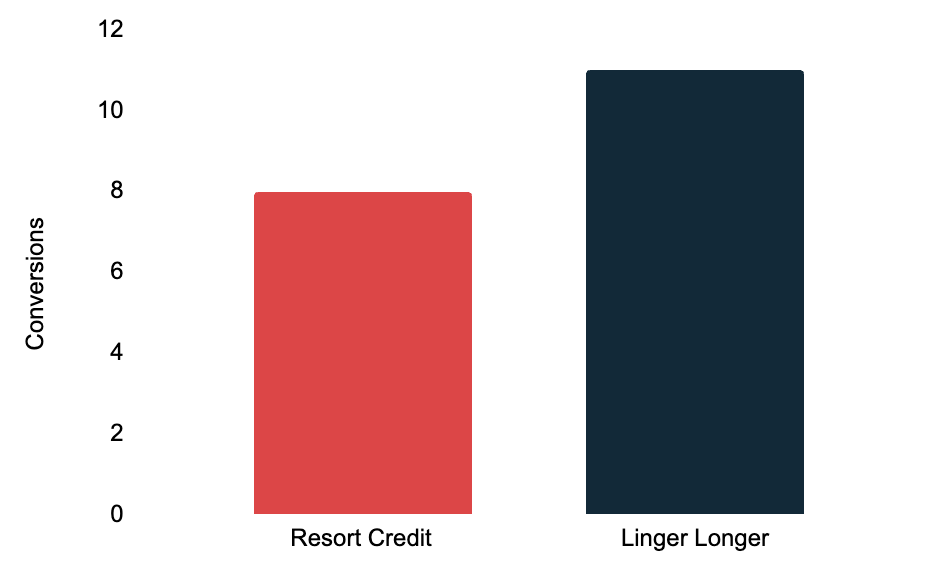
When it came to generating revenue, this property had two offers that really helped them in generating conversions. The first one was a resort credit offer where if you stay two nights, you receive a $100 resort credit. The second was a linger longer offer where if you stay three nights, you receive the fourth night free. Below, we will share the results of these offers:

This graph compares conversions between two different offers. The resort credit generated 8 conversions and linger longer generated 11 conversions. 

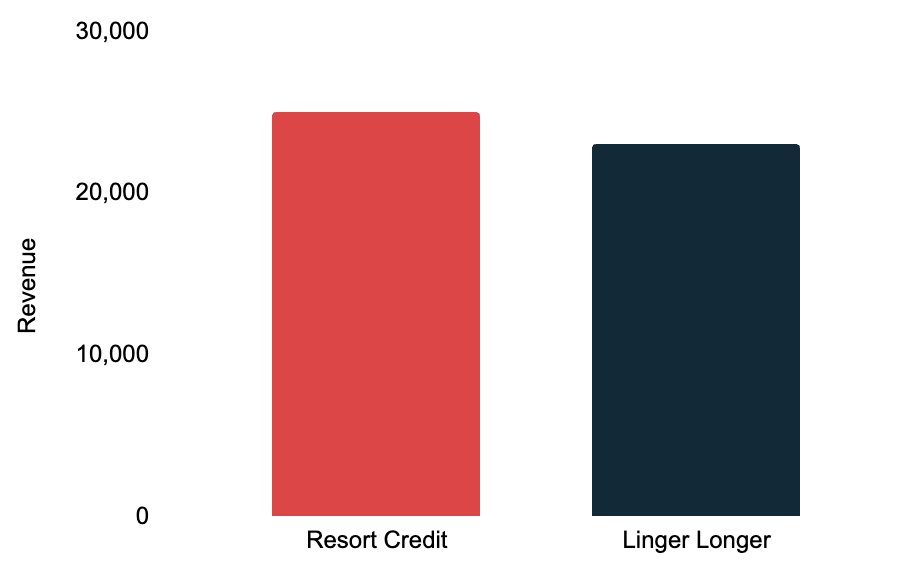
Although we generated more conversions from the linger longer offer, we generated more revenue from the resort credit offer at over $25,000, indicating that the resort credit brought in a higher value guest.

Having offers that appeal to different people is critical for all marketing efforts and especially in this example on Facebook and Instagram, along with using very specific luxury travel audiences to reach the right potential guest.

If your property is looking to reach the luxury traveler, contact us today for help with advertising on social media channels!

Inbound- Hospitality marketing nirvana

SHARE:

I’m at 30,000 feet on my way to the world’s greatest marketing conference, a conference I’d bet most of you have never heard of.  Inbound, imagined, and launched to the world by HubSpot, is attended by 11,000 professionals and features presentations, panels, and networking with the most celebrated marketers of our time.  This marks GCommerce’s tenth year attending, and over that decade, the inspiration and practical advice we’ve gleaned from countless Inbound sessions have been our secret weapon as GCommerce has ascended to the pantheon of strategic hospitality marketing.  And yet, over our ten years in attendance, our friends from the hospitality industry have been conspicuously absent.  I could wax poetic about the insular, circular nature of our industry, but I also love networking with peers at the premier events in hospitality.  Instead, here’s a compelling argument for why you should consider Inbound in your plans for next year.

World-class marketing content

Ryan Reynolds, Serena Williams, and Kara Swisher headline this year's main stage speakers.  Past years have included Barack and Michelle Obama, Anna Kendrick, Reese Witherspoon, Jane Goodall, Chip and Joanna Gains, and many more.  Each had an interesting story to tell, and their A-list status demonstrates the power of the Inbound audience.  Imagine, then, the quality of the marketing professionals that the conference can attract to present and discuss their current work.  Presenters that don’t speak on the main stage but instead present 90-minute deep divers into their most compelling works.    

What can we all learn from CMO’s steering great companies in technology, publishing/media, consumer goods, and transportation?  How does that content diverge from what we experience at hospitality-focused events?

Innovation is featured, unleashed by progressive budgets and perpetual research.  These speakers aren’t competing for today; they’re inventing for tomorrow.  While our R&D budgets may not mirror theirs, we can learn from their insights and outcomes.  We can understand how their research informs how they see the future and the steps they are taking to claim their share.  

At Inbound, we also hear about emerging technologies and practices that are hot topics in our industry.  This year, we expect to hear a lot about AI, and not just about how it is used to attract travelers.  We’ll learn about GenZ’s media consumption and not just about how they prefer to travel. I expect we’ll hear more about data privacy and security and how heavyweight social media companies are adjusting their advertising platforms to remain relevant.  The content; straight from the minds of the tastemakers, will give us a leg up on future trends.

We come to Inbound for content that inspires us; that breaks the mold of incestuous thinking, and dares us to question our own practices.  

Breaking the mold - Cross industry education

It’s often said that hospitality is years behind other industries. We stare wistfully at the conversion paths of eCommerce companies.  We marvel at the emotional resonance of DTC brands.  We envy the data collection prowess of technology firms.  

We don’t have to accept the dissonance.  It may seem basic, but simply hearing stories from innovators from other industries has led GCommerce to change our approach.  At Inbound, you come to understand that universal best practices from other industries are considered innovative in the hospitality industry.  Without this yearly jolt of perspective, it would be easy to fall into complacency.  Inbound provides us an opportunity to learn from the best and brightest marketers out there, regardless of their industry.  We are unified by marketing principles that are timeless…and practical.

Practical solutions - Rubber meets the road

All this high-minded inspiration may lead you to question the real value of the conference.  I can picture a well-intentioned decision-maker saying “I’m happy you were inspired by some celebrities, but how is this going to help our hotel this year?”

While the answer varies by year and by attendee, here are a few universal thoughts. How you collect first-party data matters.  How you use storytelling to connect with your audience matters. How you nurture your conversion funnel matters.  

Yes, we leave Inbound ready to leap tall buildings, but we also leave with a dozen or more practical ideas that, every single year, produce incremental advantages for our clients.  Dig into the details of the agenda, and you will see that it is chock-full of practical content that can change the trajectory of your property and improve the performance of your marketing.  

Improved performance

Bending the trajectory of our marketing towards better performance is what we are all after, right?  We want to discover the tools and techniques that allow us to perform while our competition struggles.  Yet, too often, we follow the same script as our competition; we attend the same conferences and read the same trades.  Is it a surprise that we often achieve similar results as our peers?  

Inbound breaks that mold and brings novel ideas to the forefront.  It allows us to bring new ideas and revenue focused initiatives to our owners.  When those ideas bear fruit, we find ourselves in new territory not yet harvested by our competition.  The result - improved performance relative to our competition.  

We are all staring wobbly demand in the face, hoping that 2025 won’t be a down year.  Hope is not a strategy.  Instead, imagine a dozen ideas, grounded in research yet novel amongst your comp set, all designed to drive improved performance regardless of fluctuations in demand.  That’s the definition of marketing nirvana.

Marketing nirvana

Ten years is a long time to enjoy marketing nirvana in blissful isolation.  This year, GCommerce has invited a few close partners to join our pilgrimage.  Our long-time partners and friends at the Lenox Hotel have offered great rates and even better hospitality.  We have a few select clients from across the country joining us for the week.  We’ll spend our days navigating the world’s greatest marketing conference together and the evenings sharing what we learned, brainstorming ideas, and building relationships with our peers.  


If this all sounds compelling, spend a few moments this week living vicariously through us on social media as we post vignettes from the journey.  Register your interest in joining us next year here; we can’t wait to see you.

Keep Reading