Why hotels should discount early | Flip.to x GCommerce
TL;DR
Hotels have long held rate and discounted at the last minute, but Flip.to’s Spacetime data shows guests plan stays for months before they book. Ed St. Onge, President of Flip.to, recommends a modest discount (around 8%) 90 to 120 days out, then raising rates as arrival nears. The result is premium ADRs on the earliest and latest bookings, direct demand captured before the OTAs take over, and more time for revenue and marketing teams to act on real demand signals.
What the full interview here to discover if earlier discounts could help extend your hotel's booking window.
GCommerce + Flip.To
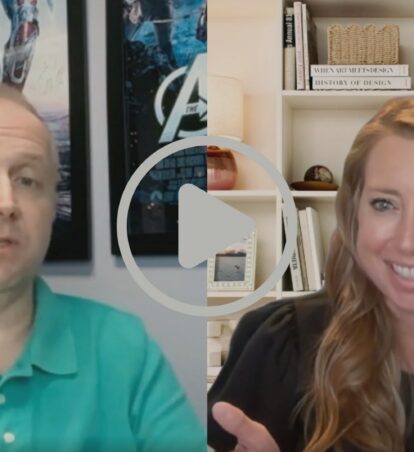
Whitney Ryan, Partnerships Manager at Metadesk, recently sat down with Ed St. Onge, President of Flip.to, to unpack a hot take on hotel pricing that runs against almost everything revenue managers were taught: discount early, not late.
Meet Ed St. Onge and Flip.to
Whitney: Tell us a bit about yourself and Flip.to.
Ed: I've been building tech for this industry my entire adult life. In the early 2000s, I built the industry's first channel manager, EasyYield, which was later acquired by TravelClick. After that, I wanted to keep solving problems for hotels, this time on the marketing side. Martech was overdue for an upgrade, and that's where Flip.to came from.
For the 15 years we've been around, we've been best known for building complex, personalized journeys that drop into different parts of a hotel's marketing to make it more efficient. Our newest product, Spacetime, is our answer to Google Analytics and Adobe Analytics, built specifically for the hotel industry. It's also the data behind a lot of what we'll talk about today.
Rethinking the hotel booking window
Whitney: Conventional wisdom says hotels should hold their rates and only discount at the last minute to fill empty rooms. Why are you telling hoteliers to do the opposite?
Ed: Everything I'm going to say is based on what the data now shows us about consumer behavior. The old advice to wait until the last minute to drop rate was built on our understanding of the booking window. And the booking window does look very last minute for most hotels. But back up and look at the planning window, meaning when people actually start searching for dates, and you'll find that even someone with a 7- or 14-day booking window was on your site, on and off, for months before they booked.
Once we saw that, we noticed something else. For a lot of hotels, shrinking booking windows were a self-fulfilling prophecy. They had trained their travelers that there's no value in booking early. You'll still get early bookers who need to lock in your hotel, and you should get them at a premium. But flexible travelers who are willing to take a risk to save money have learned to wait until the last minute.
The other problem is that most of that last-minute timing falls after the peak of your marketing influence. It actually feeds the OTAs, whose demand naturally builds later than your direct channel demand. That was an aha moment for us, so we asked a few hotels where we were seeing this pattern to run an experiment and try it a different way.
What early hotel discounting looks like in practice
Whitney: Can you walk us through what discounting early actually looks like for a hotel?
Ed: Say you're looking at a specific set of dates with a target BAR, and you know that if you don't hit your occupancy goal, you're willing to discount 20%.
Rather than waiting until the last minute and dropping the full 20%, what we've found really effective is moving 90 to 120 days before arrival and dropping only part of the way, say 8%. Then over the next couple of months, you dial it in. Maybe you drop a little more, maybe you don't. Maybe you get what you need and start raising rates right away.
Every destination has its own seasonality, so 90 to 120 days is an average. But the hotels that made that window their sweet spot for their most aggressive discounting, and then built rate as the dates got closer, saw results. The goal is for your furthest-out and closest-in bookings to carry your most premium ADRs, with a plateau in the middle for guests who will book earlier when they see what feels like a good deal.
Whitney: 8% sounds modest. Does something that small really move the needle?
Ed: It absolutely can. Starting at 8% gives you room to go further if you need to, without holding a deep rate for a long time. What matters is showing movement in price. Consumers are savvy. They're on your site long before they buy, and they're paying attention to how you price yourself.
They also have an easier time comparing your prices through Google metasearch, and increasingly they can see how those prices change over time. So when you move at a time the rest of the market isn't moving, they see an opportunity to lock something in. Later, they see your rates rising as the dates approach, and that sticks with them too. You're not just hitting the sweet spot with a modest step. You're training your guests.
There's another problem with deep last-minute discounts: you miss the people who can't decide that fast. If you drop your rate 20% two weeks out, how many people can actually act on it? Offer it earlier and more people have time to plan, put in for PTO and make it happen. A modest discount further out reaches a much wider audience. The longer you wait, the smaller the pool of people who can travel on short notice.
A real-world example: A San Francisco Hotel in September
Whitney: You're sharing an example of a San Francisco hotel and how it approached September. What made you pick this one?
Ed: We've worked with this hotel for a while, and they shifted to this strategy a little over a year ago. Their September shows what's possible. It also shows that things don't always go exactly to plan, and can still land where they need to.
In Spacetime, there's an insight that shows how demand built for any stay month and how well that demand converted. For each month leading up, we can see how many users were on the site looking at September stays, how many transactions came from that audience and at what ADR. Here's how September built:
| Booking month | What happened with September stays |
|---|---|
| January | 8 transactions at an ADR of almost $700 |
| February | 9 transactions at a $417 ADR |
| March | 9 transactions at a $413 ADR |
| April | Pushed a little harder: 26 transactions at a $421 ADR |
| May | Dialed back slightly while converting September demand at 4% |
| June and July | Held that 4% conversion while starting to raise rates |
| August | Conversion dipped, but far more people were looking: 181 transactions at a $509 ADR |
| September (in month) | Most bookings were for dates after the holiday, still at a $514 ADR. Conversion dropped to 2%, which was fine because the hotel had already filled up |
This is a really good picture of finding that zone. People who want to plan far in advance see an ADR you're very happy to get. Around the midpoint, you experiment with how to unlock and hold a high conversion rate on demand. Then in the months leading up to arrival, you raise rates.
Protecting property rate integrity
Whitney: Some hotels hear the word "discount" and get nervous. Does discounting risk cheapening the brand?
Ed: There are a couple of ways you can hurt your brand. The first is always-on discounts. If I see a 20% discount every time I visit your site, for any dates, that's not a discount. That's your price. Consumers understand that, and it hurts your brand. It also takes away a lever you could use to change behavior.
The second is last-minute discounting, which tells people you need them. Instead of a slow, steady value conversation about why you're a great place to stay, it reads as desperate. It's coupons, and it plants a seed of doubt.
Adjusting price over time is a normal course of business, even for the most premium brands. Consumers know that if they buy at the right time, they'll get a good price, and if they buy at the wrong time, they'll pay what's optimal for the brand. None of that feels cheap. Discounting starts from "we have to achieve this ADR, and anything below it is a discount." Dynamic pricing starts from where the market is and what price best achieves your goals. That's not really discounting at all.
Forecasting with real hotel demand signals
Whitney: Let's talk about planning. How does discounting early help a hotel with forecasting?
Ed: It starts with paying attention to where demand is on your site at any given time. Most hotels don't know what people are searching for on their site today. They have guesses, usually based on booking window. When you have the data, you start seeing signals over time.
One thing we built into Spacetime is the ability to pick any date range of site activity. For this same hotel, I can look at what people searched for over the last month: how much demand there was for stays this month, for October, for November, and how well each converted. You'll see something most people understand in theory but not in numbers. In the last 30 days, this hotel had more than 1,000 people planning trips past March, converting at really high rates and really good ADRs.
So this shouldn't be a patchwork effort where you pick one period to conquer. It should be regular practice. Where is demand today? How are we optimizing to it? What's the natural timing of our travelers? How do we line up both our revenue strategy and our marketing strategy to that?
If you see only 800 people on the site interested in December over the last 30 days, but they converted at 3.8% at a healthy ADR, the conversation should be how to get more of that, and how to get it in September, not November. It's a shift in how marketing and revenue management work together. Your booking window says one thing, but the planning window is where you can really optimize your marketing and your revenue.
Inside Spacetime Analytics for Hotels
Whitney: Is there anything else in Spacetime you want to share?
Ed: One of our goals with Spacetime was something we call democratizing the data. That doesn't just mean giving everyone access, which is easy. It means building insights that work for specific roles inside the hotel, so more of your team actually looks at your analytics.
The first insight I showed is what we call the goals insight. Beyond showing how you got here, it forecasts what the website needs to drive for any stay month for the hotel to hit its budget. That's been especially useful for agencies and marketers, because it's a meaningful KPI tied to the health of the hotel. Instead of focusing on ROAS or site conversion, you focus on real business goals, like "we need $1 million driven by the website for February stays," and you can watch the pacing.
Google Analytics and Adobe Analytics are built on the retail ecommerce model, where users make transactions and transactions are revenue. In travel, a transaction is a reservation for future dates, and you need to understand how you're selling and driving demand to those dates. We've worked hard to build the hotel business model into analytics, and to present it so people without PhDs in data analysis can read it. At a glance, I can see where a property stands against every future month goal, how it's pacing and how it did in previous months. Then I can dig in and figure out what to do about it.
This solves a real problem. When we asked our agency partners, GCommerce included, how we could make things better between them and their hotels, one of the first answers was: we never know the need dates, and we spend so much time on calls asking about them. This insight is our answer. Give everyone visibility into pace and goal.
And this is marketing analytics. It looks very different from most GA4 or Adobe dashboards. These are data narratives that help you get to action.
Where direct bookings and hotel metasearch fit
Whitney: Where do direct bookings and hotel metasearch fit into all of this?
Ed: With metasearch, there's a lot more at play. You have rate parity challenges, and your budget can burn if your rate strategy isn't set correctly. In Spacetime, we've made it obvious when metasearch conversion is moving and when a lot of demand is coming from metasearch. That's generally well-baked demand that should convert highly, so when you see it move, there's a good chance someone is undercutting you. We've built a lot of insights around that, all to improve the direct channel.
Something surprised us when we built the goals insight. Hotels constantly talk about how important it is to grow the direct channel, yet most of the hotels we've shown it to had never assigned a specific performance target to it. How can you focus on moving something without a goal to measure against? How can you make marketing spend decisions without a goal for what that spend needs to do? And that goal can't be ROAS, because you can't pay your staff in ROAS. You have to sell specific dates to cash flow the hotel.
All of this is about giving everyone the data they need to shift strategy and make real progress on direct bookings, including understanding the role metasearch plays. For a lot of hotels, it's a heavy driver of conversion and a key way to push back against the OTAs.
The mindset shiftf or hotel revenue teams
Whitney: This sounds like a mindset shift for hotel revenue teams. How would you describe it?
Ed: It won't be a complete shift for teams using advanced revenue management systems, which are always reading demand signals and adjusting. But it is a shift for teams going off their gut. And if you're relying on your gut, remember that you might not be listening to it every day, because you're busy.
The big shift is to set the foundation early so you have time to make decisions. If you let things play out and wait until the last minute to discount, you're just hoping people see it. Start early and you have levers beyond discounting. You can pair a modest price break with audience generation, promote the timing and promote the rate plan. Instead of letting your market dynamics happen to you, you define them. You might even decide a target matters enough to spend a little more to hit it, knowing you can overachieve it.
So yes, it's a mindset shift for some, but it makes your job easier in the long run and gives you control instead of leaving you to react.
The one thing for hoteliers to remember
Whitney: For hoteliers ready to try this, what's the one thing to remember?
Ed: Get more of your team involved in understanding what's happening with your marketing. That's been the single biggest impact driver we've seen for hotels that have adopted Spacetime. And I don't just mean your agency or your marketing people, or even your revenue managers. Have your GM spend some time asking questions about marketing. The more eyes you have on it, the more likely you'll catch an opportunity while there's still time to act on it.
The takeaway for hoteliers
The biggest lesson from this conversation: early discounting isn't about giving away margin. It's about buying more information and putting your tools to work before you need them.
Want to see how Spacetime can help you put this into practice, or talk through direct booking strategy, digital marketing or metasearch? Connect with the teams at GCommerce and Flip.to.
What the full interview here.
Frequently asked questions about discounting early for hotels and resorts
Instead of saving your deepest rate cut for the final weeks before arrival, you make a smaller cut 90 to 120 days out and then adjust over the following months. For example, if you’d be willing to drop 20% to hit occupancy, start with about 8% early. You can go further if needed or start raising rates once demand builds.
Not when it’s done strategically. The real brand risks are always-on discounts, which become your actual price, and last-minute discounts, which signal desperation. Adjusting price over time is normal for premium brands. Early, temporary moves teach guests that booking at the right time is rewarded.
Look at your planning window, not just your booking window. Website analytics built for hotels, such as Flip.to’s Spacetime, show how many people are searching each future stay month, how well that demand converts, and at what ADR. Reviewing those signals regularly helps revenue and marketing teams agree on when to adjust rates and where to focus spend.