Does The Location Of A Call To Action Impact Website Conversion Rate?

SHARE:

Landing page optimization and conversion rate optimization (CRO) is a study and an art all in its own category. In case you don’t have the time to dive headfirst into the world of optimizing calls to action on your hotel’s website, GCommerce has you covered with some first-hand data fresh from our marketing teams.

Earlier in the spring, as the coronavirus pandemic had most hotels shut down, we saw some consistent requests for information on weddings hosted at hotels. While most of our clients were seeing decreased demand for room nights, we thought it was a great chance to create an A/B test on the call to action of a wedding page.

Many practitioners of CRO would tell you the position of the call to action within the page is incredibly important. In the case of our wedding page, the call to action was a button with the text “Start Planning”. We wanted to see if we could increase the conversion rate of people requesting information for weddings if we moved the call to action to the top of the page. Using Google Optimize, we created a true A/B test with half of our traffic being sent to the original page and the other half being sent to the test page that had the call to action at the top of the page.
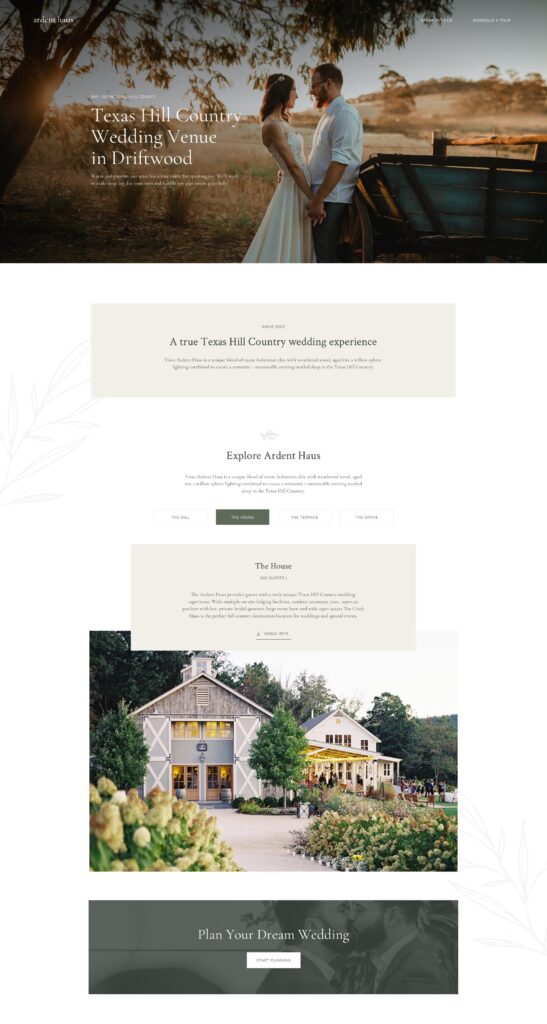
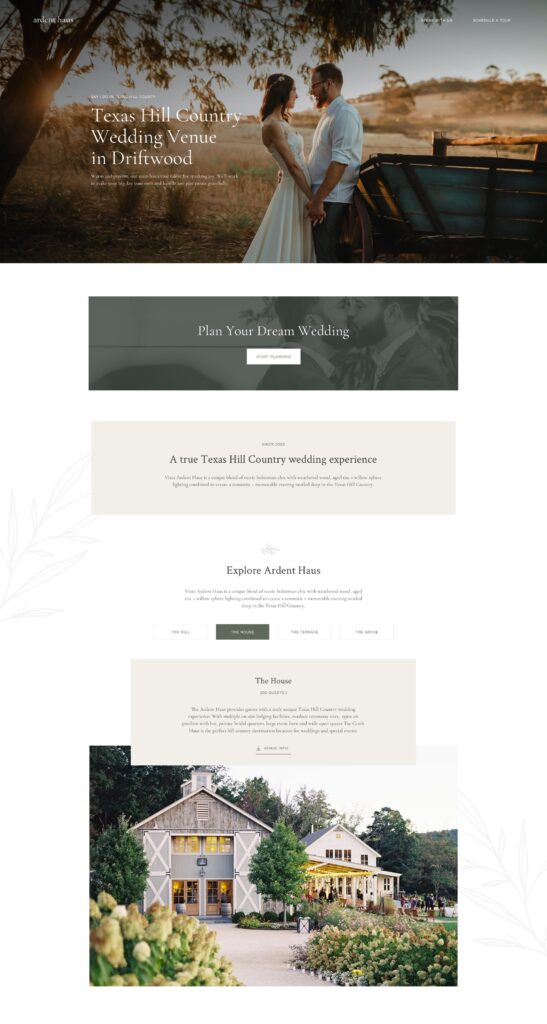
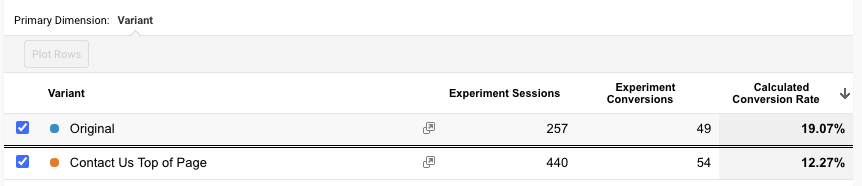
After 90 days, we evaluated our results and found that keeping the call to action at the bottom of the page kept conversion rates higher. We think this may have something to do with the nature of booking weddings at a hotel; users generally want a lot of information and want to see photos and details about the venue.
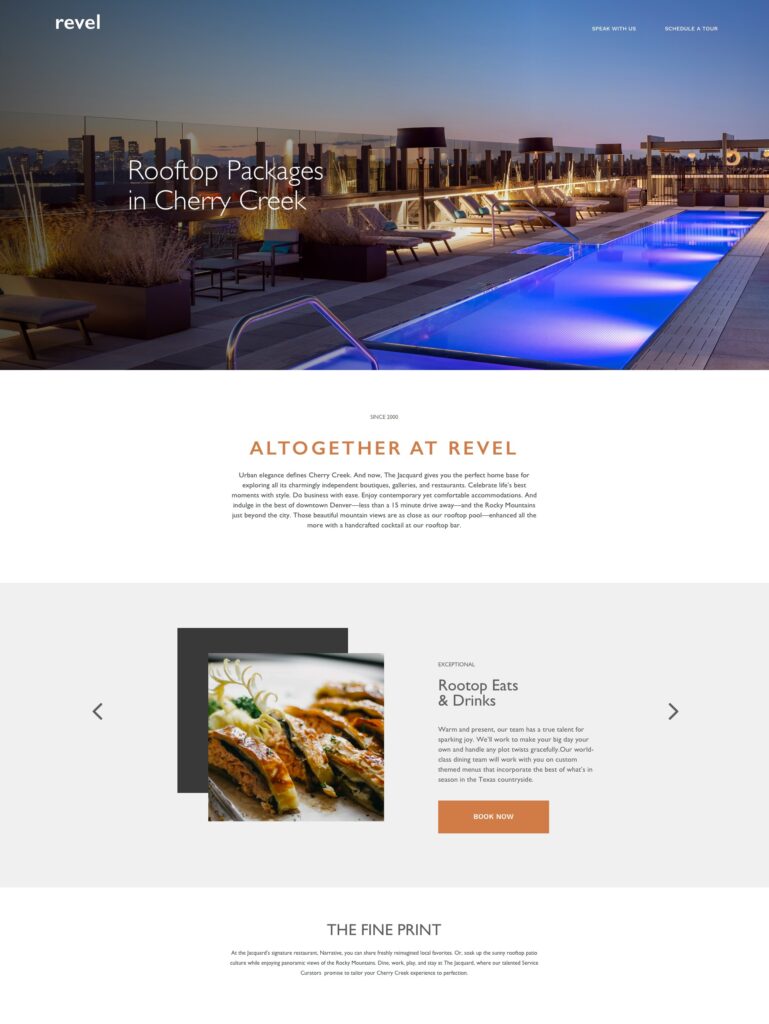
Having this information in our hands was important as we moved into the summer and the hotel was able to start accepting guests again. We wondered if we could improve the conversion rates of a package offer through the hotel if we moved the call to action lower on the page. Similar to the wedding page, maybe we could increase conversions if the call to action were below the details about the offer? We chose to run our next test on a rooftop package page that provided a food & beverage credit to the rooftop bar. We felt this was a package that could appeal to visitors during the coronavirus pandemic and wanted to have as much impact on increasing conversions as possible. Another A/B test was created on a rooftop package page with 50% of traffic going to each version:
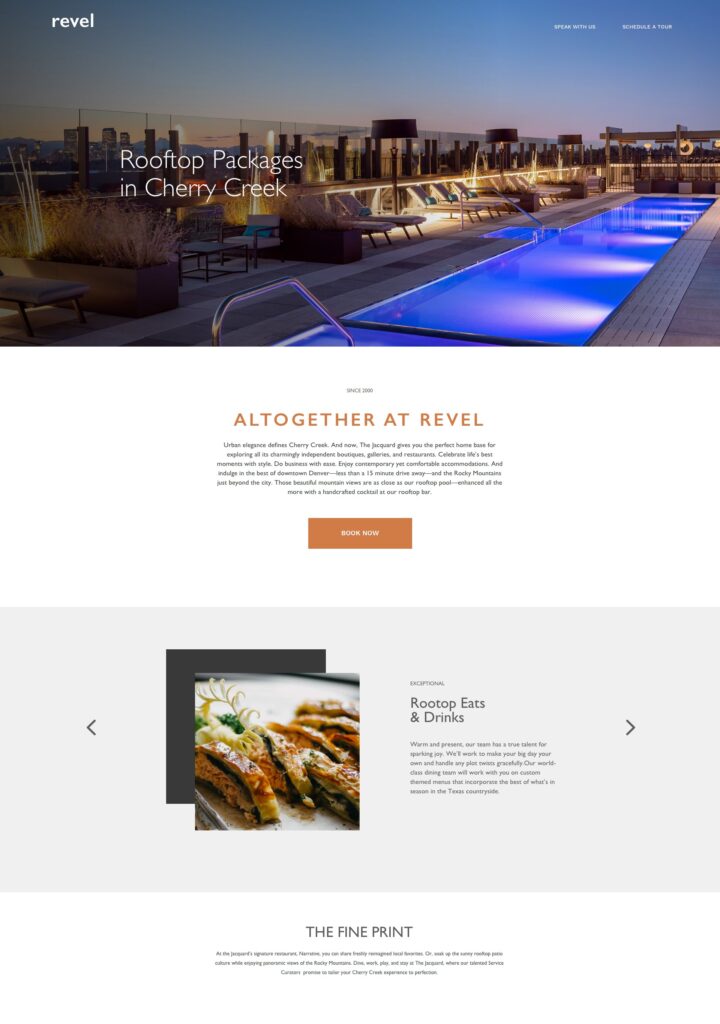
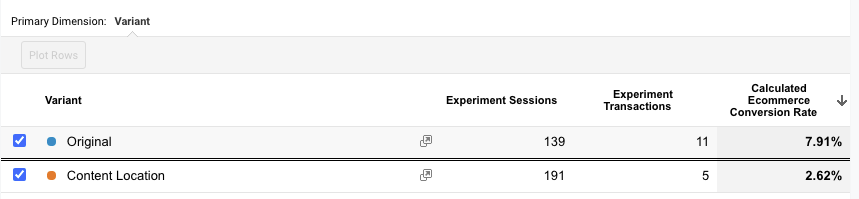
Once again, our hypothesis proved to be wrong and our variant of moving the call to action to the bottom of the hotel package page performed worse than the original:
In an attempt to totally redeem ourselves, we set up a final A/B test to see if the call to action at the top of the rooftop package page would perform better since people booking packages seem to be interacting in a different way than those requesting information about weddings:
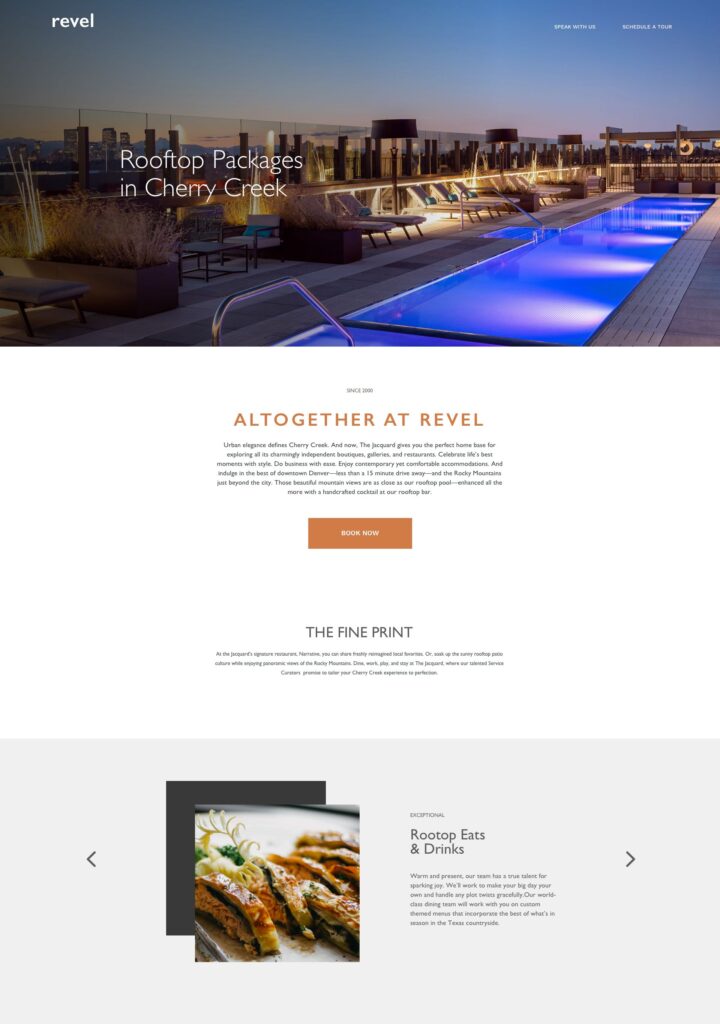
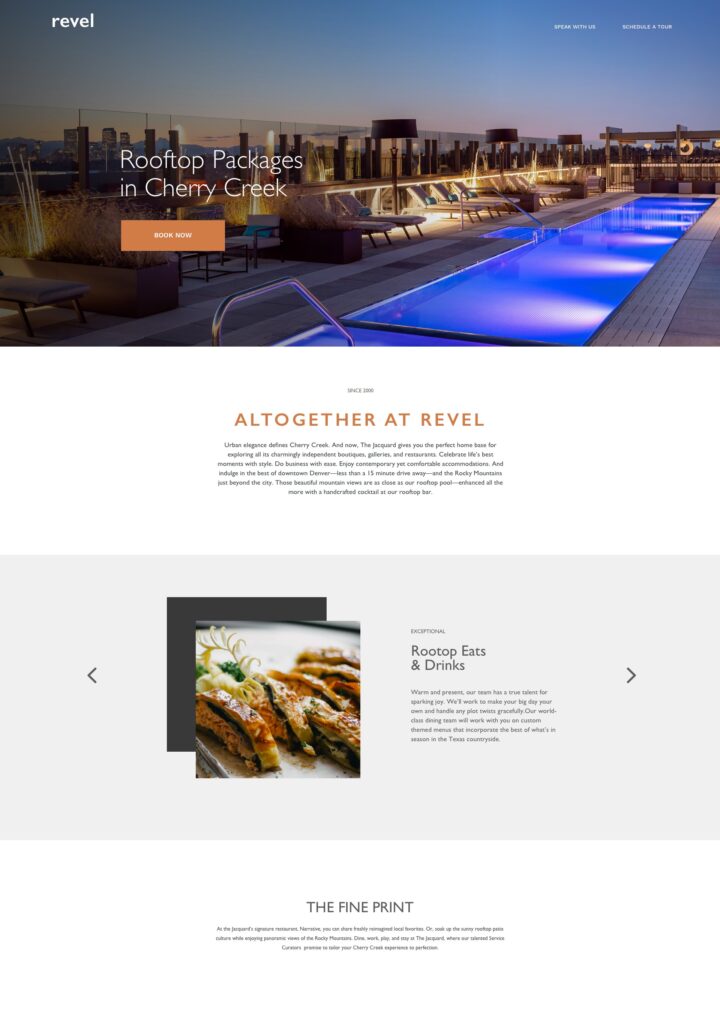
Finally, we seem to be getting some positive results on our variant and we have currently recorded about twice the conversion rate by moving the call to action higher up on the page.
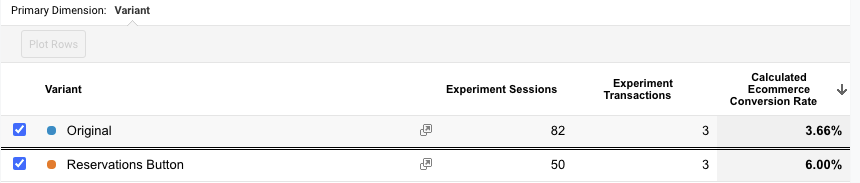
What is important to note here is that while our first two A/B tests were not successful, they established a base of understanding and allowed for additional tests to be run. The only failure in running A/B tests is not running them at all. Even if the test doesn’t go as planned, there’s always a lesson to be learned. Fans of The Office may appreciate Michael Scott’s take on the subject:
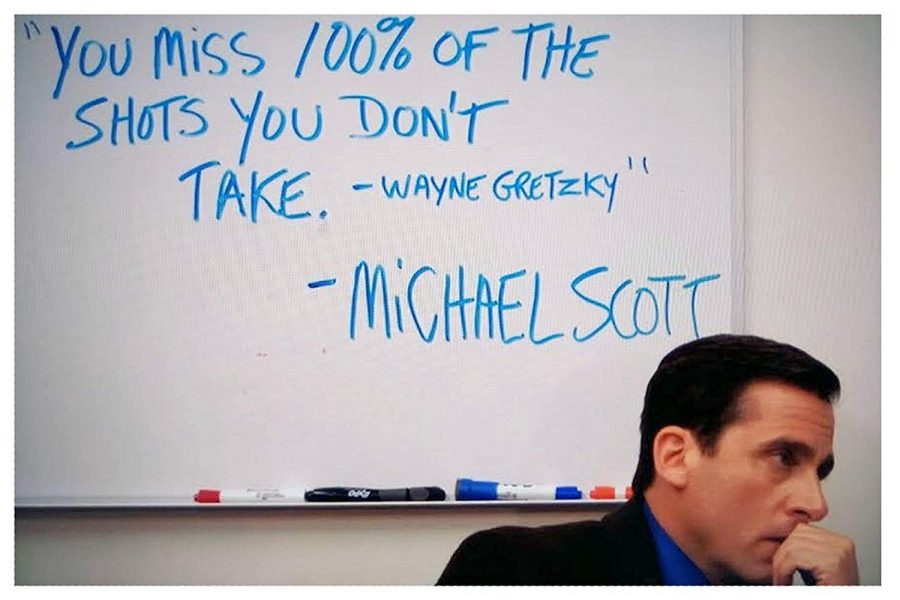
michael scott from the office

Knowing that conversion rates are different based on the location of the call to action AND the nature of the services you are trying to communicate to your guests is vitally important to improving user interactions on your website. There is no better time than now to begin running A/B tests on your hotel website. Contact GCommerce Solutions today to get started on gathering insights to improve your hotel conversion rates.

The Ups & Downs Of Building Your Own Digital Marketing Agency Website

SHARE:

If you didn’t already know, we launched our new digital marketing company’s website on August 26th. It’s been in the works since January of this year and with other digital marketing client projects and then the pandemic hitting, it took a bit of a backseat for a while. All in all, it’s beautiful and we’re very proud of the finished product.

I just got off a video call where we were conducting our internal retrospective meeting where we discussed how the website development project went. It got me thinking about the ups and downs of building your digital marketing agency’s own website and I’ve laid them out here: 

1. Prioritizing yourself as a digital marketing client

As are many digital marketing agencies, we are typically the painter that doesn’t paint its own house. This website was a big step in reversing that mentality. In June 2019, we refreshed our brand and essentially updated the existing site with the new branding. It was passable, and I was surprised by how many people would say they loved our website.

When we started this website development project back in January it had been a long time coming. Years ago, the team designed the website in-house but we had to outsource the development portion due to our resources being tied up with client projects at the time. It deeply pained us all to not develop our own website, but we weighed the pros and cons and decided to move forward. Three years later, we were finally ready to redesign and develop a brand new website with our own team and to the level that we knew we needed to represent our skill set and work.

2. Holding yourself accountable

I’m proud to say that GCommerce builds beautiful sites that perform for our digital marketing clients. To be honest though, many website design firms are capable of building beautiful websites. What sets us apart from them is our website development process which is focused on the client’s overall business strategy. So when you are acting as both the client and the primary decision maker internally, lines can get blurred. In my role, it’s easy to get off track, not follow process and ultimately cause unnecessary confusion and frustration amongst the team. I frequently found myself pausing before firing off an email with feedback and I know I let at least a couple of them go out. But, I would quickly remember what that does to the overall website development project and why it’s so important to keep communication organized.

3. Empowering the entire team

One of the biggest “ups” of building your own company’s website, is if managed correctly, the entire team has ownership of it. Because we aren’t limited by budget or even time, each team member can participate in all of the conversations so they know the ultimate goal of each decision. And not only do they know what the end goal is, they help create it. Our digital marketing agency’s new website is by far the best one we’ve had yet and it’s because we were able to have an entire team meaningfully contribute.

The last 6 months have challenged us all in ways we couldn’t have expected. Building a new website for ourselves was a luxury that we were very fortunate to be able to afford. The team’s heart and soul was poured into this website development project and it shows. We are all in love with this refreshed representation of our work and who we are. Hope you enjoy it.

The EU’s Ruling on Data Transfers- Updates to Google Ads Terms

SHARE:

Why Did Google Ads Send Me An Email Re: Updates about GDPR Compliance?

In July 2020, the EU’s highest court ruled against the validity of the Data Privacy Shield for protecting EU citizen data when it is transferred out of the EU to other countries including the US. This caused many businesses, including Google and other ad tech companies, to have to revise their platforms’ data processing terms.

What Did the EU Rule on Data Transfers to the US in July 2020?

In July 2020 the Court of Justice of the European Union, the highest court in the EU, ruled that the current Privacy Shield that allowed transfers of online advertising and measurement personal data out of the EU to the US was invalid. This was based on the court finding that EU citizen data could be interfered with by the US government based on the country’s current surveillance laws. 

TechCrunch.com’s Natasha Lomas explains that, The CJEU’s finding is that “the requirements of US national security, public interest and law enforcement have primacy, thus condoning interference with the fundamental rights of persons whose data are transferred to that third country”, and that mechanisms in the EU-US Privacy Shield ostensibly intended to mitigate this interference (such as an ombudsperson role to handle EU citizens’ complaints) are not up the required legal standard of ‘essential equivalence’ with EU law.

The Court of Justice of the European Union did keep Standard Contractual Clauses (SCCs) in place as a valid and legal way for businesses including banks, Facebook, and Google to transfer online advertising and measurement personal data out of the EU and into the US. This effectively provides these companies with a way to maintain data transfers outside of the EU and into the US (and other countries) for the time being.

How Does The EU Ruling on Data Transfers Impact My Google Ads Account?

Since SCC’s are still considered an allowed method of transferring data from the EU to servers in the US, Google is moving to use them for all transfers of online advertising and measurement personal data out of the EU, Switzerland and the UK in order to stay in compliance with the ruling.

Google is also updating its existing Google Ads Data Processing Terms, Google Ads Controller-Controller Data Protection Terms, and Google Measurement Controller-Controller Data Protection Terms to add the relevant SCCs as adopted by the European Commission. These updated contract terms for using Google Ads will apply starting on August 12, 2020.

How Can I Make Sure My Google Ads Account Is Still In Compliance with GDPR?

First off, we are not legal experts and you should be consulting your lawyer regarding how to keep your business in compliance with GDPR and other consumer data privacy protection laws. 

  1. Google’s updated contract terms that add the relevant SCCs ensure your agreement with their ad platform keeps the account in compliance with the updated ruling. 
  2. Make sure you have a cookie preference solution in place (such as OneTrust) on your site. Make sure settings are specific for traffic from visitors from the EU countries, allowing them to control how their personal data is used across the site and ad platforms. 
  3. We also recommend that you have detailed information regarding your business’ privacy policies that can be found on the privacy policy page on your website. 

The court’s standing on SCC’s and how EU citizens’ data is transferred out of the EU could come under further scrutiny, which could further complicate things for banks, ad tech companies, and other businesses. 

Have further questions about the recent EU ruling on data transfers and how it affects your Google Ads account? Please make sure to consult your lawyer and be sure to reach out to GCommerce to help you implement cookie compliance tools on your website.

We Increased ROAS 123% For Our Hotel Clients’ Google Ads, Here’s How

SHARE:

At the end of 2018, Google turned the SEM industry on its head by once again changing the definition of its exact match keyword targeting. The definitions and performance by match type have historically dictated campaign structure for many across the SEM industry, GCommerce included. Google’s 3rd and most recent change to exact match forced paid search marketers to reexamine their account structures and best practices. When we did, we found an incredible opportunity to reinvent our paid search account structure to drive substantial improvements in performance for our clients. Read below to find out how we did it.

A Quick History of Google’s Keyword Match Type Definitions

To set the stage, let’s take a quick look back over the evolution of Google’s exact match keyword targeting definitions.

Pre-2014: Exact Match means the searcher has to type your keyword in exactly as you have it written in order for the search to trigger your ad.

Search = luxury hotel in park city Keyword = luxury hotel in park city

2014: Google updates its exact match keyword definition to allow your ad to trigger for the exact spelling of your keyword PLUS plurals and misspellings 

Search = luxury hotels in park city Keyword  = luxury hotel in park city

2017: Google updates its exact match keyword definition again to trigger your ad for the exact phrase or misspellings and plurals OR different word order and function words

Here are two great tables from Search Engine Land’s article to help explain:

Function words:

Word Order:

What Do These Changes Mean For My Hotel’s Google Ads Account Structure? 

But, what does this all mean for paid search optimization and account structure? Separating campaigns by match type used to mean we had more control of where to funnel our ad dollars based on what keywords and match types were performing the best. We found that with Google’s latest updates to match type definitions, if we had the same keyword with a different match type located in different ad groups within the account, they would now compete with each other. The theory became, if we restructured our accounts to keep all keywords (of all match types) within the same ad group, we should see lower CPCs which in turn would drive more traffic, more conversions, and higher ROAS. We tested the theory across a sampling of our hotel client Google Ads accounts.

Results of Our Hotels’ Google Ads Restructure Tests Based On Match Types

Let’s dive into the test results. On average this is what resulted from the changes we made in account structure based on the new keyword match type definitions:

  • CPCs declined by 30%
  • ROAS increased by 123%

This meant our paid search campaigns were able to drive 80% more revenue on average for our hotel clients across the sample set of test accounts. After reviewing the results, we rolled out the change across all of our hotel Google Ads accounts and continued to see outstanding results across the board.

It’s important to always keep an eye out for announcements from Google Ads and make sure you’re testing, restructuring, and updating your accounts based on what provides the best results. If your agency isn’t constantly evolving your campaigns based on changes within the platform and your industry then you risk wasting budget and sacrificing performance. Have questions about how we can help your hotel launch or test this new account structure? Please reach out to one of our hotel digital marketing experts today.

5 Phases to Relaunch Your Hotel's Marketing Campaigns During COVID-19

SHARE:

The world is slowly opening up again, and as hoteliers and other players in the hospitality game that means it’s time to welcome guests back with open, yet socially distant, arms. Similar to phased reopening plans throughout the country, your hotel’s marketing efforts should take the same approach. By phasing out your hotel marketing targeting you’ll be able to provide the most value for your property in this current market for less (we know many will still be operating with smaller budgets at this time). Below we’ll outline a great phased approach that can be curated to fit any property’s strategy amidst the COVID-19 crisis.

PHASE 1: Focus efforts on your hotel’s current and upcoming guests

 If your property isn’t ready to resume marketing efforts and outreach quite yet, then the most basic approach should be to focus on the guests you have. People are still traveling, even to the most restrictive areas, and your top priority should be to make their stay at your hotel as safe and comfortable as possible. This could include imposing smaller capacity caps, ensuring social distancing between guests, using stricter and more frequent cleaning guidelines, and more.

Focusing on your current hotel guests presents the opportunity for providing a much more intimate and personalized experience. Fewer guests mean you can get to know them by name, provide upgrades and other premium amenities, and showcase the service of your hotel in new ways. This focus on guest experience can turn into positive reviews and chatter throughout the web, which has a great impact on your hotel’s reputation, website traffic, and conversion rates.

PHASE 2: Initiate your hotel’s marketing with loyal and previous guests

When you are ready to begin your hotel’s marketing efforts again, we recommend starting small, especially if your hotel is located in a very restrictive area. Your audience should be focused primarily on loyal guests like pass holders and loyalty program members first and then broadening to previous guests or families that return year after year. One of the best ways to engage with this audience is through email marketing because you already have these guests’ contact information and you can draw them in with a more personalized approach.

PHASE 3: Engage with your hotel’s local audiences  

Once you’ve taken care of the loyal users, it’s time to move on to your hotel’s local drive market audiences. Whether this is within city limits or up to a day’s drive away, your local market will be the first to return to your property through serious marketing efforts. This is when you really want to make sure your Facebook, display and paid search efforts are ramping up to draw that awareness and highlight the benefits of a staycation or long weekend out of the house.

PHASE 4: Draw in regional guests for your hotel

As we start seeing the United States and other parts of the world opening up more safely we’ll also start seeing people traveling further distances. This goes beyond day trips and weekends and dips more into longer stays. These guests will be driving to your hotel from places that are over six hours away or even taking short flights in. 

Some properties are already seeing an influx of regional guests, especially those located in larger metro areas, while some are barely getting local visitors. It’s important to pay attention to your state or city’s reopening guidelines and phases to determine which audiences are worth targeting at any given time.

PHASE 5: Return to normal by reaching your hotel’s destination audiences

Eventually, things will go back to normal and travel will continue as it had before COVID-19 hit. This fifth and final phase includes all guests and normal operations, meaning you can return to targeting your new top-of-funnel audiences and guests that live out of your property’s region. 

While this phased approach is simply a guided recommendation, it’s still important for any property or business to evaluate their current standings and plan out their future marketing efforts. Eventually, this will be all over and we will return again to a saturated marketing landscape, but until then you can lean on GCommerce to create a strategy for your hotel’s marketing efforts during COVID-19.

Our hotel digital marketing experts are standing by to help you craft a custom digital marketing relaunch strategy for your hotel. Contact us today.

[Webinar Recording] Exploring the Hotel Buyer Journey

SHARE:

Want to know more about the customer booking journey but don’t know where to start? Replay this webinar where our Business Insights Analyst, Mike Orrison, explores the hotel guest’s buyer journey, and learn the best ways for your hotel to measure the value of your advertising dollars.

Keep Reading