Why A Mobile-First Approach Matters For Your Hotel’s Ads

SHARE:

We’re living in a mobile world—it’s 2020 after all! So why don’t all our digital marketing efforts reflect that? How often do you see a Facebook ad on your smartphone with the text cut off because it’s too long? Have you ever scrolled right past a text-heavy display ad where you had to squint your eyes to read? How about a video that didn’t have subtitles or just seemed to drag on and on? These are examples of ads that were not made with a mobile-first approach in mind.

What is a Mobile-First Approach to Ad Messaging?

A mobile-first approach to ad messaging is exactly what it sounds like, ads that take mobile users into account first. If you’re a seasoned digital marketer you know that many years ago there was a huge push to go digital with all marketing efforts (hence, digital marketing). Enter Facebook advertising, display advertising, PPC, email marketing, etc. 

A few years ago, another major shift happened: mobile-friendly advertising. With smartphones being more accessible than ever, the landscape changed again. Suddenly marketers started seeing dramatic shifts in numbers where mobile traffic was outweighing or equaling desktop. Now, in 2020, we continue to see mobile traffic growing, but only recently have marketers really started focusing on mobile-friendly and mobile-first messaging.

Smartphones and tablets have smaller screens than desktops, so it’s no shock that ads need to be tailored around that. This means more concise ad copy, shorter videos with subtitles, large text on display ads, and even one-column email templates. While many of these practices may seem like good marketing in general (and they definitely are), some marketers are still slow to adopt them. 

At GCommerce, we’ve been making a huge push toward mobile-first messaging and have compiled a few “best practices” and tips for making the shift.

How to Make Your Facebook Ads Mobile Friendly

Facebook ads are arguably the easiest of the bunch when it comes to the mobile shift, especially since marketers have the ability to see ad previews across all placements before hitting publish. Creating mobile-friendly ads for Facebook is especially important because a recent report from Facebook stated that 94% of Facebook ad revenue comes from, you guessed it, mobile. 
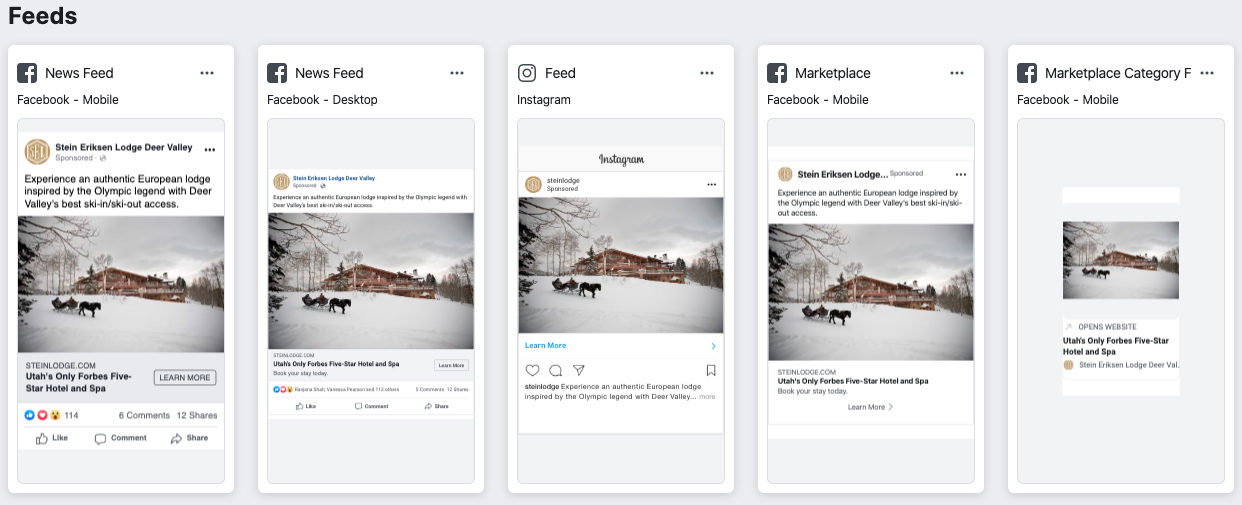
At GCommerce, our best practice for ad copy is to make everything mobile-friendly. This means that if it’s in any way cut off or too long for the mobile view, we don’t use it at all. Facebook recommends that all primary text copies be 90 characters or less, which equates to about three mobile lines of copy. 

This same theory goes for the headline. You want it to be short, but eye-catching. Because Facebook also recently announced that the description section (under the headline) will only be shown if it’s proven useful to any particular user, we think it’s okay to let your headline run onto the second line and use more ad space.

How to Make Your Display Ads Mobile Friendly

Although not as quick to alter as Facebook ads, making your display ads mobile-friendly can be just as easy. Similar to the billboard effect (using seven words or less), you want your display ads to be easy to read on a smaller device. This means packing your ad space with a paragraph of text that looks okay on a desktop but absolutely minuscule on mobile is a big no-no. 

Put it this way, if a user has to zoom in to read your display ad, it’s not mobile-first.

How to Make Your Video Ads Mobile Friendly

Compared to other mediums, video ads are relatively “new” on the marketing scene, but we are already learning new ways to optimize them for mobile users. Long videos with sound definitely have their place in the marketing landscape, but in a mobile world, they need to act differently. Videos made for mobile marketing must be shorter and always include subtitles. 

A report from Verizon Media stated that 83% of consumers surveyed watch videos with the sound off on mobile and that users are 80% more likely to finish a video when captions are available. If your videos use sound, don’t worry, the report also stated that when captions are available, 37% of viewers were more encouraged to turn the sound on because the video appeared more interesting.

Using a mobile-first approach in digital advertising will help improve performance across the board, whether your goal is to increase bookings or inspire engagement with your users. We’ve already begun to see the effects here at GCommerce and are confident that tailoring your ads to be mobile friendly is the next step in launching your ad efforts into the new decade.

Please reach out to GCommerce with any questions regarding how to ensure your hotel has a mobile-friendly approach to digital marketing.
3 Ways to Protect Your Hotel’s Revenue from the Impacts of the Coronavirus

SHARE:

As the number of people infected with Coronavirus continues to rise while the U.S. stock market continues to drop, the hospitality industry is wondering what the true impact will be in the coming weeks and months. While no one can accurately predict the total damage, we do know that hotels who rely on business from China, Japan and Korea will need to look elsewhere to make up for loss in traffic from these countries. In addition, in the last few days, some of the largest conferences in the world have been canceled due to companies shutting down international travel (and in some cases US domestic travel). The Washington Post recently stated “Booking Holdings, which owns Priceline, Booking.com and Kayak, said this week that it expects hotel room bookings to fall as much as 10 percent this quarter because of the coronavirus.”

3 Things Your Hotel Should Start Doing Today To Protect Your Revenue

  1. Focus all of your hotel's digital media efforts on domestic travel. This doesn’t mean don’t take business from international audiences if they are still looking for a hotel, but prioritize your media spend on domestic audiences who have historically performed well. In your analytics tool, look at both frequency from various geos and average purchase value. This will give you a good indication as to which domestic locations will get you your biggest bang for your buck.
  2. Engage your hotel's repeat customers with customized messaging to encourage them to come stay at your property. This isn’t a new idea and certainly is not exclusive to dealing with the Coronavirus, but will be a critical component to your hotel’s success during this time of crisis.
  3. Be prepared for ADR cuts and flash sales in your hotel’s market. Whether your property frequently participates in deals or typically focuses on experiential-based packages to entice travelers to book with you, you will need to be prepared for your market to start to slash nightly rates in order to fill the void from the Asian markets. This is directly related to #2 (above) - engage your repeat customers so you don’t have to drop your rates as much just to get heads in beds. 

One thing GCommerce learned during the 2008 economic downturn was that the properties who doubled down and continued to invest in their hotel’s marketing programs were the ones that made it to the other side less scathed. This is a similar moment in time - lots of uncertainty about where the economy is headed not to mention our public safety. Above all things, we behoove you to be safe, keep your people and your families safe. But as it relates to running your property and keeping revenue flowing, don’t take your foot off the gas pedal. 

If you’d like help identifying ways to help your hotel or property, we’re offering a free phone consultation, no strings attached. 

Contact Us

Contact Us (coronavirus posts)

4 Steps to Selecting the Right Digital Marketing Agency for Your Hotel

SHARE:

The need to drive to direct bookings for your hotel is now more important than ever before due to factors like increased competition in the market and with OTAs. In order to be successful, it is essential to have a well-defined digital marketing strategy for your hotel. In today’s fast-paced digital marketing environment, it can be a struggle to keep up with all of the latest industry trends and best practices. When it comes to hotels, this can be especially challenging to manage in addition to everything else happening at the front lines of the property. This is why we recommend finding the right hotel digital marketing agency to best meet the needs of your specific hotel and property.

1. Know Your Hotel's Marketing Objectives

It is essential to have a good understanding of what your hotel’s business and marketing objectives are before vetting any potential hotel marketing agencies. This could be anything from increasing direct online bookings to generating more web traffic or driving wedding RFPs. With a solid understanding of your hotel’s digital marketing objectives, you can hone in on the types of services you are looking for and be prepared to ask the right questions.  If you have an in-house marketing team, this could be a good opportunity to decide what can be handled internally and what needs to be outsourced to an agency. Knowing your business objectives will help guide you in your search for the best digital marketing agency.

2. Determine Your Hotel's Marketing Budget

Understanding your hotel’s marketing budget is another important piece of the puzzle when choosing the right digital marketing agency for your hotel. While the cost should be a determining factor when selecting the right agency, you should not just go with whatever option is the cheapest. Agencies with higher prices tend to have more time to dedicate to your account and are much more hands-on. Instead of getting too hung up on price, focus on the value and make sure that your budget will align with the services you need to achieve your hotel’s marketing objectives. At the end of the day, choosing your digital marketing agency is an investment and you want to ensure that you’re investing in an agency that will help you achieve your hotel’s marketing goals.

3. Review the Hotel Digital Marketing Agency's Website

Reviewing a hotel digital marketing agency’s website is a great way to evaluate their work, expertise and weed out any companies that might not be a good fit. As you review their site, it is important to take a step back and think like a user... does their site have intuitive navigation and calls to action? Does the site look and feel modern? While you’re at it, review their blog and make sure that they keep up with regular blog posts and that they are staying on top of the latest digital marketing trends. While there are many reasons why you shouldn't judge a book by its cover, in this instance, it may actually benefit you to do so.

4. Find a Hotel Marketing Agency with the Right Experience & Culture

In a lot of ways, choosing a digital marketing agency for your hotel is like adding a new member to your team. You want to make sure they have the right experience and culture fit to help you achieve your digital marketing goals. This is especially important for the hospitality industry since it is unique in so many ways. The last thing you want to do is sign a contract with a digital agency that knows nothing about hotels or hospitality since you might miss out on industry insights and best practices. Instead, you want a team that speaks the same language and has a proven track record of helping their hospitality clients achieve their goals and KPI’s.

Summary

While finding the perfect digital marketing agency for your hotel may seem like a daunting task, it does not have to be difficult or stressful. The right full-service digital marketing agency will be focused on understanding your hotel’s needs and objectives and developing strategies to help achieve the best return on investment for your efforts. 

If you want to learn more about working with GCommerce to see if we would be a good fit for your hotel, feel free to reach out to us directly by connecting with us here.

The Rise of Data Regulation & The Impact on Hotel Marketing

SHARE:

The rise of digital advertising grew from an era of limited tracking capabilities to an era of almost unlimited access to tracking user data across the web. This advancement in tracking has provided amazing opportunities to enhance campaign targeting options, narrowing targets based on user behavior and tying that tracking back to direct online booked revenue. This wild west atmosphere of digital tracking reached an apex that finally had governments and citizens around the world taking notice and growing concerned. Concepts around privacy and data took hold with the general public and political scandals, such as the ones documented in Netflix's The Great Hack. This drew attention to the need for the government to step in and help protect citizens from how their data was tracked, used and sold across the web. 

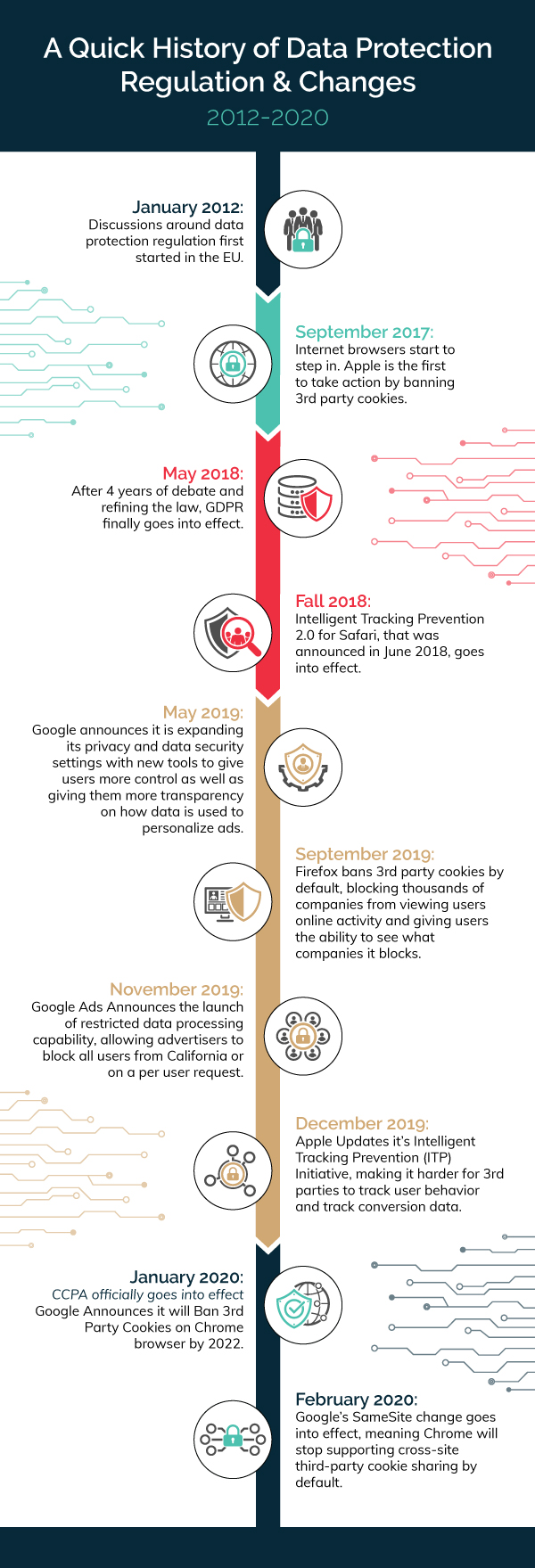
To better understand where we are and what it means for hotel marketing, let’s look back at a brief timeline of changes and regulations surrounding online data over the past decade.


What Do These Changes Mean?

September 2017: Internet browsers start to step in. Apple, whose revenues don’t rely on advertisements, was the first to take action by banning 3rd party cookies in September 2017.

https://www.theverge.com/2017/9/14/16308138/apple-safari-11-advertiser-groups-cookie-tracking-letter

May 2018: After 4 years of debate and refining the law, GDPR finally goes into effect. The first set of regulations aimed at protecting citizens from how their data is tracked, used, stored and sold.

Fall 2018: Intelligent Tracking Prevention 2.0 for Safari, which was announced in June 2018, goes into effect.

https://webkit.org/blog/8311/intelligent-tracking-prevention-2-0/

May 2019: Google announces during Google Marketing Live that it is expanding its privacy and data security settings with new tools to give users more control as well as giving them more transparency on how data is used to personalize ads.

September 2019: Firefox bans 3rd party cookies by default, blocking thousands of companies from viewing users' online activity and giving users the ability to see what companies it blocks.

November 2019: Google Ads Announces Data Processing Restriction Setting. The launch of restricted data processing capability allows advertisers to block all users from California or on a per-user request. Applying this setting turns off the ability to build and use remarketing lists for these users.

December 2019: Apple’s Update to It’s Intelligent Tracking Prevention (ITP) Initiative made it harder for 3rd parties to track user behavior and track conversion data. 

January 2020: CCPA officially goes into effect. Google Announces it will Ban 3rd Party Cookies on Chrome browser by 2022.

https://www.vox.com/recode/2020/1/16/21065641/google-chrome-cookie-ban-advertisers

February 2020: Google’s SameSite change goes into effect, meaning Chrome will stop supporting cross-site third-party cookie sharing by default.

In addition to CCPA, there are new laws and regulations on state legislature dockets across the country. How or when the U.S. federal government will take action in the form of data regulation law is unknown. The question remains, how will your hotel marketing evolve and change based on current and future changes coming to data regulation. We’ve taken some time to outline how we are viewing data regulation changes and evolving our hotel marketing to address them.

What Do These Changes in Data Regulation and Tracking Mean for Hotel Marketing?

  1. You should have already consulted your lawyer. The topics and laws surrounding data regulation and technology changes can easily get confusing. GCommerce recommends that you consult with your hotel’s consumer privacy lawyer immediately if you haven’t done so already to make sure your business is in compliance with these laws. Please feel free to check out our GDPR and CCPA guides for hotels, but understand that these are not to be used in any way as legal advice.
  2. Audience lists, such as remarketing lists, will be impacted. As more people take control of their privacy and restrict sites from using cookies to track their actions and behavior, the data behind audience lists will decline and so will remarketing audience list sizes. While we’re not seeing a huge impact on our clients yet, this might result in the decline in size for these types of audience lists which can directly impact ROAS tracked.
  3. Lean into 1st party data for audience and campaign targeting. While companies that rely on 3rd party cookies to track user behavior across the web and develop audiences will suffer, companies that hold 1st party data such as Google and Facebook stand to gain the most benefit. Since Google has so much 1st party user data through its various platforms, it can continue to offer rich in-market and affinity audience targeting opportunities through its ad platforms. GCommerce already uses these audiences to drive targeting campaigns and will continue to use audiences that provide favorable results for our clients.
  4. Our ability to track conversions will suffer. It will continue to get harder to track conversions to the same level of detail we have been used to through some browsers and platforms. The changes implemented by Firefox, Safari, and Chrome can all have an impact on this tracking. The industry is having to pivot and changes in technology that move away from cookie tracking are being worked on by large tech companies including Google. GCommerce is on the pulse of changes to pivot how we implement tracking across sites like Google Analytics to mitigate as much interruption to tracking as possible.
  5. Contextual targeting will become a greater asset. Contextual targeting options on Google and DV360 offer an alternative to audience-based targeting. Using keywords and topics allows us to craft ads and messaging to match content the user is viewing. This will continue to be a method for us to effectively market our clients and drive performance.
  6. Automation and machine learning tools can help. When cookies are blocked, it also prevents the ability to control certain campaign aspects like ad frequency. Google is investing heavily in ways to ensure the user experience isn’t impacted. One way is using machine learning within DV360, GCommerce’s programmatic solution of choice, to help prevent users from seeing your ad too many times.

The digital environment will continue to evolve as more data protection regulation emerges, forcing platforms and advertisers to adjust accordingly. While this does provide uncertainty in areas like audiences and tracking, it does provide the hope of a more secure web for us all. Please reach out to GCommerce with any questions you have in regards to our stance and preparation for these changes to the hotel digital marketing landscape.

Google My Business Reviews Directly Correlate to Your Hotel’s Conversion Rate

SHARE:

It should be no surprise in today’s world of marketing how important reviews are for your hotel. For a little refresher: 88% of consumers trust online reviews as much as personal recommendations and 95% of consumers say that online reviews influence their buying decisions. 

Your hotel has reviews, so you are golden, right? Not so fast. There is probably more that you should be doing to ensure your maximizing benefits from guest reviews. Uberall did a study from analyzing 64,000 GMB (Google My Business) profiles in 4 countries to find out what turns consumers into customers.

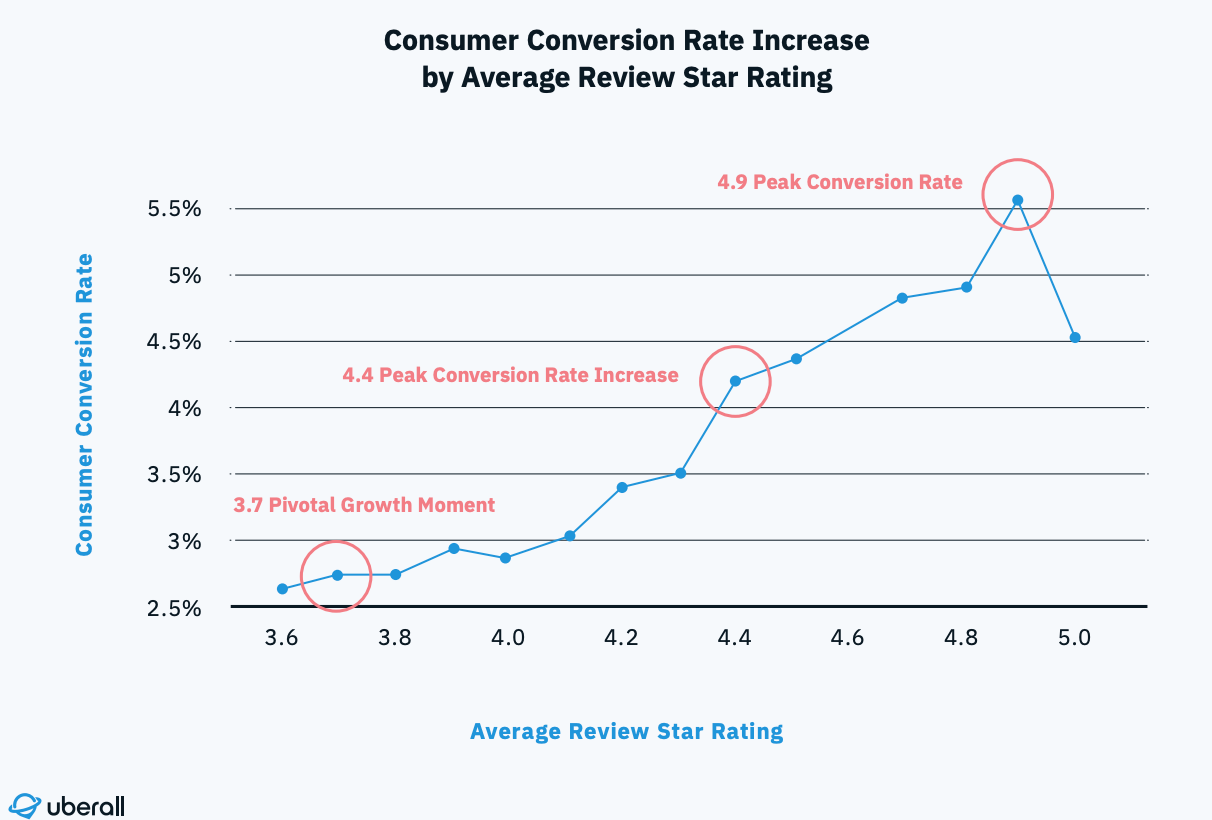
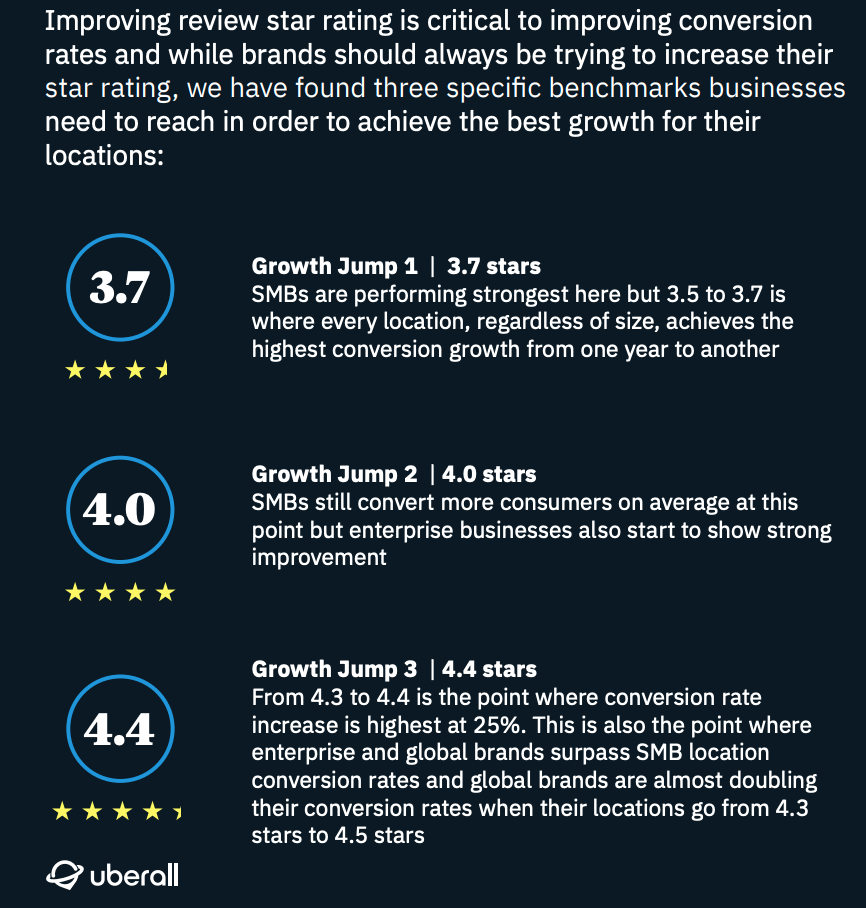
We all want the best reviews possible and a perfect score is the ultimate goal. What people don't realize is that even a review star rating increase of just 0.1 could increase the conversion rates of a business location by 25%, one study finds. The sweet spot for star ratings is 4.4 (Growth Jump 3 in the diagram below). The study found that there is less competition at this mark and is where the conversion rates start to dramatically increase.

Conversion rates peak when they have attained a 4.9-star rating, but when businesses improved from 3.5 stars one year to 3.7 stars the following, they saw an almost 120% increase in conversions, which is the highest percentage growth jump from any star rating.

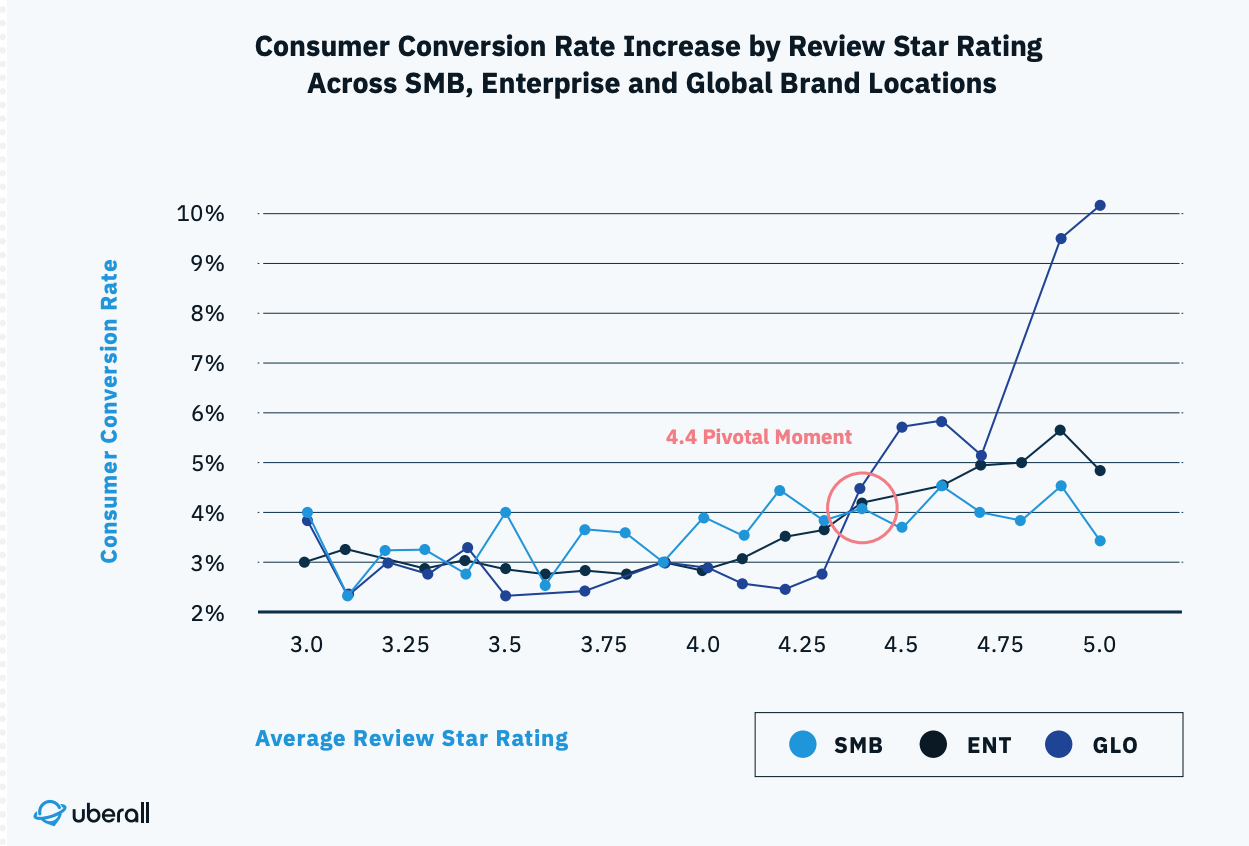
The chart below shows growth across SMBs (small to medium size businesses), enterprise locations and global brands. As you can see, across the board, conversion growth peaked between the 3.5 to 3.7-star mark.

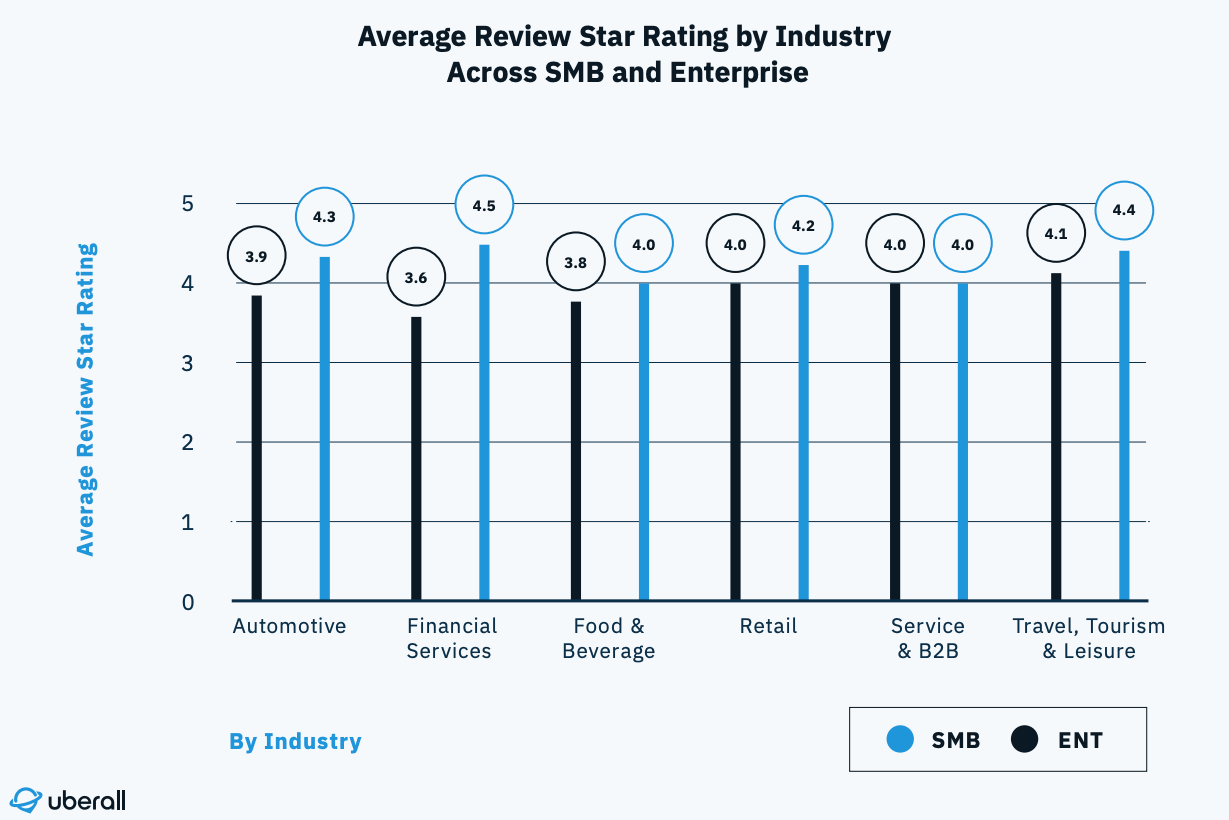
Reviews Across Industries

Reviews are allowing SMBs to compete with enterprise businesses and global brands and they should definitely take note. SMBs across the board are achieving higher star ratings allowing them to achieve higher conversion rates up until the 4.4-star rating mark.

Replying to Your Hotel’s Reviews Is Just as Important

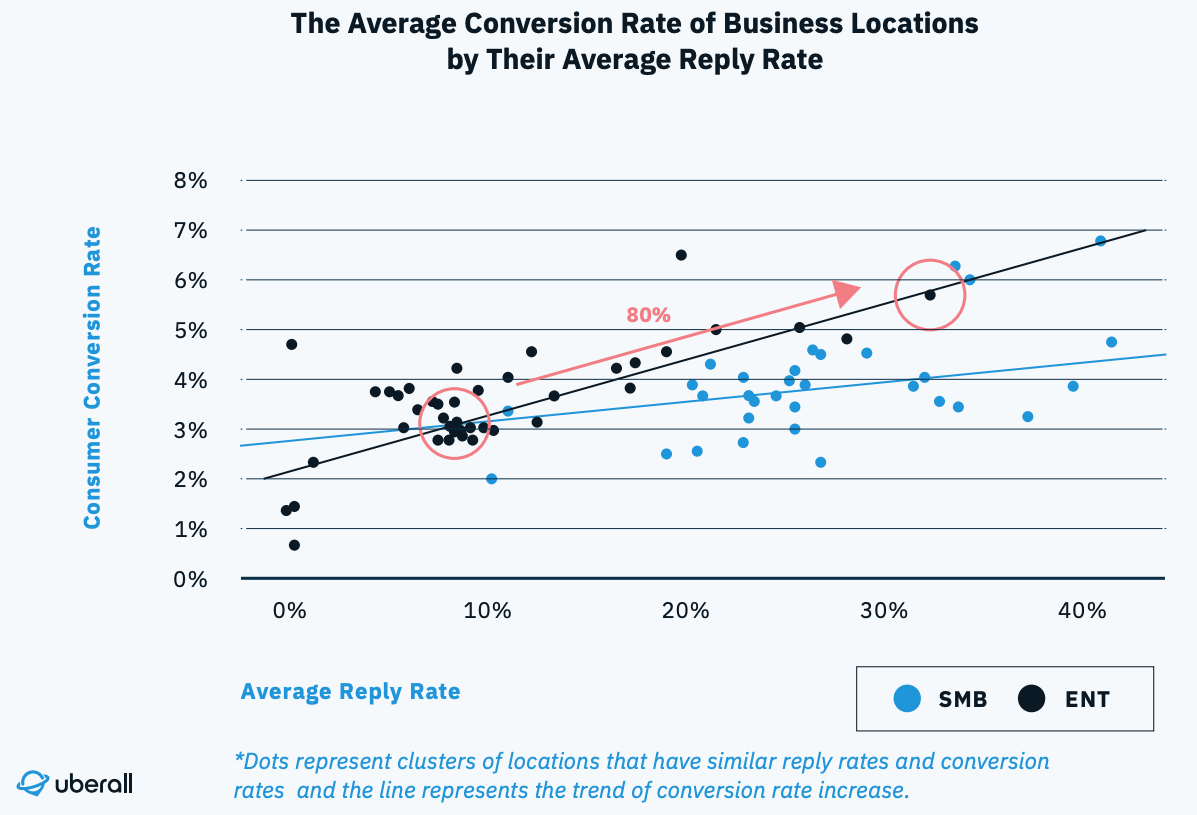
So, your hotel has a substantial number of reviews and a great star rating, now what? Reply! Enterprise businesses are hovering around a 10% reply rate. Understandably, they have more locations and thousands of reviews and it can be time-consuming. It is also estimated that 75% of small businesses don’t respond to their reviews at all, though they do reply more on average than enterprise businesses.

Looking at the chart, you will find that SMB and enterprise conversion rates intersect at just about the same point. When the reply rate starts to increase to the 20-30% range, you will start to see the conversion rate really climb for enterprise companies. 

“According to this data, enterprise locations that reply to an average of 32% of reviews will have an 80% higher conversion rate than enterprise and SMB locations that reply to 10% of reviews and 40% higher than SMBs that also reply to 32%” the study finds.

While enterprise locations will outperform SMBs at certain review star ratings and reply rates, most brands are not currently adapting to the reputation management revolution to achieve growth rates that they are capable of.

Next time you think you can’t compete against your local small competition, let alone the big brands in the hotel market, think again. Early adaption is key to get ahead and to maintain market share and position once you get there. 

GCommerce offers solutions to help you adapt and maintain your hotel’s market share and local position. Reach out to your Account Executive for more information!

Flywheel News: Your Top 8 Hotel Digital Marketing Updates For November 2019

SHARE:

Wow, just like that November is over and the last month of the year has arrived. We hope you all had a wonderful Thanksgiving and were able to spend some time relaxing with your friends and family. We’re grateful to have such a great group of coworkers, colleagues, and clients that allow us to keep doing the work that we love. Cheers to you all! Now, here you have your latest round of news for November in this easy to follow guide. Here’s your top 8 list of hotel digital marketing news for November 2019:

1. TripAdvisor Launches New Self Serve Media Platform

TripAdvisor announced the launch of its new self-service media manager platform earlier this month. This opens up media buys on the travel-focused research site to smaller businesses that can’t afford direct buys of $10k minimum. The self-service platform offers the ability to target visitors based on the destination page they viewed, behaviors such as trip type and budget and more. Learn more here.

2. Google Ads Announces Data Processing Restriction Setting

We’re less than a month away from the start of CCPA on January 1, 2020. As many businesses scramble to get themselves in compliance in time, Google has announced a new feature to help them control how their data is used on Google Ads. The launch of restricted data processing capability allows advertisers to block all users from California or on a per-user request. Implementing restricted data processing will turn off the ability to build and use remarketing lists for these users. Learn more here on Google’s position on CCPA:

3. Google Testing New Hotel Search Filters

Google always seems to be testing new features within its hotel search. The newest tests appear to have new filters such as city, where to stay, when to stay and travel packages that calculate pricing by matching flights with your hotel. This serves as a reminder to make sure you are optimizing your local listings and utilizing Google Hotel Ads to capture the booking through this channel.

4. Instagram Testing Removal of Likes in the U.S.

Following tests in other countries, Instagram is now testing the removal of forward-facing “likes” within its platform. This means account owners will still be able to see the total amount of likes but the like count will not be shown to users scrolling through the platform. This is just a test at the moment but could roll out permanently. This could change the way users interact with posts as the social proof of “likes” will no longer influence their interaction.

5. Google Discovery Feed Campaigns

According to Google, 800 million people use Google Discovery feed. They have now launched a new campaign type allowing advertisers access to serve ads within this space. The new discovery campaign type serves the ads across Google Discover Feed, YouTube and Gmail from a single campaign. It offers the ability to display ads to users who are in the customer journey discovery phase.

Targeting for these campaigns is based on audiences such as in-market and affinity, not keywords and ads can contain imagery as well as text. Looking to test a new campaign type to drive awareness and consideration? Reach out to your GCommerce representative to launch a test today of this new Google Ads campaign type.

6. Facebook Launches Multiple Text Variation Feature

Showing similarities to Google Ads’ responsive ad type, Facebook has launched a new ad feature that allows the inclusion of multiple text line variations. Facebook’s system will then decide which line of text to show based on the user - optimizing the ad automatically based on the audience to drive better results. GCommerce will be launching multiple text variations for clients as they become available in accounts.

7. Google Maps Testing New Local Guides Feature

Google's local guides are an important driving force behind Google reviews, a huge factor within local search. Google’s taking a step to make local guides and reviews a more social channel by allowing users to follow specific local guides and their recommendations. Who knows how this will evolve as Google puts more effort behind this channel but GCommerce recommends the continued push to have guests publish reviews directly on Google to grow your hotel’s presence and positive reputation. 

8. Facebook Updates Ad Description Visibility

Facebook ads within the news feed will be subject to a new update to description visibility. According to Facebook, “some people will see the description and some people won’t.” Where the description was previously a section of the ad to display essential information it is now advised that “you should only put non-essential information there.” Instead, Facebook recommends placing “essential information in the headline, such as shipping information, detailed product information (like the type of material or product dimensions), ratings, reviews, or your return policy.” GCommerce recommends updating your hotel’s Facebook ads to ensure no essential offer or property information is located within the descriptions.

Keep Reading