Increase Website Conversions & Traffic

SHARE:

In 2014, I was looking for a new job and did a Google search for “digital marketing careers park city.” GCommerce was one of the top results and I submitted an application. During my first interview with GCom, our current Chief Evangelist, Chris Jackson, said he was really surprised to hear that I found their site on Google: “we’ve hardly optimized anything on there, we’re like the painter that still hasn’t painted his own house." When I started as a Search Specialist, I quickly learned exactly what Chris meant; the company was moving and growing so quickly, marketing our own website was a lower priority than building out new services and strategies that would serve our clients. 

Much like the rest of the world, we finally caught up on some to-do items during 2020. On August 26th, the new and improved GCommerce website was introduced to the world. As always, our website design and development teams did an amazing job of building an incredible website. The pages are built on our latest Stile CMS that is incredibly agile and flexible, allowing us to make quick updates and changes to the website while creating a more customized experience with our content. With a fresh look and an incredibly well-optimized site, the painter had finally painted his own house. 

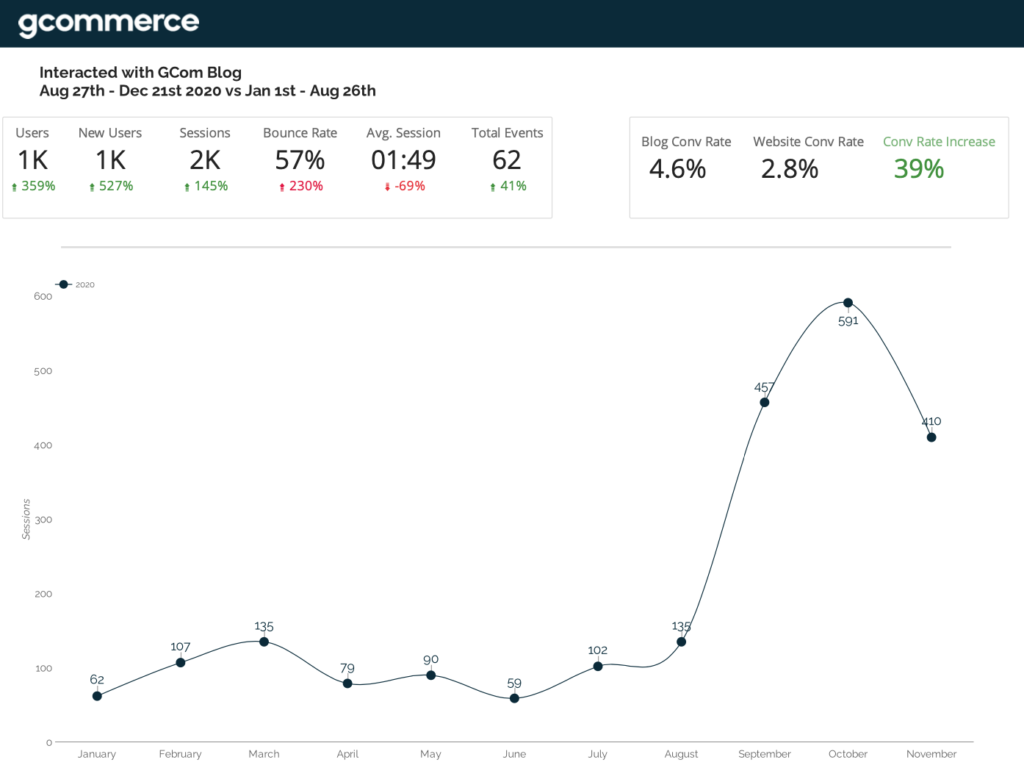
Now that we are in January, 5 months post-launch, the real question is, did it pay off? Was it worth it to invest in a new website? We’re happy to say it absolutely was. In the first 238 days of the year (Jan 1 – Aug 26), GCommerce posted 34 blogs, or a blog every 7 days. In the last 116 days (Aug 27-Dec 21), GCommerce has published 13 blogs (not including this one), or a blog every 9 days. Our posting frequency has decreased since the launch of our new website, however, our traffic has absolutely exploded.

We are reporting over 1,000 more Sessions to the site, a 360% increase. GCommerce averages a $.78 CPC for all our clients on Google Ads; if we were to drive this much traffic to the website through that platform, it would have cost over $800 at our average CPC. Instead, posting 13 blogs has driven that same amount of traffic. The Bounce Rate and the Average Session Duration have certainly gone up and down respectively, which are not necessarily good things, however, this is higher-funnel traffic and we would want to know the Conversion Rate of this traffic compared to our site average to see whether or not we are driving a more qualified audience with our blog content. In calculating those conversion rates, we see a 39% increase during this time, so we are definitely driving a qualified audience with our blog. For GCommerce, that means people submitting RFPs, sharing content on Social Networks, interacting and engaging with the website among other things. 
For many small businesses, 2020 has been an incredibly difficult year with many challenges. Yet, we are optimistic with an increased demand for travel and a vaccine that is beginning to be delivered to frontline workers. We are hopeful that 2021 is a different year for travel and hotels. While this might not be the best time for every business to invest in a new website, for those that can, the return on investment once travel demand has returned could really pay off in the long run. In the example of our company, we were posting more blogs prior to our new website launching, possibly putting more time, labor, energy, and research into those blogs. Simply by building a new website and even posting less frequently, we have seen a huge return with better conversion rates from more “free traffic” - we pay in the form of blog posts, but not in the form of budgets, ad copy, creative, CPCs and all of the other hard costs that go into driving traffic to your website with advertising. 

If you are interested in building a new site or upgrading your current one, check out our impressive portfolio of websites custom built by the experts at GCommerce.  
Does The Location Of A Call To Action Impact Website Conversion Rate?

SHARE:

Landing page optimization and conversion rate optimization (CRO) is a study and an art all in its own category. In case you don’t have the time to dive headfirst into the world of optimizing calls to action on your hotel’s website, GCommerce has you covered with some first-hand data fresh from our marketing teams.

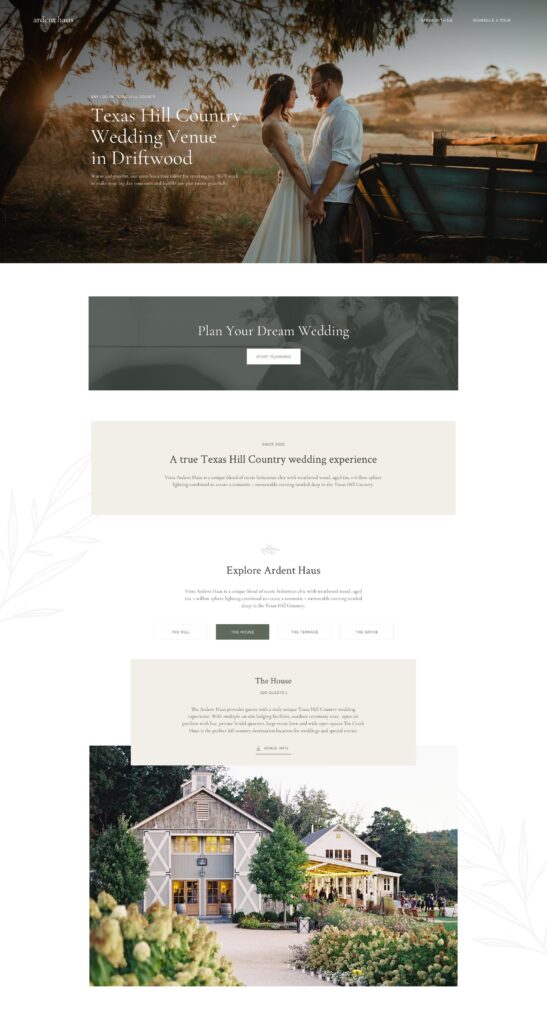
Earlier in the spring, as the coronavirus pandemic had most hotels shut down, we saw some consistent requests for information on weddings hosted at hotels. While most of our clients were seeing decreased demand for room nights, we thought it was a great chance to create an A/B test on the call to action of a wedding page.

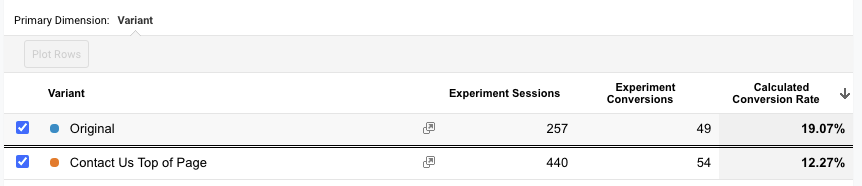
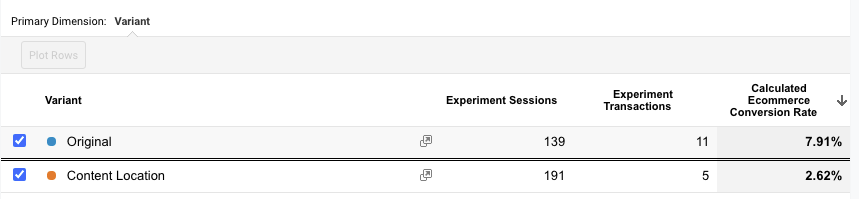
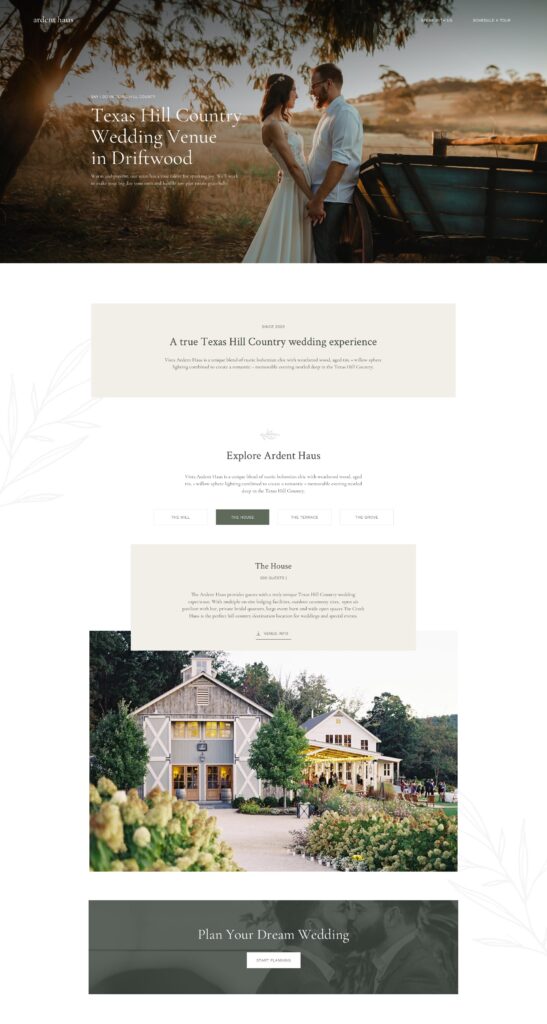
Many practitioners of CRO would tell you the position of the call to action within the page is incredibly important. In the case of our wedding page, the call to action was a button with the text “Start Planning”. We wanted to see if we could increase the conversion rate of people requesting information for weddings if we moved the call to action to the top of the page. Using Google Optimize, we created a true A/B test with half of our traffic being sent to the original page and the other half being sent to the test page that had the call to action at the top of the page.

After 90 days, we evaluated our results and found that keeping the call to action at the bottom of the page kept conversion rates higher. We think this may have something to do with the nature of booking weddings at a hotel; users generally want a lot of information and want to see photos and details about the venue.

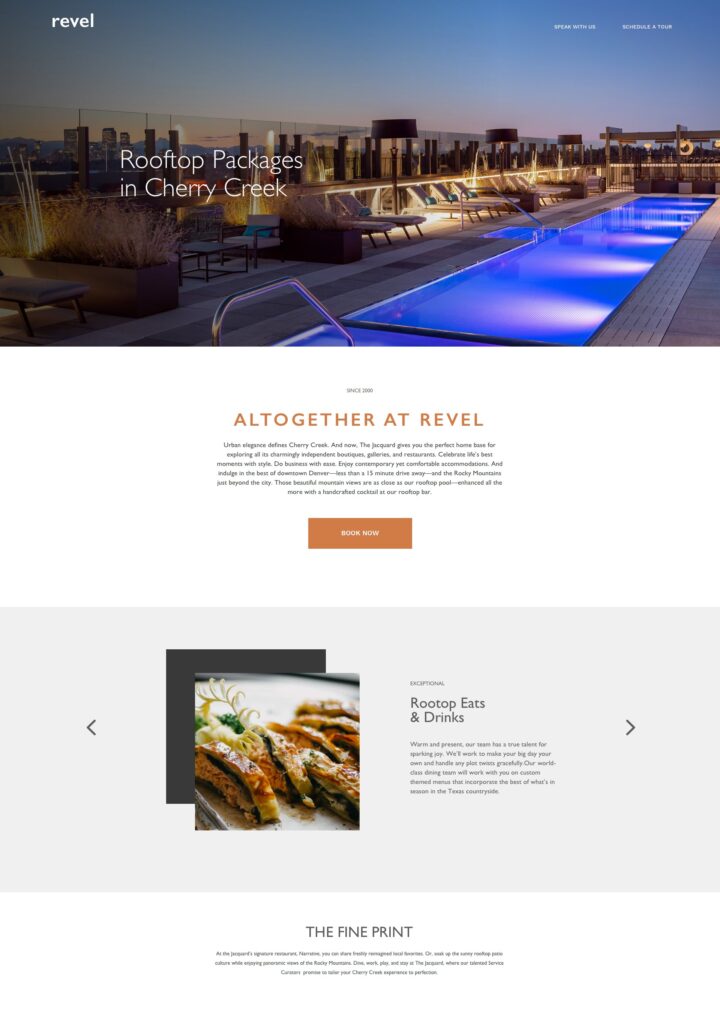
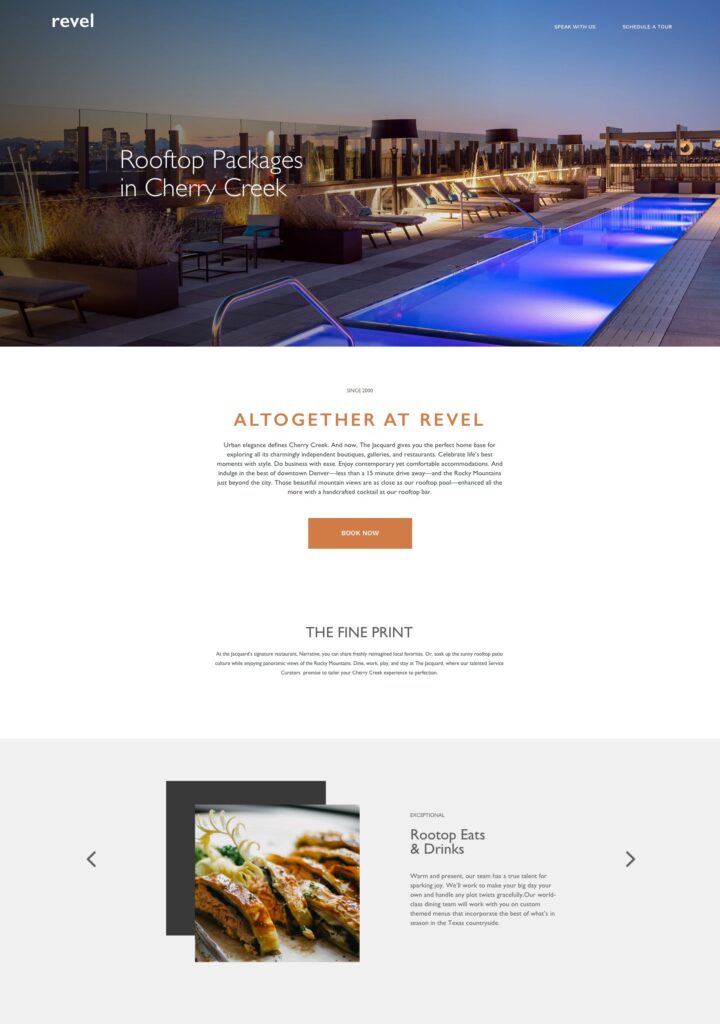
Having this information in our hands was important as we moved into the summer and the hotel was able to start accepting guests again. We wondered if we could improve the conversion rates of a package offer through the hotel if we moved the call to action lower on the page. Similar to the wedding page, maybe we could increase conversions if the call to action were below the details about the offer? We chose to run our next test on a rooftop package page that provided a food & beverage credit to the rooftop bar. We felt this was a package that could appeal to visitors during the coronavirus pandemic and wanted to have as much impact on increasing conversions as possible. Another A/B test was created on a rooftop package page with 50% of traffic going to each version:

Once again, our hypothesis proved to be wrong and our variant of moving the call to action to the bottom of the hotel package page performed worse than the original:

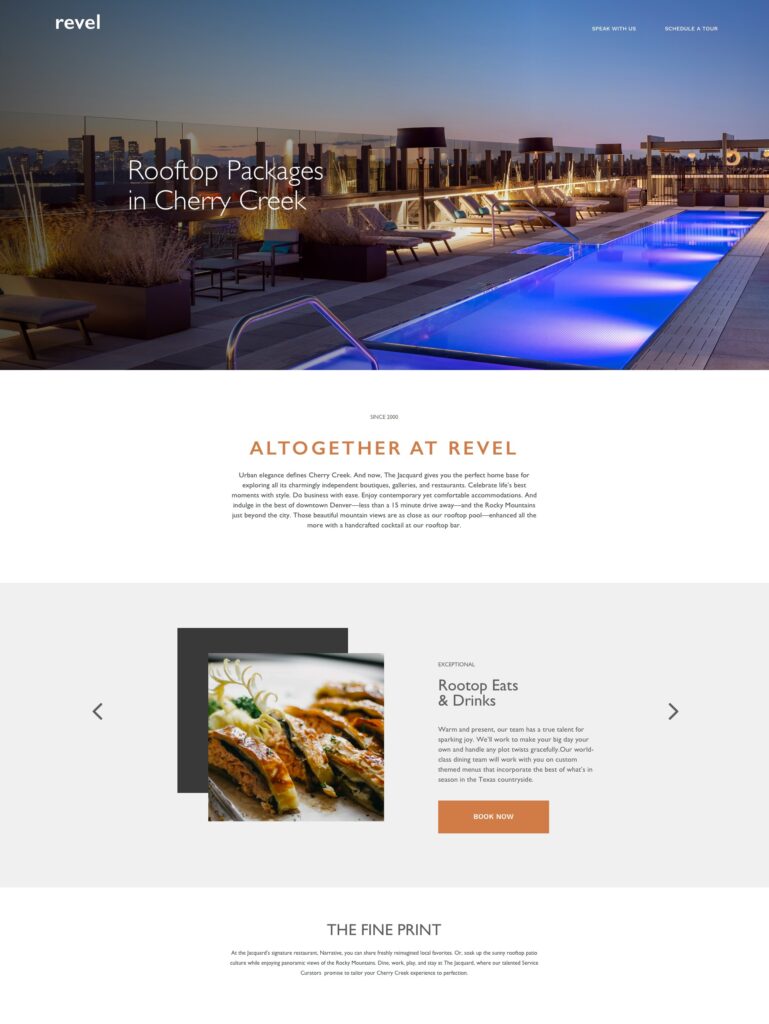
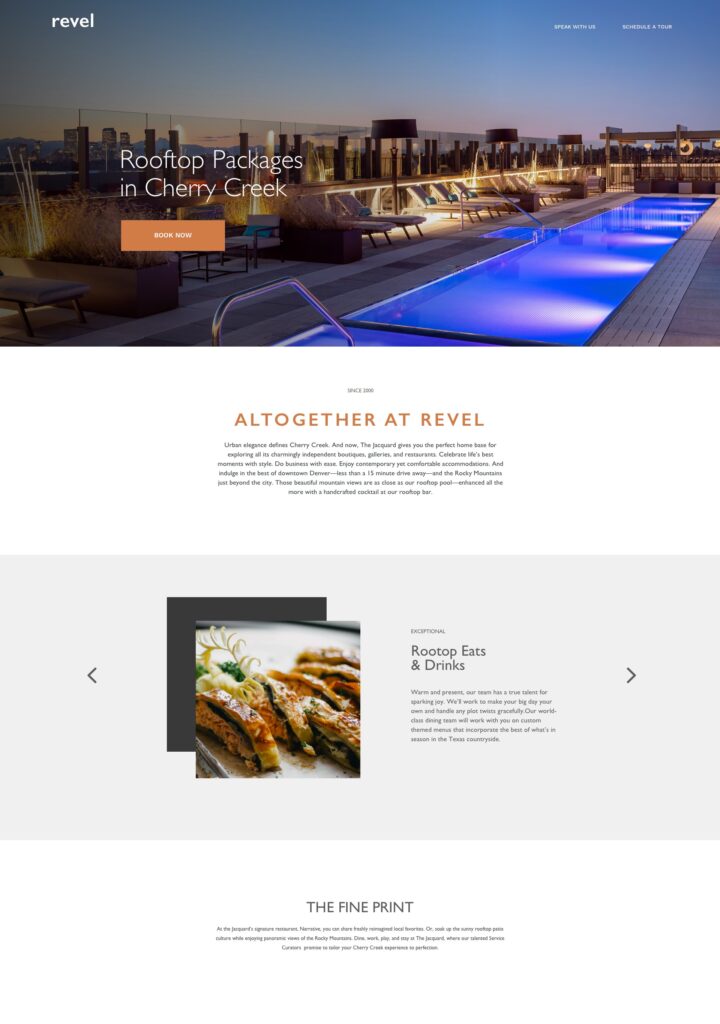
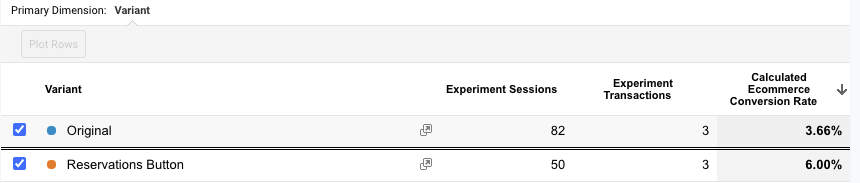
In an attempt to totally redeem ourselves, we set up a final A/B test to see if the call to action at the top of the rooftop package page would perform better since people booking packages seem to be interacting in a different way than those requesting information about weddings:

Finally, we seem to be getting some positive results on our variant and we have currently recorded about twice the conversion rate by moving the call to action higher up on the page.

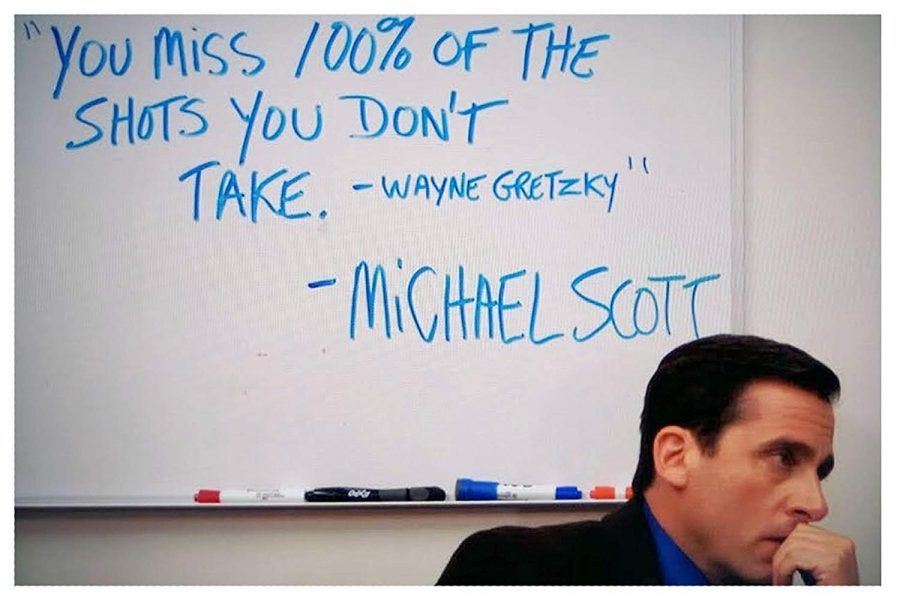
What is important to note here is that while our first two A/B tests were not successful, they established a base of understanding and allowed for additional tests to be run. The only failure in running A/B tests is not running them at all. Even if the test doesn’t go as planned, there’s always a lesson to be learned. Fans of The Office may appreciate Michael Scott’s take on the subject:

michael scott from the office

Knowing that conversion rates are different based on the location of the call to action AND the nature of the services you are trying to communicate to your guests is vitally important to improving user interactions on your website. There is no better time than now to begin running A/B tests on your hotel website. Contact GCommerce Solutions today to get started on gathering insights to improve your hotel conversion rates.

Top 5 Reasons Your Hotel Needs Prospecting Campaigns

SHARE:

You want your hotel to make money, right? At least that is usually the main goal when it comes to most hotel digital marketing campaigns. What if we told you that the secret to driving more revenue and building your audiences up was by prospecting and targeting top-of-funnel users? 

We all know that retargeting campaigns, or campaigns serving ads to users already familiar with your brand or hotel, are the main money makers of the marketing world. However, those digital marketing campaigns would quickly run out of gas without the continued support of prospecting. While we don’t typically see a hefty number of conversions through prospecting campaigns (although a strong campaign can still see results), they are a key player when it comes to success with any digital marketing campaign.

Here are the top reasons why you should be running prospecting marketing campaigns for your hotel.

  1. Audience Refresh. The continued use of prospecting (or brand awareness) campaigns will help refresh your retargeting audiences by consistently bringing in new users. Most retargeting windows are within 30-90 days of being onsite, but if you aren’t refreshing this audience regularly, it will quickly decrease. This in turn will cause whatever users are left to be shown your ads in excess which can lead to ad fatigue, higher bounce rates, lower CTRs, more spam reports and of course, less revenue.
  2. Discover New Audience Targeting Segments. Many people shy away from prospecting because they think they already know their target audience. At GCommerce, we argue that there’s always potential to expand into new markets, geographics, demographics, and more! After all, there’s no way to see if a new targeting segment is viable if you never try it out. By steering away from the traditional targeting segments into new geographic locations or interests, we’ve often found new, responsive audiences that were previously unconsidered and thus expanding our reach and driving more revenue.
  3. Increased Traffic to Your Hotel Website. Aside from building up the run of site list, getting users to your site is a major benefit of prospecting campaigns. Our clients are always seeking out new ways to increase their site traffic with qualified visitors. Prospecting is one of the most cost-effective ways to do this, especially if you use Display and Facebook advertising as they traditionally see much lower CPCs and can run on a smaller budget compared to other channels, such as paid search.
  4. Increased Brand Awareness. Prospecting isn’t only for supporting retargeting campaigns. In fact, most people will think of prospecting in digital marketing as a tool to build brand awareness and high visibility across the web. This is especially important if you are launching a new brand or starting out on a new channel for the first time. Whenever we launch a new client at GCommerce, we tend to focus on their prospecting campaigns first so that we can build up our retargeting lists as quickly as possible and increase brand visibility at the same time.
  5. Drive More Wedding, Meeting & Event Lead Submissions. That’s right, prospecting campaigns are also great for eliciting onsite leads or on-Facebook leads. Unlike using retargeting lists, which are normally limited in size, prospecting marketing campaigns can be specifically targeted to drive quality traffic to your onsite lead form. Facebook also has great lead generation ability and allows you to re-create your form in the Facebook ad itself, allowing the user to engage with your hotel’s ad and complete the form in with less clicks. As a bonus, you can also add the users who filled out your form to your retargeting lists (win-win).

Utilizing prospecting marketing campaigns for your hotel is always important and will always be encouraged by the marketing experts at GCommerce. It’s especially important to use them right now as we’re learning how to cope with COVID-19’s impact on the industry. If you’ve had your marketing channels paused during this time and are now getting back to you regular advertising schedule, prospecting will be pertinent to your hotel’s digital marketing campaign success. 

Most likely, your retargeting lists are depleted and your normal target audiences have shifted to the drive market or similar markets. Pushing your marketing dollars toward prospecting over retargeting first will help to build up your run of site and serve your ads to the most qualified audiences rather than wasting it on an audience who isn’t looking to travel to your location or is no longer interested in your brand. 

For more information and guidance on building your prospecting audiences up, consult the experts at GCommerce today!

The Ups & Downs Of Building Your Own Digital Marketing Agency Website

SHARE:

If you didn’t already know, we launched our new digital marketing company’s website on August 26th. It’s been in the works since January of this year and with other digital marketing client projects and then the pandemic hitting, it took a bit of a backseat for a while. All in all, it’s beautiful and we’re very proud of the finished product.

I just got off a video call where we were conducting our internal retrospective meeting where we discussed how the website development project went. It got me thinking about the ups and downs of building your digital marketing agency’s own website and I’ve laid them out here: 

1. Prioritizing yourself as a digital marketing client

As are many digital marketing agencies, we are typically the painter that doesn’t paint its own house. This website was a big step in reversing that mentality. In June 2019, we refreshed our brand and essentially updated the existing site with the new branding. It was passable, and I was surprised by how many people would say they loved our website.

When we started this website development project back in January it had been a long time coming. Years ago, the team designed the website in-house but we had to outsource the development portion due to our resources being tied up with client projects at the time. It deeply pained us all to not develop our own website, but we weighed the pros and cons and decided to move forward. Three years later, we were finally ready to redesign and develop a brand new website with our own team and to the level that we knew we needed to represent our skill set and work.

2. Holding yourself accountable

I’m proud to say that GCommerce builds beautiful sites that perform for our digital marketing clients. To be honest though, many website design firms are capable of building beautiful websites. What sets us apart from them is our website development process which is focused on the client’s overall business strategy. So when you are acting as both the client and the primary decision maker internally, lines can get blurred. In my role, it’s easy to get off track, not follow process and ultimately cause unnecessary confusion and frustration amongst the team. I frequently found myself pausing before firing off an email with feedback and I know I let at least a couple of them go out. But, I would quickly remember what that does to the overall website development project and why it’s so important to keep communication organized.

3. Empowering the entire team

One of the biggest “ups” of building your own company’s website, is if managed correctly, the entire team has ownership of it. Because we aren’t limited by budget or even time, each team member can participate in all of the conversations so they know the ultimate goal of each decision. And not only do they know what the end goal is, they help create it. Our digital marketing agency’s new website is by far the best one we’ve had yet and it’s because we were able to have an entire team meaningfully contribute.

The last 6 months have challenged us all in ways we couldn’t have expected. Building a new website for ourselves was a luxury that we were very fortunate to be able to afford. The team’s heart and soul was poured into this website development project and it shows. We are all in love with this refreshed representation of our work and who we are. Hope you enjoy it.

A Mid-Year Review of COVID-19’s Impact on Facebook Advertising for Hotels

SHARE:

As COVID-19 cases increased across the US, many hotels and resorts shut their doors to ensure the safety of their employees and community. This led to a dramatic decrease in revenue during a normally popular travel season. As bookings decreased, hotels and resorts searched for ways to decrease costs as much as possible. This resulted in many businesses and hotels across the country pausing their digital marketing efforts for a few months. Many businesses look at cutting digital advertising first in an effort to cut overall business costs, even though studies from the 2008 recession proved that hotels that kept advertising came out the strongest. 

One of the many digital marketing channels that took a hit during the current crisis is Facebook advertising. Hotels and resorts across our client roster  were forced to decrease or pause Facebook advertising spend due to lack of available marketing funds. Here’s a quick review of our Facebook ad performance year-over-year.

March- June 2020 vs 2019 Facebook Ads Performance

  • 71% Decline in Facebook Advertising Spend
  • 74% Decline in Revenue Generated from Facebook Ads
  • 54% Decrease in Impressions
  • 42% Decrease in Clicks

Although many of our clients pushed out organic posts with the goal of follower engagement while they were unable to commit as much budget to advertising, their traffic and revenue still decreased. 

Positive Facebook Advertising Performance for Hotels During COVID-19

It’s not all negative. Even with a large general decrease in performance compared to 2019, we did see positive results from our hotel clients who were able to keep Facebook advertising campaigns running. For those able to continue funding throughout the early months of the pandemic, their Facebook ad campaigns produced a 232X return on ad spend (ROAS) in May, jumping to 367X in June and 383X in July.

The increase in revenue and ROAS through the month of May can be attributed to our clients reopening and resuming their digital advertising across multiple channels, including Facebook. Many of our clients resumed or increased their Facebook advertising budgets in June leading to even greater increases in revenue and ROAS. 

Continuing to run wedding lead generation campaigns also benefited clients even with restrictions on large gatherings. One hotel in Louisville, KY received 80 leads through a Facebook Lead Generation Campaign from March to the end of June. While many weddings and gatherings have been postponed, this downtime offered a great opportunity to plan for the upcoming wedding season.

The strong performance we continue to see on Facebook advertising this summer demonstrates thepent up travel demand and consumer need or desire to get back to traveling and enjoying their summer vacations. Many properties are focusing their digital marketing efforts on their local markets and advertising a staycation experience. As travel opens up more and restrictions are lifted, hotels should look to expand audiences, but only if data supports the decision. It will be important to monitor performance to see if bookings stay strong in the next few months, or if they decrease due to the potential to exhaust the smaller, local audiences and the transition from summer to the typically slower fall travel season.

Key Takeaways From Facebook Ads Performance During COVID-19 & Beyond

While properties are focusing on their local guests and expanding their efforts to popular markets based on the decrease of travel restrictions, GCommerce Solutions recommends the emphasis for prospecting campaigns across a variety of platforms. As many properties reduced their digital marketing budgets, their online presence decreased significantly. The most important action that many hotels and resorts can take now is rebuilding their brand awareness, and engaging with potential guests. Properties who invest in a strong brand presence now will see positive results in the upcoming months. 

From May through July of this year, Facebook averaged an impressive ROAS of $350 for our clients that were engaging with the platform. Curious if Facebook was an outlier or a leader among channels, we looked at those same clients' performance on other channels during the same time period. We found that while the client's performance on PPC averaged a respectable $10.52, Facebook was by far the leader. 

In our estimation, this can be attributed to three primary factors. First, Facebook still offers micro-targeting capabilities we simply don't have access to on other digital channels. Working with our clients to understand their shifting market segmentation during the outbreak, we were able to advertise only to prospects with a high likelihood of making a purchase. Second, Facebook allows for a more rich advertising experience than other platforms. Travel is an often visual, always emotional purchase, and being able to better visually tell a story improves overall performance. Finally, advertising rates on Facebook still haven't caught up to other mediums like paid search. Marketing dollars simply go further on this medium. Because of these findings, we are reiterating to hotels and resorts that Facebook needs to be an early part of their digital advertising mix as they once again start actively marketing.

Questions about Facebook advertising for your hotel? Please reach out to one of our digital marketing specialists today.

Flywheel News | August 2020 Digital Marketing Month in Review

SHARE:
  1. Google Travel Updated With New COVID-19 Related Features

COVID-19 had severely impacted how people travel and plan for travel. Knowing this, Google has incorporated new features into its travel portal to help consumers with their planning and keep them on Google as their travel planning resource. Along with COVID-19 related warnings about specific destinations, Google has also incorporated a feature that shows you the percentage of open hotels with availability and flights currently operating. It will also show travelers if a specific destination is trending for COVID-19 and new cases. Another new feature allows travelers to filter by hotels that offer free cancellations. Ensure you are keeping your hotel’s guests and potential guests as up to date as possible with your policies and procedures on all of your channels, including Google My Business.

  1. Facebook Announces More Ad Targeting Option Removals 

In the past, Facebook has removed targeting options within it’s platform due to anything that could be used on a discriminatory basis. Facebook doesn’t state this as a reason for this most recent removal of 1000 targeting options, and instead notes it as removal “because they’re just not seeing much use.” However, it’s important to note Facebook’s decision to get rid of more granular targeting. Even though we don’t think this will impact us or our clients targeting much, we’ll be monitoring campaigns to ensure we update and replace targeting as necessary. 

  1. Google Showcases Mobile Data with COVID-19 Community Mobility Reports

Google has released what it’s calling "COVID-19 Community Mobility Reports" which are developed to help public health officials combat COVID-19. You’re able to dive into data that Google has from mobile devices to understand how people are moving around their communities vs pre-COVID-19. You’re able to look at categories including Retail & Recreation, Grocery & Pharmacy, Parks, Transit stations, Workplaces, and residential at the state or county level. Check it out here.

  1. Facebook Warns of Impacts to Audience Network Due to iOS Update
Facebook announced that due to the most recent iOS update on Apple devices, they will no longer be collecting the IDFA for advertisers on their apps on iOS 14 devices. This impacts publishers' and apps' ability to monetize through the Audience Network, which is Facebook’s off-Facebook, in-app advertising network for mobile apps. It does not impact on-Facebook ad audience targeting. This is yet another example of privacy changes coming to platforms, devices, and browsers that will impact digital advertising targeting and tracking moving forward.

  1. Facebook Ads Shop Tab & Expands Shops to All US Businesses 
Facebook has unveiled the new Shop tab navigation within its menu, allowing users to easily find products from their favorite brands and businesses. If you have any sort of retail or eCommerce component to your business, you should be taking advantage of the Facebook and Instagram shops that are now available to all businesses in the US. Learn more about all of these new features here. These are just a few of the ways Facebook is building it’s eCommerce component, taking on Google and Amazon.

  1. Pinterest Shares Travel Recovery Data & Ways Brands Are Inspiring Travel Again
Pinterest recently shared a blog that highlighted some of it’s Pinterest trends and travel-specific data. While it calls out trends that we were already aware of, like the increase in road trip searches and outdoor focused destinations, it’s important to note that it’s also seeing increases in air travel-related searches like “airplane essentials” and that the number of travelers passing through airport security is nearly 10x higher than in early April. Pinterest also dives into how top travel brands including Disney are helping travelers imagine future trips and reassuring travelers with messages of safety and trust. GCommerce continues to recommend that hotel clients focus on the planning and prospecting phase of the consumer journey through effective campaigns that showcase messaging around safety as well as escapes.

Keep Reading