Google Ads Vs Google Hotel Ads: Do You Need Both?

SHARE:

Did you know that 2023 marks the 23rd anniversary of Google Ads? 🤯 Ad revenue now contributes 80% of Alphabet’s revenue and last year that totaled around $54 billion. Over the past 20+ years Google paid search has become an almost guaranteed budget line item for pretty much every business that is looking to advertise, reach customers, and drive revenue. Chances are, your hotel has been a loyal customer of this ad type for years. But did you know there’s a type of Google search ad that is helping hotel’s drive 5%+ of total website revenue that can’t be accessed via the standard keyword focused Google paid search campaign type? 

If you’ve been a loyal Google paid search advertiser all these years and you’re not running Google Hotel Ads via metasearch advertising then you’re losing out on a very large portion of the Google hotel search ecosystem. One that could be driving a substantial amount of direct revenue for your hotel. One that the OTAs have been using to STEAL MARKET SHARE the past 10+ years. 

A Brief Overview of Google Hotel Ads

Did you know the first ideation of Google Hotel Ads technically launched back in 2010? Up until 2018, hotel inventory partners running these sponsored placements had to manage them in a completely separate platform from Google Ads. When Google moved Hotel Ads into the Google Ads platform in 2018, it made it easier for advertisers to manage alongside their standard keyword based paid search campaigns. The caveat though, is that in order to run these Google Hotel Ads placements the hotel advertiser still has to rely on a Google connectivity partner to feed rates/inventory into a separate campaign type.

To clarify, just because you are running Google paid search, doesn’t mean you are live on Google Hotel Ads.

How are Google Hotel Ads Different Than Google Paid Search Ads?

There are quite a number of differences between Google Hotel Ads and Google Paid Search Ads. Understanding these differences will help you navigate between the Google search ecosystem for hotels and set your hotel up for success by best utilizing these different campaign types.

  1. Google Hotel Ads require a direct feed to your hotel’s (or an OTA’s) rates and inventory

Unlike Google paid search campaigns, Google Hotel Ads require a direct feed to your hotel’s rates and inventory via your CRS or booking engine. A huge factor in hotel ads campaigns quality score comes down to the accuracy of the price in your feed to the price that is shown on the booking engine landing page. Since these rates and inventory fluctuate constantly based on your inventory and revenue management, it’s a requirement by Google that there is a feed in place to keep your campaigns updated with the latest rates and inventory information. You also must use a Google technology partner that offers the ability to connect your hotel’s rates and inventory to Google Ads. This list is limited but can include booking engine/CRS companies as well as technology providers such as WIHP and Derbysoft.

  1. Google Hotel Ads appear in different places in Google’s search ecosystem

Let’s look at some examples of where Google Hotel Ads and Google Paid Search Ads appear within Google Search.

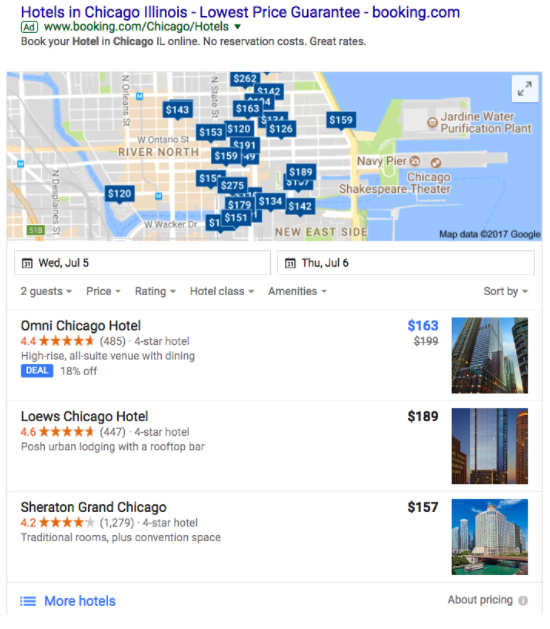
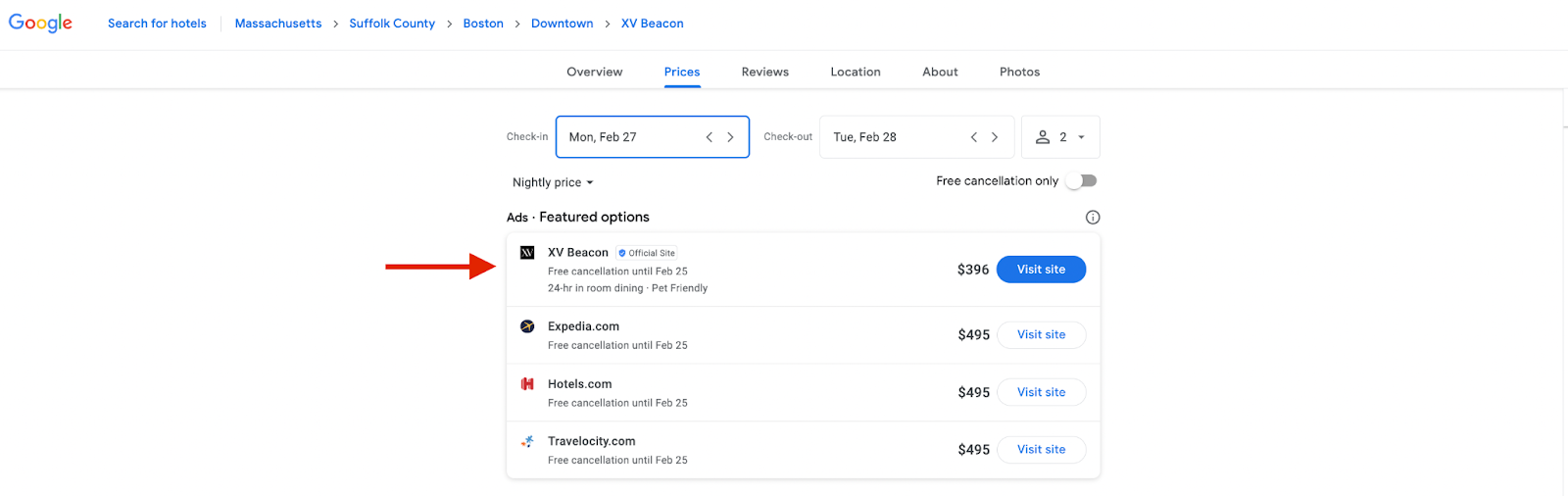
Google Hotel Ads can be found under the knowledge panel in the main search engine results page (SERP), within Google’s travel planner and within Google Maps/Local Map Packs. 

Google Hotel Ads in Knowledge Panel on SERP Shown Below:
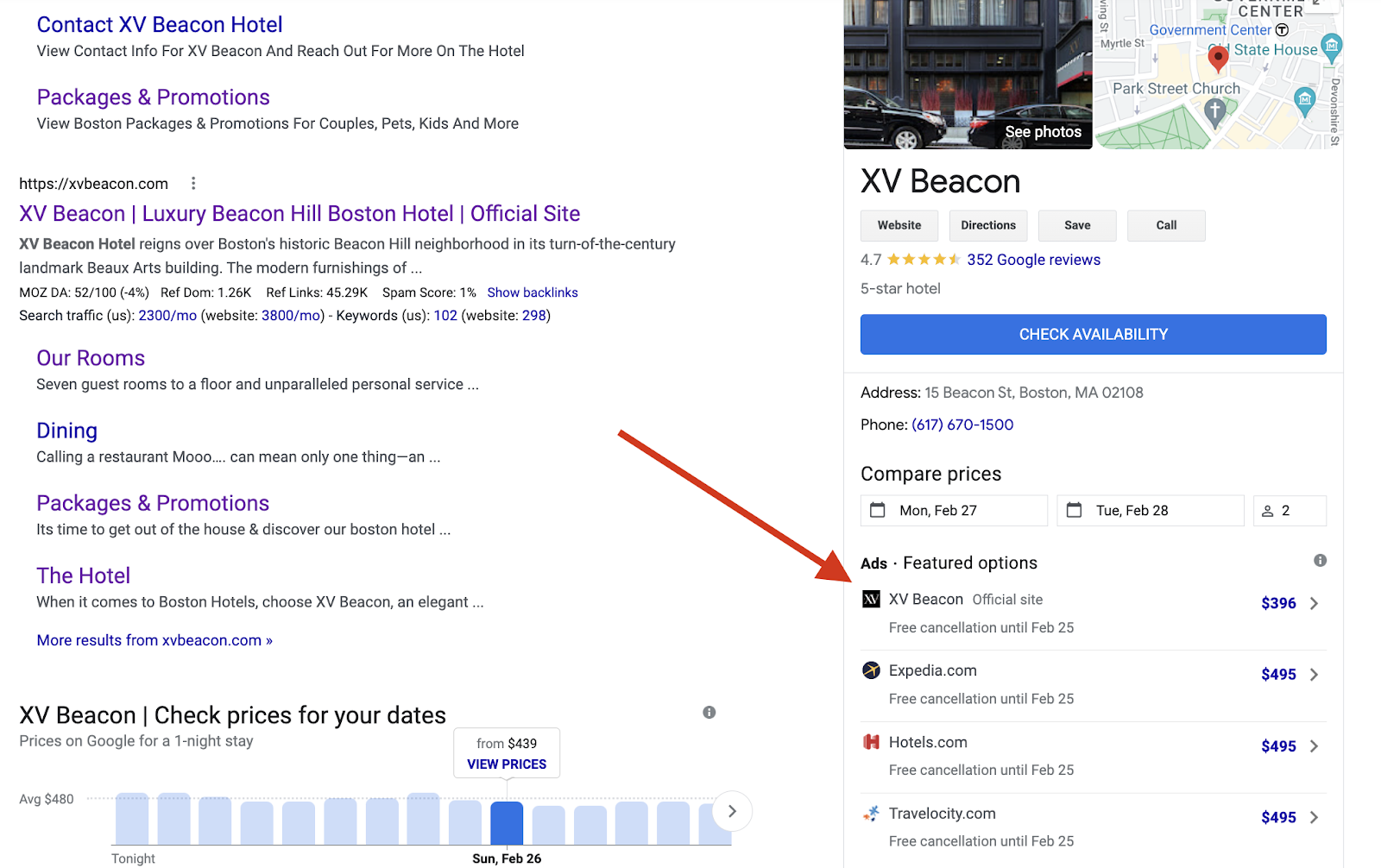
Google Hotel Ads in Google’s Travel Planner Shown Below:
Google Hotel Ads in Google Maps Shown Below:
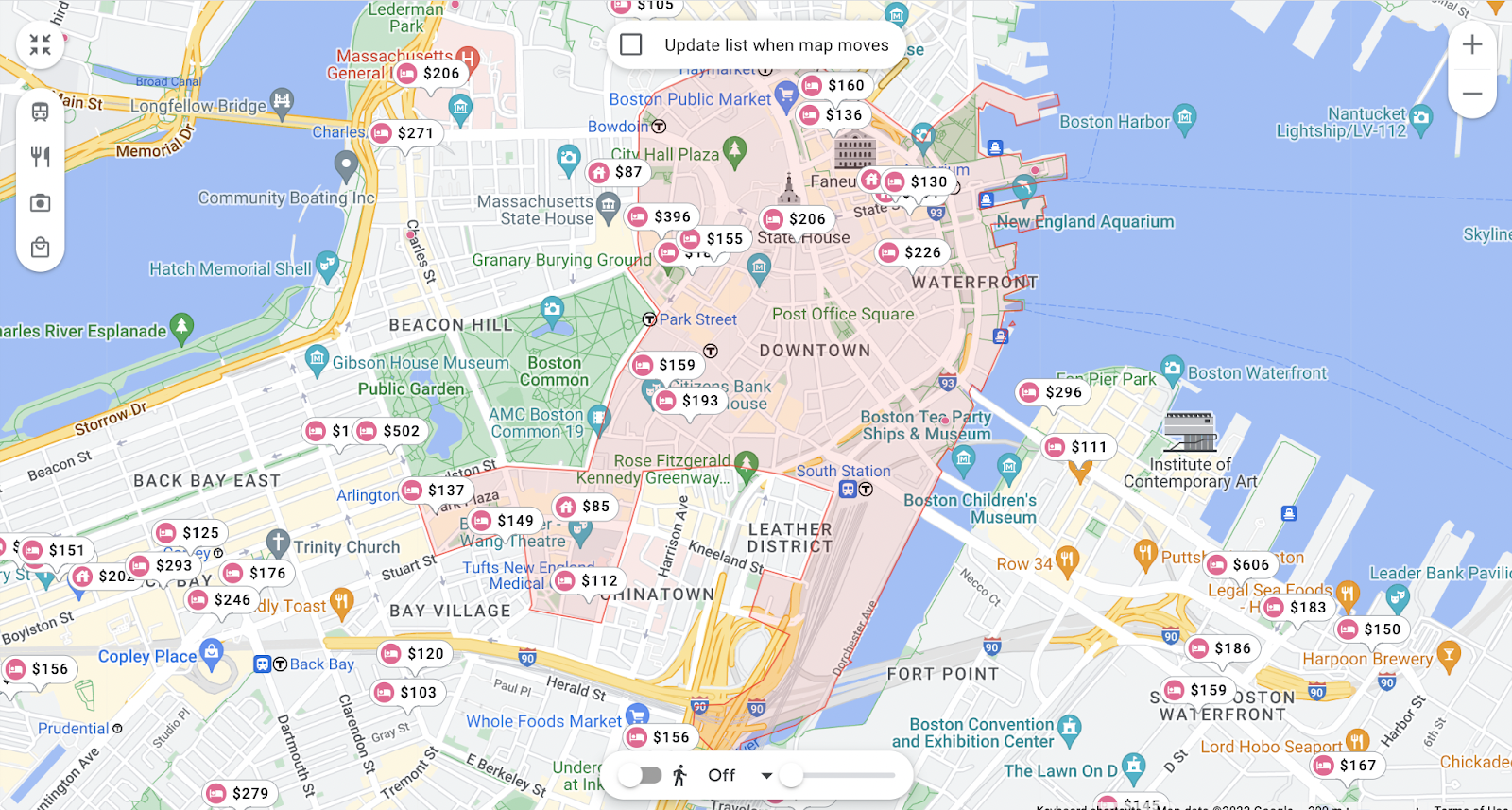
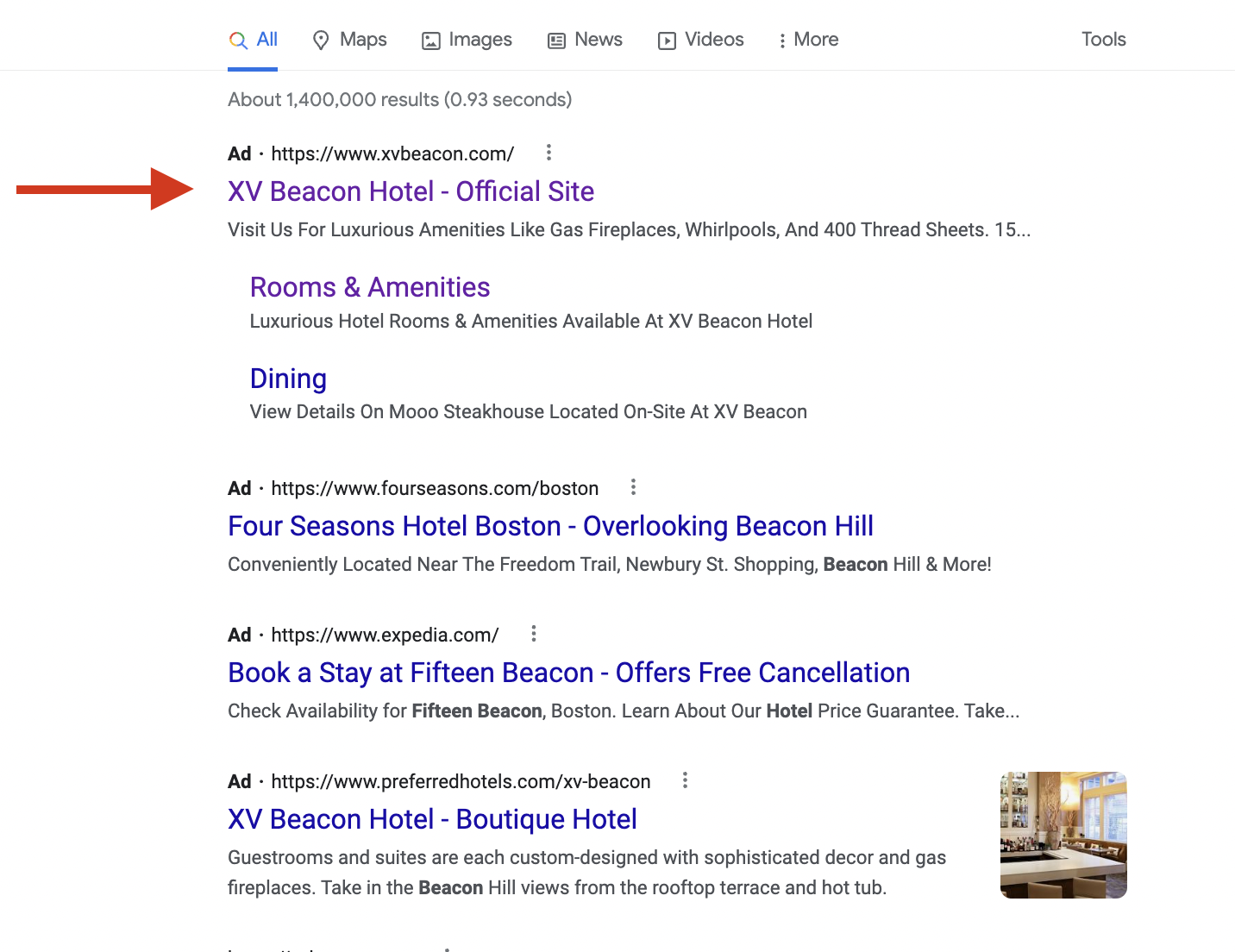
Google Paid Search Ad placements only appear within the Google SERP at the top and sometimes bottom of the page: (unless you are opting to advertise on Google’s Search Partner Network then they can appear on a number of other sites OR if you’re participating in local search campaigns that can appear on Maps)

Google Paid Search ads in Google’s SERP Shown Below:
  1. Google Hotel Ads campaign types don’t use keywords for targeting

Unlike standard Paid Search campaigns, there is no keyword targeting option associated with Google Hotel Ads campaigns. You’re limited to geographic targeting, some different bid modifier options and 1st part audience targeting options.

  1. Google Hotel Ads campaigns can’t utilize Google’s in-market and affinity audiences

One feature that Google has enhanced within Google Ads over the years (to compete with Facebook audience targeting) is a robust list of in-market and affinity audiences. These audiences group users together that have shown intent to be in-market to purchase something (like travel to San Diego) or have an affinity (like for outdoor sports) based on their online behavior. While Google paid search campaigns allow you to target or exclude in-market, affinity and 1st party audiences (website visitors, customer database lists), Google Hotel Ads only give you the option to target/exclude your 1st party audience lists.

There are workarounds on using 3rd party data providers as audience lists but they must be imported as a 1st party audience type. Our hope is that this changes in the future but for now it’s limited.  

  1. Google Hotel Ads has different bid modifier options

Google Hotel Ads offers bid modifications on different segments than standard paid search campaigns. Since it’s specific to hotel accommodations inventory searches bid modifiers in Google Hotel ads campaigns includes:

  1. Geo-Location
  2. Device
  3. Length of Stay
  4. Check-in day of week
  5. Date Type
  6. Advance booking window
  7. Audience lists
  8. Check-in date

Out of the above list, the only overlaps with Google Paid Search Ads are geo-location, device and audience lists

  1. Google Hotel Ad types contain different content

As you can tell from the screenshots in #2 above, visually Google Hotel Ads and Google Paid Search ad types contain different content. The components of a Google Hotel Ad are different than a Google Paid Search Ad.

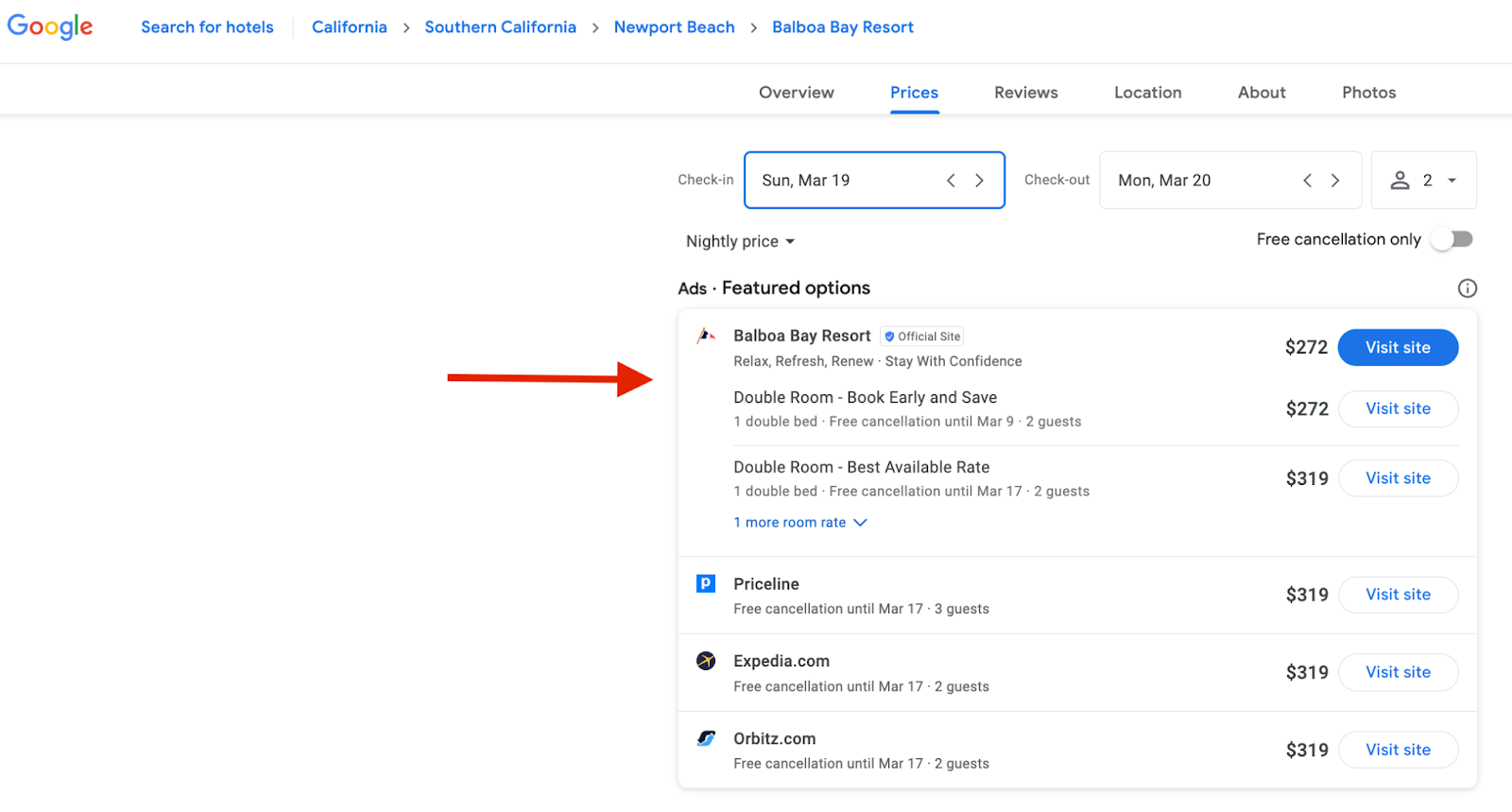
Google Hotel Ads contain:

  • Rates/Prices
  • Call Outs for Marketing Messaging (via Call out Extension) 
    • The example below for Camelot Inn & Suites shows Family Friendly and Scooter Rentals for the official site ad and Free Cancellation for the OTA ads
  • Room Type Bundles (sometimes)
    • Sometimes, if Google decides and you’re in the top position they will show room type bundles with different room types/rates

Google Hotel Ad example:

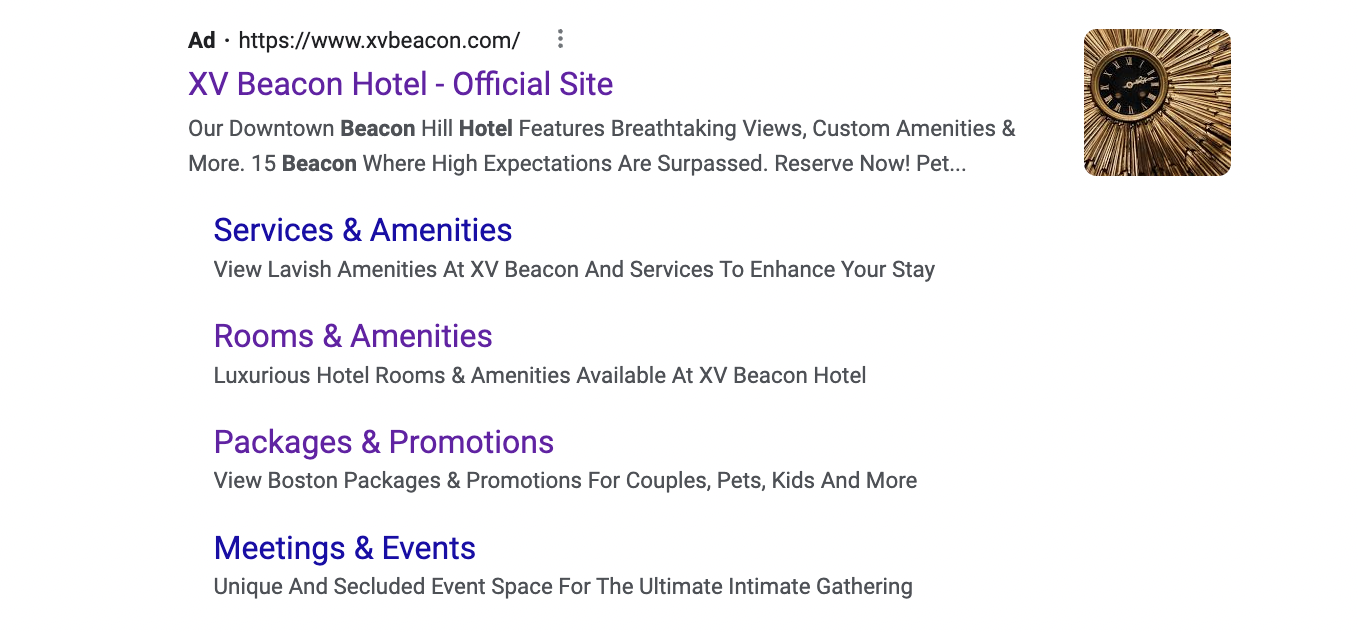
Google paid search ad components that are most applicable to hotels include:

  • Headlines
  • Descriptions
  • Display URL
  • Extensions that can include
    • Image (seen below)
    • Sitelinks (seen below)
    • Promotions
    • Structured Snippets (amenities list)
    • Call outs (same as seen in hotel ads)
    • Location
    • Call
    • Lead form

Google Paid Search Ad example:
  1. Google Hotel Ads uses a completely different quality score rating system

Google Ads quality score is what all great account structures are built around. It is the holy grail of optimization. For keyword based Google paid search campaigns quality score is calculated based on 3 components: Expected click through rate (CTR), Ad relevance and landing page experience. Improve your scores in these three areas and the reward is lower CPCs. When you are limited on budget, it’s imperative to have it go as far as possible and by lowering CPCs and driving more clicks you’re giving your client more clicks with chances for more conversions.

Google Hotel Ads relies on different components for quality score rating. Price accuracy and price competitiveness factor into Google quality score calculation for Google hotel ads. Price accuracy comes down to making sure the rates and inventory feed from your booking engine/CRS to Google ads is as accurate as possible. If the rate shown in the ad doesn’t match the rate shown on the booking engine landing page then your price accuracy score will be negatively impacted. If Google continues to see issues with price accuracy, you risk your hotel ads campaigns being turned off. The other piece is price competitiveness. The less competitive your price is compared to OTAs, the more it will cost you for the same placements. Parity is important for all direct booking strategies but takes center stage in Google Hotel Ads.

How Can I Tell if My Hotel is using Google Hotel Ads?

Not sure if your hotel is currently using Google Hotel Ads? I recommend reaching out to your digital marketing agency or booking engine/CRS to inquire. Not all searches for your hotel will show an “official site” Google Hotel Ad, even if your hotel is currently live on Google Hotel Ads. This comes down to impression share and optimization focus. Not all impressions are created equal and you want to optimize your campaigns to prioritize impressions to those more likely to convert. You can go to your hotel’s listing in Google Travel Planner to try and view your official site ad. If you do see it, it will show with the default Google Hotel Ads green icon or preferably, your hotel’s own logo. 
Should my hotel be advertising with both Google ads campaigns and Google Hotel ads campaigns?

The answer is Yes! If your hotel isn’t present on both Google Hotel Ads and Google Paid Search Ads then you’re missing out a huge opportunity to drive more direct bookings for your hotel. If you’re not advertising here, the OTAs already are and they are capturing the wealth of bookings that are driven from these campaigns. Participating with both of these campaign types also makes sure you are visible throughout the Google ecosystem where travelers are searching for hotel accommodations.

Do you have questions on how you can get started with either Google Hotel Ads or Google Paid Search Ads? Reach out to one of the GCommerce experts today for a consultation.

[E-book] Metasearch Advertising Pro-Tips

SHARE:

Learn the metasearch advertising techniques the pro's use to boost your direct bookings.

3 things you can expect to learn:

  • How to ensure your metasearch connections allow for strategic targeting and budget optimization
  • What are bid modifiers and how to use them to address your need periods
  • How to use custom audiences on Google to enhance the targeting capabilities of your metasearch advertising 

View the full ebook here.

Should You Be Using Google Hotel Ads Bidding Adjustments?

SHARE:

To get the most out of Google Hotel Ads, your hotel metasearch campaigns require the same level of attention as any other hotel marketing. This includes a dedicated budget, performance monitoring, and most overlooked, campaign optimization. Bid adjustments are some of the most common optimizations for many search marketing campaigns, so we put them to the test on Google Hotel Ads to see if the same technique would also work for metasearch.

The Google Hotel Ads Bidding Test

This test was conducted over a period of 3 months (3 weeks for “Hotel 2”), using period-over-period data from Google Hotel Ads to compare results. 

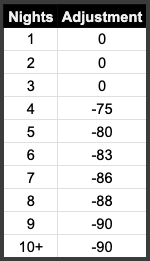
In this case, we were testing reduced bids on longer stays, with little to no change in total spend. In Google Hotel Ads, Cost per Click (CPC) is duplicated per night, which quickly adds up. A bid of $1 becomes $4 for a 4-night stay, and goes up to $7 for a week-long guest.

To combat this, we used negative bidding adjustments to minimize CPC bids and reduce unnecessary spending. In the case of our 4-night stay, we used a -75% adjustment to better match our base bid, effectively aiming to reverse the 4-times duplication. 

We did not adjust 1-3 nights, since these lengths were both reasonably priced, and our best performers for each hotel. 

See the chart below for the exact bidding adjustments we used in this test.

Google Hotel Ads Bidding Test Results By Hotel

Percent change, period-over-period.

Hotel 1 saw an improvement to all metrics. 

Hotel 2, the shortest test, saw a decrease to most metrics, with CPC, Revenue/Click, and ROAS remaining flat. 

Hotel 3 saw an improvement to most metrics, with the exception of increased CPC and flat Clicks.

Overall Google Hotel Ads Bidding Test Results

The following metrics were inconclusive, as the test produced one increase, one decrease, and one flat result for each:

  • Average CPC
  • Clicks

However, every other metric saw an overall increase from this test: 

  • Revenue per Click
  • Conversion Rate
  • Return on Ad Spend
  • Revenue
  • Bookings

No metric decreased overall.

Conclusion

Using negative bidding adjustments on Length of Stay led to a far more efficient use of our metasearch budget overall, stretching our dollar further and allowing us to increase conversion metrics without a significant increase to spend. While this specific test only adjusted bids for one variable, it still proves that Google Hotel Ads bidding adjustments can lead to improved performance, strongly supporting their value.

Like any optimization technique, bidding adjustments aren’t foolproof. Even in our test, Hotel 2 did see a dip in performance as a result of these adjustments. However, it’s still an optimization technique we wholeheartedly recommend. If you keep your customer in mind and pay careful attention to the performance of your specific hotel, Google Hotel Ads bidding adjustments have the potential for a great payoff.

If you’re looking to get started with Google Hotel Ads bidding adjustments, contact GCommerce Solutions below for more information.

[Webinar Recording] Metasearch Marketing Optimization Techniques

SHARE:

Earlier this year, GCommerce Solutions polled several thousand hoteliers and learned that very few were aware that metasearch advertising campaigns can be managed and optimized similarly to paid search campaigns. 

3 things attendees can expect to learn:

  • How to ensure your metasearch connections allow for strategy and optimization
  • Bid modifiers and how to use them
  • How to use custom audience on Google to enhance the targeting capabilities of your metasearch marketing campaigns

Watch the replay by submitting the form below.

Access Webinar

Metasearch is one of your best tools for increasing direct traffic and recapturing market share from OTA’s, but only if you’re optimizing your metasearch advertising campaigns. Learn how to harness the power of metasearch advertising to support your property’s unique needs.

  • This field is for validation purposes and should be left unchanged.

What Is Disparity Monitoring & Why Your Hotel Metasearch Needs It

SHARE:

Ensuring your hotel is in parity is an on-going struggle for many in the industry. In a previous blog post, we talked to some experts in the field about their parity challenges and best practices. We took what we learned from them and are putting it to good use at Metadesk. Read on for exciting developments in the parity battle.

What is rate parity in the hotel industry? Rate parity is an agreement between hotels and their partner OTAs that ensures consistent pricing across distribution channels. In exchange for increased visibility on OTAs, it’s often written into these agreements that the hotel will not undercut the prices offered by OTAs. This includes alerting partner OTAs when the hotel is running sales and offering discounts so they can do the same. From the customer’s perspective, this means they should see the same price whether searching on an OTA or directly through your booking engine. If the rate listed by your hotel differs from the price listed by OTAs, then your hotel is said to be out of parity.

What are the risks of being out of parity? When customers see conflicting prices, they’re often left feeling confused, unsure of who to trust, and skeptical that they’re getting the best deal. It creates a muddied and frustrating user experience, which can impact bookings and hurt your brand’s reputation. They are also more likely to book with whichever channel has the lowest rates. Meaning if OTAs are offering a lower rate, you’ll lose out on valuable direct bookings.

How do hotels fall out of parity? In theory, customers should see the same price across the board, wherever and whenever they search. However, due to technical errors and questionable business practices, this is not the case. A common way hotels fall out of parity is due to software delays. Sometimes there’s a lag between when the hotel informs the OTA of a price change and when the change is implemented by the OTAs software. This results in inaccurate prices in the distribution channel. Additionally, OTAs tend to take a loose approach to their own rules. They often stack discounts or decrease the amount of commission they earn from a booking in order to display lower prices themselves, effectively undercutting the hotel.

How can we ensure we stay in parity? Depending on the service you use to oversee your metasearch campaigns, you’ll likely have to do a lot of manual labor to find whether or not you’re in parity. Some channels, like Google Hotel Ads, offer basic information on “price competitiveness,” but beyond this, specifics are hard to identify. Reporting delays complicate the issue even further and hotels are left playing catch up.

But a solution is on the horizon. Metadesk is partnering with The Hotels Network to give clients access to their real time metasearch disparities tool. While other metasearch solutions can take up to a week to alert you to price disparities, this is the only real time metasearch disparity monitoring tool on the market, offering instant insight on Trivago, TripAdvisor, Google Hotel Ads, and more. Gone are the days when parity issues flew under the radar, causing you to lose out on valuable bookings. Created for experts, by experts, Metadesk ensures that managing metasearch campaigns and staying in parity has never been easier.

To learn more about our metasearch services, visit https://gcommercesolutions.com/digital-marketing-services/metasearch-advertising/

Google Hotel CPC & Metasearch for Hotels

SHARE:

In the world of online travel first came the search engines, then the OTAs (online travel agencies, i.e. Expedia) and most recently the metasearch engine websites such as Trivago and Kayak. Hoteliers are forced to evolve and utilize new online channels to be visible and compete effectively online.  But what is the most effective way for hotels to use these channels? Since the launch of Google’s Hotel CPC program, hotels must now use a combination of search engine and metasearch campaigns just to be visible throughout Google’s search engine features. What are you doing to ensure your hotel is visible and driving qualified traffic across these online channels? Let’s break down what metasearch for hotels means, where it fits into your online marketing strategy and how hotels can be successful using this marketing channel.

WHAT IS HOTEL METASEARCH?

Unlike OTAs such as Expedia, Orbitz, and Travelocity, metasearch engines don’t hold their own inventory of hotel rooms. Instead, metasearch engines pull data from other search engines to provide information to users about rates and availability. The metasearch engine will then direct the user from their website to the original source (i.e. OTA or hotel website) to book their stay. The metasearch engine will then receive a referral commission or CPC charge for sending the traffic to the hotel or airline website.

Examples of Hotel Metasearch include:

  • Kayak
  • Trivago
  • Google’s Hotel Ads
  • TripAdvisor
  • Hipmunk
  • Skyscanner

WHY SHOULD HOTELS PARTICIPATE IN METASEARCH

  • IT IS IMPORTANT FOR HOTELS TO BE VISIBLE WHERE CONSUMERS ARE RESEARCHING, FROM THE TOP OF THE FUNNEL TO THE BOTTOM. This requires a strategy that incorporates multiple channels including search engines, metasearch engines, OTAs, social media and more.  Metasearch should be viewed as another tool to gain exposure to new customers and drive conversions. Just like all tools in your hotel’s marketing strategy it should be tested and analyzed to assess if it is successful in achieving your business goals and objectives.
  • TO COMPETE WITH OTAS AND THEIR COMPETITION FOR DIRECT BOOKINGS. Similar to paid search campaigns, metasearch campaigns allow hotel’s to compete with OTAs for ad space that is critical in driving direct bookings through the hotel website. If you’re not present with ads in metasearch you are losing out on bookings to competition and OTAs. If the consumer books through an OTA you’re losing out on critical information needed to market to those guests in the future and increase the lifetime value of the guest.
  • VOICE ASSISTANT TRAVEL SEARCH IS CURRENTLY POWERED BY METASEARCH. Voice assistants, such as Alexa and Google Home, are the newest channel for search powered exposure to consumers. Currently, these devices are partnering with metasearch engines such as Kayak to provide hotel, flight and travel search results. The metasearch and OTAs are going to be the first to provide a way to enter this channel. My prediction is that if you want your hotel to be present in these voice assistant searches you’ll need to be visible through metasearch channels.
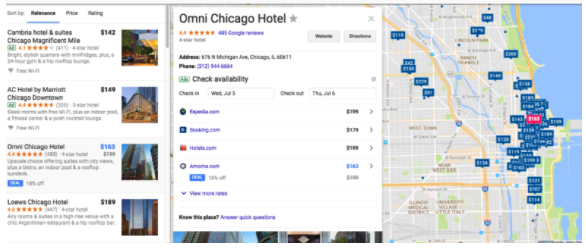
  • LOCAL SEARCH IS MOVING TOWARDS A PAY-TO-PLAY MODEL. Google is continuing to monetize search results, the most recent changes being seen in local search within the Google My Business listings and map pack. Just a couple weeks ago Google changed their map results to show rate cards directly on the map, as shown below:


Here’s another view, taken directly from inside Google Maps:

Screen-Shot-2017-08-15-at-3.52.07-PM

In the above screenshot, you can see two different ways Google’s monetized the local search results for hotels. The first is the ads on the far right for Cambria Hotel and AC Hotel. These ads are managed directly through Google Adwords paid search campaigns. The second is shown in the details view for Omni Chicago Hotel, which are the OTA channels displaying with rates – these ads are populated through Google’s Hotel CPC program. Google’s Hotel CPC program is a form of metasearch and managed separately from Google Adwords paid search campaigns.

HOW CAN HOTELS PARTICIPATE IN METASEARCH?

Hotels can participate in Metasearch directly through their Google Hotel partner booking engine providers. The Google Hotel program requires a direct API with rates and inventory feed directly from booking engine to Google. Google Hotel CPC partners include Synxis, TravelClick and more. You can find a full list here. Pricing through your booking engine is typically set up on a commission based model that charges you a percentage based on revenue from reservations driven by the campaigns. Some also charge CPCs on top of this commission. Review contracts with your booking engine partner to ensure it will be a profitable model for your hotel.

HOW CAN HOTELS BE SUCCESSFUL WITH METASEARCH?

Just like all other marketing channels and campaigns, it is important to closely monitor key performance indicators from your metasearch campaigns.

  • Work closely with your booking engine partner to ensure you are receiving reports that detail clicks, CPCs, costs, reservations and revenue attributed to these campaigns.
  • Monitor KPIs through each metasearch channel – which channels are performing best? Which ones are costing you money? Not all metasearch channels will perform the same. Make sure your booking engine partner that is managing your campaigns are shifting budget to the ones that work best for your hotel.

Have a question? We can help.

Keep Reading