Increase ROAS & Decrease CPA

SHARE:

How much are you paying for conversions?

In a world of increasing competition, rising CPC’s, and an ongoing battle over shrinking organic impressions; every click in the Paid Search world counts. As CPCs continue to increase YOY across all industries; the battle over rising CPAs is becoming tougher for hotels to win. Are you maximizing your budget to obtain the most clicks and conversions?

HOW ADWORDS AUDIENCES CAN HELP YOU WIN THE BATTLE OVER RISING CPA

We have all heard of remarketing lists for search and audience targeting, but are you effectively utilizing these tools to maximize your campaigns’ CPA and ROAS performance? If your answer is “no” or “I don’t know”, then you’re missing out one of the most effective ways to segment and target your campaigns to get more conversions for your budget.

Reviewing audience data from multiple clients, here are the results:

  • 16% decrease in cost per click
  • 62% increase in average click-through rate (CTR)
  • 103% higher return on remarketing audiences then non-remarking lists search user traffic
  • 161% increase in conversion rate


Still wondering about your bottom line? COST PER ACQUISITION (COST PER RESERVATION SPECIFICALLY) WAS 64% lower for remarketing lists for search audiences versus all search traffic.

AdWords Promotion Extensions Result in Substantial ROAS

SHARE:

HOW TO DRIVE INCREDIBLE ROAS FOR YOUR HOTEL WITH ADWORDS PROMOTION EXTENSIONS

The Benson Hotel, located in Portland, Oregon, was looking for a quick way to increase hotel bookings before the end of the month. Over the course of three days near the end of August 2017, this property wanted to showcase their 20% off rooms and discounted valet parking special on paid search.

Due to the way that Google AdWords serves advertisements, we knew it would be tough to get solid visibility across all of our ad groups and campaigns within the account for this very short sale. That is why we decided that the new promotion extensions within AdWords would probably be our best chance to bring in additional revenue. Adwords Promotion extensions work by enabling the advertiser to showcase a specific deal/sale at the bottom of correlating ads you know have performed well in the past.

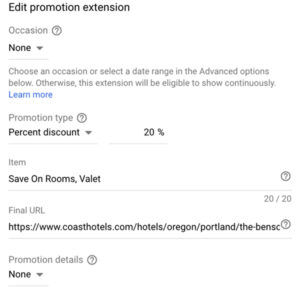
Previously, promotion extensions have been available to use only during specific holidays. Now there is a drop down feature allowing you to select an OCCASION, ranging from Christmas to Boxing Day if you deem fit. You have four options in showcasing the PROMOTION TYPE, the first is a monetary discount and the second is a percentile discount. Both of these options can also be further limited by displaying “Up to monetary discount” and “Up to percent discount”. Below that is a 20 character text box allowing you to describe your ITEMFINAL URL lands your customer onto your desired page. There is a feature called PROMOTION DETAILS allowing you the option of displaying “On orders over” and a “Promo code”. Insert your “Start date” and “End date” (not shown in the example below). Lastly, there are two remaining features titled URL OPTIONS and ADVANCED OPTIONS allowing you to customize this extension further.


2017.09_Blog_Image_1_AdwordsPromotionExtensions


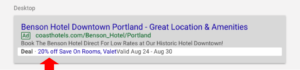
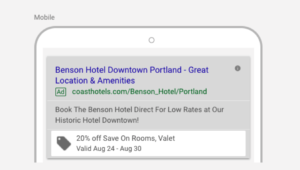
One restriction while choosing the percentile discount is that this “ __% off” is fixated at the front of the passage while then allowing you 20 characters to write about the item you are promoting. The red arrow in the examples below highlights the “__% off” AdWords automatically displays first on the live ad. As Google continues to roll towards a mobile-first index, the aesthetic differences between the ads themselves have become more distinguishable. Adwords Promotion extensions on mobile devices have a large price tag icon that could potentially capture the attention of consumers who may have become accustomed to seeing standard AdWord ads. The Adwords promotion extension total real-estate is also larger on a mobile platform in comparison to desktop.

Blog_2
Blog_3

Between August 25th and August 27th 2017 our Adwords promotion extension for The Benson received 42 clicks with an approximate impression figure of 521. The click-through rate was 8% with an average cost per click of $1.06. With three conversions resulting in a total conversion value of $743 and our total cost being $44.55, The Benson’s return on advertising spend is 16.67 to 1.

Blog_4


Promotion extensions are a relatively new feature for Google AdWords beta. Why not take advantage of some of the exclusive features of this “New AdWords Experience”? Promotion extensions allow advertisers to serve exclusive offers to their customers and to easily call out that promotion within ads through your account, campaign or ad group. Our experience with promotion extensions in this instance showed an increase in the overall CTR, conversions, and revenue on the account. While also showing a decrease in the amount of time spent creating new sale specific ads. Promotion extensions are easy to set up and aim to give your offer more visibility to your audience. Transitioning into the new AdWords user interface clearly has its positives and negatives, but I don’t know anyone who would not like a 16:1 return.

10 Search Engine Marketing Trends Hotels Need to Know in 2017

SHARE:

The top search engine marketers in the world met over 3 days in Seattle to discuss and present current and future trends within the industry, covering everything from how to obtain position 0 in the SERP to the exciting future of Voice Search and everything in between. Here’s a breakdown of what all hoteliers need to know about the present and future of search engine marketing for hotels.

  1. ROBOTS ARE TAKING OVER! EMBRACE TECHNOLOGY AND START USING CHATBOTS. It’s been proven for many years that live chat on your website boosts conversion rate but many hotels run into operational limitations. Independent hotels are stretched thin on operational staff and typically don’t have someone available to monitor and respond on their website’s live chat. There’s a solution and it’s called CHATBOTS. It’s not a new concept but platforms such as Bing are making it easier than ever to build your own. Just take a visit to The North Face or Skyscanner websites. These two sites are actively using chatbots to interact with visitors – helping them shop, find content and products as well as make purchases.
  2. START USING ADWORDS NEXT AS SOON AS YOUR ACCOUNT IS ELIGIBLE. Google Adwords is slowly rolling out access to their new version of Adwords called Adwords Next. It features a completely new user interface. While it does take a bit to get acquainted with the new layout, using the new version gives you access to important new features you can’t access in the old Adwords UI, such as promotion extensions & call bid adjustments.
  3. THE FUTURE OF SEARCH IS VOICE, BUT MOBILE IS NOW. The question on everyone’s mind and a breakout topic at this year’s SMX Advanced was “how do I optimize for voice search?” Alexa, Siri, Cortona, Google Home; there’s a smattering of new technology built upon voice search commands. The fact remains that this technology is still in its infancy and has many limitations. In an industry such as hotels where consumers rely so heavily on visual results to assist them in their research and purchase funnel, other devices continue to be more important for hotels. While voice search is something to be considered in search strategies for hotels moving forward (and there are a few tactics to help you now), hotels should be more focused on optimizing their mobile and desktop experiences before focusing on voice.
  4. LOCAL SEARCH WILL MOVE TOWARDS ADS – YOU’LL NEED TO PAY TO PLAY TO BE VISIBLE. Google reported a 53% increase in paid clicks YOY on their Q1 2017 earnings report. It’s no secret that they’re in this business for the money, they have to answer to shareholders and the majority of their income comes from advertising dollars. They’re constantly looking for ways to monetize the search results, which is evident from the evolution of the SERPs page year after year. One thing that was agreed on by every member of the Local Search Braintrust of experts at SMX Advanced was that Local Search results are going to become pay-to-play. This is apparent from the changes to the knowledge panel with Google’s Hotel CPC program that allows OTAs and hotels to present sponsored ads showing current rates, the launch of local ads on Google Maps, and their recent tests that show rates directly on map results.
  5. THE MOST EXCITING, NEW FEATURE TO TAKE ADVANTAGE OF RIGHT NOW FOR PAID SEARCH IS AUDIENCE TARGETING. On the last day, during the last session of SMX Advanced, a panel of SEM experts sat down for a Q & A session with the audience. One of the best questions to round out the series was “what is one thing you want to do to your paid search campaigns but haven’t had time to yet”. All of the experts voiced their excitement and goals for their paid search campaigns focused on better use of audience targeting. This includes:
    1. In-market (coming soon to Google & Bing)
    2. RLSA
    3. Customer match

Enhancements to audience targeting have been a focus of Google for a while now, most likely to compete with the incredible targeting options available within Facebook advertising. If you haven’t started testing different audiences in Google and Bing don’t wait. Options like RLSA and customer match are already proving successful for many advertisers. We can’t wait to test the new in-market audiences Google and Bing will be launching this year.

  1. YOU SHOULD ALREADY BE USING SCHEMA/STRUCTURED DATA. A common theme across many SEO sessions was the use of Schema structured data markup to improve your presence within search results. From local search to voice search, all SEO experts agree – if you’re not using schema structured data throughout your site, you’re missing out on having the best-optimized pages for search engines. With such a low adoption rate by hotels so far, now is the time to implement schema structured data on your website and get ahead of the competition.
  2. GOOGLE IS NOT QUITE READY TO MOVE TO A MOBILE-FIRST INDEX. The two sessions where Google’s Gary Illyes stood up to speak were both packed to the brim, standing room only. Since what Google says is considered the holy grail of the search marketing world, a room full of SEOs waited with baited breath as he delivered cryptic statements about Google’s stance on a variety of questions. The biggest topic being the recently announced Mobile-first Index. If anything was apparent from the bits and pieces of information Gary would give up, it was that Google isn’t close to being ready to transition to a solely mobile-first index. If they made the switch now, it would risk poor results – considering many websites are still not providing a mobile-friendly experience. Gary also stated that Google may smear over desktop signals to mobile to fill in gaps of knowledge for the index. All of that being said, Google is still a ways out from transitioning to a mobile-first index and it probably won’t happen until 2018 at the soonest. So if you don’t have a mobile-friendly experience for your consumers – fix it now.
  3. SEM’S ACROSS ALL INDUSTRIES ARE SEEING INCREASES IN CPCS. It’s an unfortunate trend we’ve been seeing for clients over the past year and we’re not alone. CPCs keep going up. This was a concern voiced throughout the conference; SEMs across all industries are continuing to see a rise in CPC, most alarmingly for exact match branded keywords. These are supposed to be your most qualified, lowest cost-per-click keywords but they keep rising. One thought was that it came from a recent algorithm update in May but no one has an exact answer. It remains to be seen how CPCs will continue to rise and how much of an impact that might have on hoteliers.
  4. YOU NEED TO BE WORRIED ABOUT PAGE SPEED. There is a reason Google is pushing AMPs so much, they are worried about page speed – specifically for users on mobile devices, but it’s a true concern across devices. Any page taking longer than 5 seconds to load is too slow. Do what you can to minimize scripts, compress images and more to improve your page load time. Even minimal improvements in speed can make big differences in bounce rate and conversion rate of your website. Users’ expectations are getting even tougher; if your page doesn’t load fast enough, users are going to leave. According to a study by Kissmetrics, a 1-second delay in page response time can result in a 7% reduction in conversions (Kissmetrics Blog). Do you want to risk losing that revenue?
  5. CONTENT MARKETING IS MORE IMPORTANT THAN EVER. Content has always been important for SEO. The recent buzz word for content marketing is just a new packaging for something that SEO’s have been pushing for years. Google even came out and confirmed last year that content remains one of the top 3 ranking signals. It remains extremely important to have substantial, relevant content on your website that is valuable to your consumers. But, it’s important to remember there are no one-size/one-kind-fits-all solutions. The type of content that’s important for success differs by industry. Word content remains an important factor, with pages that rank in the top 10 consistently having at least 1,900 words (Search Metrics – Periodic Table of SEO Ranking Factors 2017). But it’s not just size that matters; the content and messaging also need to be relevant to the user’s intent. According to Search Metric’s 2017 ranking signals for hotel and travel websites, success is found with more image content. For hotel websites, success is more closely tied to having great visual content and great word content. Are there ways for your hotel to have more compelling visual and word content that better speak to your audience? If so, now is the time to implement it!

How To Boost Engagement With Your Email Marketing

SHARE:

If your business isn’t utilizing email marketing, you’re already missing out on one of your most lucrative segments of highly qualified and brand loyal customers. Think about it, these are guests who have stayed at your property before or opted in to hear what you have to say. However, often times businesses are faced with the daunting reality of designing, developing and launching email campaigns that have low engagement and, therefore, low returns. If email marketing is so important, then how do businesses ensure that their campaigns are engaging and effective?

SEGMENTATION

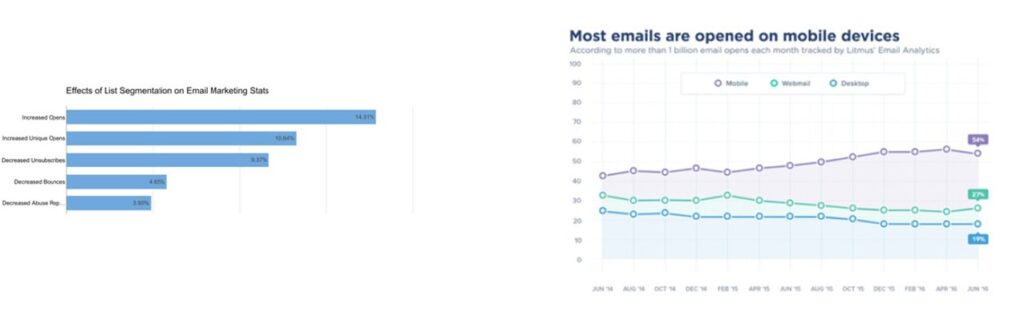
All great email campaigns start with your email lists. Who are you sending your emails to? Are you segmenting your lists to personalize and target potential customers correctly? The number one rule of marketing is to know and speak to your customers, and segmenting is an effective way of making sure that the right message gets to the right customer at the right time. Asking yourself “Who are we targeting and what would interest them” before designing a campaign is a surefire way to kick off on the right foot. You can segment email lists based on many things including demographics, interests/behaviors, or even their position in the conversion funnel. The more relevant the message is to a customer, the more likely they are to engage with it. Segmenting correctly can increase open rates, click-through rates, and conversions while decreasing unsubscribes and avoiding spam filters. Below is a graphic (See: Effects of List Segmentation on Email Marketing Stats) of how list segmentation impacted global marketing stats for Mailchimp:

Related GComm case study: https://bit.ly/2lReOjP

Image: https://stocksnap.io/photo/YK0PRWX6MC (Business)

Related Graphic: https://bit.ly/2lQ4Ujo

Untitled-11

DELIVER GREAT CONTENT

Now that we’ve answered the first question: “Who are we targeting?” the follow-up is “What do they care about?” The whole point of segmenting is to get the right message to the right person, so what is the right message? Understanding your segments is key to sending the right information. For instance, are you targeting business or leisure travelers? Business travelers might be interested in conference rooms, technological capabilities, or app-based concierge services that can cut down on time while leisure travelers may be more interested in local “insider” information on your hotel’s locale or new services or amenities. Again, relevancy is key, and customers only care about what you have to say if it will directly affect their experience with your brand.

While creating great content is a starting point, make sure that whatever great content you’re creating shines through in your subject line as well. According to Hubspot, 33% of email recipients decide whether or not to open an email solely based on the subject line. Keep it short, sweet, and simple while still keeping it personal by teasing what’s inside without giving it away. You can use online subject line testers that can give you performance estimates based on keywords. Utilize these services to make sure that your customers are getting what they want in your email marketing campaigns.

Related GComm Case Study: https://bit.ly/2kylD8V

Image: https://stocksnap.io/photo/7GJLOO70WH (Exploration)

Alt Image: https://stocksnap.io/photo/XKJDEWN1B6 (Local)

MOBILE FRIENDLINESS

Instead of reiterating, possibly for the 100th time, how important mobile is in today’s digital marketing, I’m going to leave you with one statistic from Litmus: 54% of all email was opened on a mobile device as of March 2016. So how exactly do we cater to these mobile email users that make up over half of your list? The first step is to ensure that your email template is mobile responsive. Nothing is more annoying than getting an email built only for a desktop and having to zoom in and out to read and click links. Most email clients offer mobile responsive pre-built templates to make your life easier, but if you’re custom designing a template, be sure that its mobile user experience is functional and seamless. Other tips include utilizing one column layouts, limiting clutter by keeping copy simple, short and to the point, and a personal favorite: use buttons for your call-to-actions. Text links are a thing of the past, having to zoom in and tap on a single word or phrase is time-consuming and off-putting for mobile consumers, it’s also visually disconnecting. The better and more simple option is to use buttons for your primary links, and noticeably long text for your secondary links. Constant Contact reported click-through rates of up to 30% just by using a button for their primary CTA. However, buttons alone aren’t enough, be sure to stay creative when designing your call-to-actions avoiding friction phrases such as “book now” or “sign up” that can turn a reader off to clicking. (See: Most Emails Are Opened On Mobile Devices)

Image: https://stocksnap.io/photo/67AWU2C0IR

SUMMARY

Email lists are one of a business’s greatest assets, providing easy access to brand loyal customers that have the potential for high return. Boosting engagement is key to email marketing success, and leveraging segmentation, great content, and mobile friendliness can help make sure that what you have to share is relevant and engaging for customers. When designing an email campaign, always be sure to ask yourself “Who am I targeting and what interests them?” to get in the right mindset for delivering the right message to the right customer, at the right time.

The Key to Effective Digital Marketing: Delivering Great Content

SHARE:

“Content” is the trendy new word that’s been sweeping the digital marketing space for the last few years. Hundreds of webinars and thousands of blog posts have mentioned the topic, continually hitting home on how important it is to not only deliver good content but deliver great content. But to understand how to deliver great content, it’s important to understand what “content” is.

Content is every post, picture, piece of copy, or story you are trying to tell through your marketing efforts, it is everything you share with your audience. Rebecca Lieb likened content to the “atomic particle of marketing.” There is no marketing without content, regardless of channel. Creating effective and engaging content is the best digital marketing strategy you can adopt and is the foundation for digital marketing success.

IT’S NOT ABOUT YOU

Perhaps the first and most important thing to understand about delivering great content is this: it’s not about you. Content marketing is about your audience. In another post, we talked about boosting engagement with email marketing campaigns. One of the suggested steps is to ask yourself “Who am I targeting and what interests them?” This applies to any form of content marketing. If you aren’t considering who you are trying to market to and what they want, your content is going to fall flat. That being said, it’s still important to maintain your voice.

In a webinar from Skyword, one of their first steps to good content marketing is understanding your “why?” When we say “why”, we are referring to why you’re creating content in the first place. What do you want to give people? What do you want them to know about you? Why do you want them to read your content? One of the best content marketing campaigns of 2016 belonged to Deadpool. Everything from pre-release to post-release was crafted with the singular purpose of conveying to the reader that Deadpool was in no way, shape, or form, your regular superhero movie experience. Below is one of the many movie posters created for the box office hit.

Deadpool was, at its core, a satirical superhero movie with heart. In a world inundated with superhero after superhero, audiences were clamoring for something different and that’s exactly what Marvel gave them with Deadpool and it was their “why” for their content marketing strategy. Understanding your why is key to developing good, actionable content because it serves as a constant reminder of what you want your audience to know about and learn from you while still keeping them at the heart of your campaign.

Untitled-21

LEVERAGE YOUR ENVIRONMENT: DIGITAL AND PHYSICAL

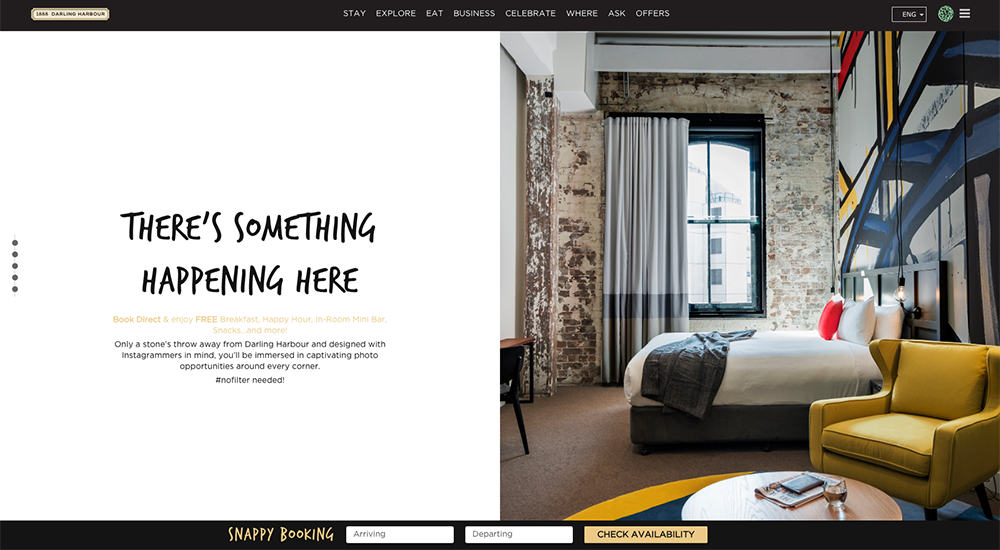
So now that you know why you’re delivering content, how do you create or find it? There is a multitude of ways to create engaging content, but perhaps one of the easiest and most effective ways to do this is through leveraging your environment, both digital and physical. The 1888 Hotel in Sydney, Australia rebranded itself as an “Instagram hotel” using its creative and eye-catching interior to develop Instagram devoted spaces and using the Instagram photos and experiences of its guests to adorn its walls, website and social media feeds. Here is one of its website homepage modules promoting Instagram-worthy interiors:

Blog_GreatContent_Image_3

Utilizing hashtags, trending topics or even local and world news and events are all fair game for delivering great content. Find out what your audience is talking about and join the discussion. But remember that content isn’t just external, your guests, employees, and property-at-large are having unique experiences every day.

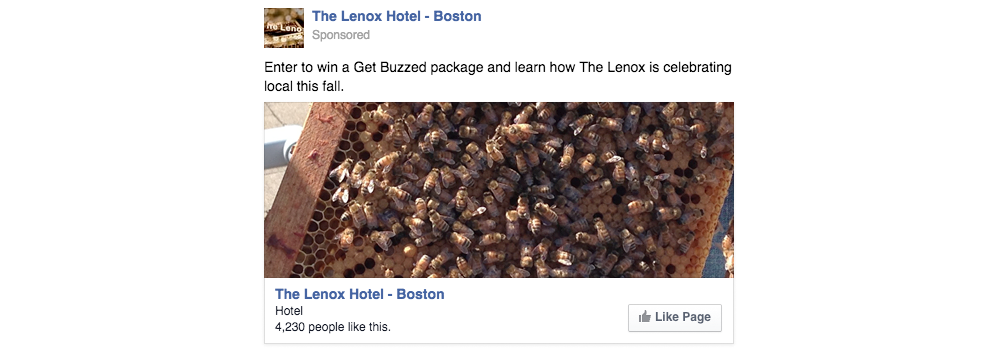
In 2014, The Lenox Hotel in Boston welcomed 120,000 new tenants to their property: bees. Yes, you read that correctly, they welcomed a colony of bees. The bees were brought in to produce honey that would be used for signature drinks and dishes created at The Lenox’s restaurant and lounge. Rather than just put up notices, GCommerce and The Lenox teamed up to rally behind the bees, creating bee-themed stay packages and content campaigns to generate buzz about the hotel’s unique news. This not only won them a Silver Award at the 2014 Adrian Awards but significantly increased their following and engagement for their email and social channels.

Blog_GreatContent_Image_4

This goes to show that great content is located all around you, both digitally and physically. To hear more about what’s going on around you, think about installing a suggestion box, creating an email account, or reminding guests and employees to share their stories as they interact with your brand.

CREATE STRONG HEADLINES

People definitely judge books by their cover, at least when it comes to content marketing. We’ve talked before about how important email subject lines are to email marketing campaigns and that extends to just about every piece of content marketing you do. Copyblogger released the following statistics about content headlines and what they mean for engagement:

  • 80% of people will read your headline
  • 20% of these people will read the rest of your content

With statistics like that, it’s clear that your headlines matter. So what can you do to make sure that you are creating strong headlines? Studies showthat headlines should stay in the 8-12 word range and be specific without being too gimmicky or sensational. In a world where clickbait is becoming increasingly popular and infamous, don’t deceive the reader with your headline, but don’t give it all away either. Try and utilize keywords as well, optimizing for SEO and social.

MEASURE, MEASURE, MEASURE

Digital marketing is all about generating actionable data and this should be no different in your content marketing strategy. One of the ways to do this is through conducting a content audit. This audit can be everything from metrics across content marketing campaigns to the quality of individual posts. Which campaigns or posts are seeing the most engagement and why? Is your content accurate and trustworthy? Is it linking to authoritative sources? Is it fresh? These are all questions that you should be asking yourself about your content. As George Santayana said, “Those who cannot remember the past are doomed to repeat it.” So remember your content, why it did or did not perform, and understand how you can use that data in the future.

SUMMARY

Effective content marketing is the key to digital marketing success. Content affects everything from your search rankings and engagement to brand awareness and repeat conversions. Understanding your “why” and your audience sets the stage while leveraging your environment can provide fun, informative and engaging content for those following your brand. Just be sure to audit your content to obtain actionable data about the health of your content marketing program.


Keep Reading