A Hotelier's Guide: How to Optimize for Voice Search

SHARE:

Voice search is the latest buzz in the digital marketing community. With companies like Gartner predicting that by 2020, 30% of searches will be voice, hotel marketers are eager to know if their businesses are optimized for this new channel.

While it may be the shiniest new marketing object to catch your attention – it’s important to first understand what this technology is, how it works and how it may disrupt the market in order to determine how it will (or won’t) change the way you need to approach your hotel’s digital marketing strategies.

FIRST, WHAT IS VOICE SEARCH & HOW DOES IT WORK?

When people use the term “voice search” they are usually speaking of one of two different areas –home assistants (think Google Home, Amazon Echo with Alexa) and voice search using your phone’s technology such as Siri to return results on a screen. The latter technically being defined as “dictated search”.  We’ll dive into both to make sure your best prepared for the latest disruption in search engine marketing for hotels.

HOW DO HOME ASSISTANTS WORK?

Amazon Echo/Alexa and Google Home are currently leading the market for voice assistant devices. This area of voice search is, at its core, screen-less. That means one-answer responses, not a list of responses presented in search engine results format. It wasn’t until Amazon launched its Echo Show that home assistants started to incorporate screens into their devices. Now more home assistant devices, like Google Home, are incorporating or planning to incorporate screens into home assistant devices.

HOW DOES DICTATED SEARCH WORK?

The other area included under the topic of “voice search” is search that uses voice command to pull up search engine results on a screen. This is more accurately defined as dictated search. This includes the use of Siri on your iPhone or Google Voice Search on your android or other devices. Does the use of voice dictated search change the way Google returns results?

Home assistant devices and dictated search through Siri (and other mobile devices) are two very different voice search experiences. One relies on providing a variety of results on a screen and one relies on voice responses to answer your questions. Next, let’s dive into how consumers are using voice search with each of these device types.

SHOULD HOTEL MARKETERS BE WORRIED ABOUT VOICE SEARCH?

Voice assistant device voice search has been hard for marketers to break into considering there’s limited space available for exposure with only position O returned as a result and no space for advertising like the typical SERPs provide. The lack of screens have also made it difficult for consumers to perform travel research since they depend on imagery and visiting multiple sources for information before they are ready to book. For this reason, voice assistants haven’t made a huge impact on how people book hotels and travel. There is a possibility that this will change soon as both Amazon and Google are launching voice assistants with screens to provide more options and the opportunity for advertisements, just like the standard mobile SERP. This article from Lisa Lacy at Search Engine Journal does a phenomenal job at diving into how this changes the optimization game.

People are using voice assistant devices for everything from playing music, controlling home gadgets to ordering products online.  But, how are they using these devices to plan travel or book hotels? With one-answer response capabilities provided by voice home assistants, the experience isn’t great. Maybe you’d have success using the device to book accommodations if you knew exactly which hotel you wanted to book at or if you were just looking for the nearest, last minute hotel. But in our experience testing voice assistant devices to research hotels, interacting with these devices for travel research is extremely frustrating.

HOW CAN HOTEL MARKETERS OPTIMIZE FOR VOICE SEARCH?

Let’s get down to the question that every hotelier wants to know, how exactly can hotels optimize for voice search?

The truth is, hotel marketers should be focused on a multi-device optimization strategy.  The success factors you were focused on for your overall strategy previously are the same ones that you’ll need to focus on for voice searches. Yes, the way people dictate search and the devices used changes the game slightly but you shouldn’t ignore other, more lucrative channels in favor of changing everything for voice search. A few ways to expand your multi-device strategy to incorporate more voice search specific optimization includes:

  1. Well built out and optimized FAQ pages and website content – being the content selected for Google’s answer boxes has long been touted as a solid strategy for being selected for that “position zero” spot. Hotels should focus on building out a FAQ page that answers questions about the hotel, the local area and any other common questions related to the hotel.
  2. Targeting question keywords and near search terms – a large portion of voice search is presented in the form of questions or consumers looking for local/nearby businesses. For hotels this means that they need to expand content on their site to answer questions (i.e. FAQ page) and to target “near” search terms such as “hotel near X” to qualify for these types of searches.
  3. Local Search optimization (local listings/GMB/reviews) – The capabilities voice assistants can offer for hotel related search seem to be limited to displaying hotel information in the form of local listing profiles such as Google My Business. These means your local search optimization game needs to be strong with a huge focus on encouraging guest reviews and up-to-date, accurate listing details.
  4. Using Meta Search – Currently Kayak offers the only voice command to book a hotel through Alexa, which actually books it’s inventory through Booking.com or Priceline.com. Seems like one of the only ways for hotels to be visible on voice home assistants currently is through participation on OTAs and Meta Search engines.
  5. More focus on tracking calls as conversions – other than Kayak offering ways to book hotels through voice assistants, the only other type of conversions presented for this type of search is to ask for directions or to call the hotel. As more and more traffic shifts to mobile and voice-activated search, hotels can no longer ignore that accurate call tracking solutions must be used to ensure you can optimize your campaigns and strategy effectively.
  6. Make sure your site is secure – upgrade your hotel website to HTTPS now if you haven’t already
  7. Implement Schema.org Structured Data Mark-up on your site
  8. Ensure your hotel website is mobile friendly

CAN HOTEL MARKETERS USE PAID SEARCH TO BE PRESENT IN VOICE SEARCH?

Depends on what type of voice search you’re referring to – dictated search or voice assistants. Currently there are no options for paid search ads on voice assistants search. One way to pay and be visible in this space is through metasearch (i.e. Kayak – Alexa). Since using dictated search (i.e. on Siri) pulls the same displayed SERP results as when you type your search queries this allows for the same advertising capabilities and paid text ads will be shown.

WHAT NEXT: THOUGHTS ON VOICE SEARCH & PREDICTIONS FOR HOTEL MARKETERS

Hotel marketers should keep in mind that “voice search” is just a new interface and that the same elements that were vital to success before will continue to be vital for success in voice search. Focus on schema.org mark-up, focus on making your site secure and mobile friendly and make sure local SEO is a cornerstone of your strategy and you’ll be well positioned for success with voice search.

Next, keep an eye on this evolving technology. Consumers depend on visual elements to properly research and book travel and hotels. As more voice activated home assistants incorporate screens into the mix it will offer more opportunities for hotels to participate.

Finally, the consumer demand for using AI and voice commands are going to expand to interaction with your hotel directly.  Technology such as chat bots and ways to ensure customer service expectations are being met or exceeded through any method they want to interact with will become more important

Have more questions about how voice search works and how to prepare your hotel for success? Reach out to the team at GCommerce today.
What Happens When You Stop Running PPC Ads?

SHARE:

Paid search has become a cornerstone of digital marketing for hotels. It quickly rose to popularity and has remained one of, if not the largest line item on most hotels’ marketing plan budgets. Its popularity is repeatedly justified as it proves its success in driving qualified sessions and substantial revenue for hotels online. But what happens when you turn your paid search off completely? There’s always been the argument of bidding on brand terms (if you were wondering, you should be) but what about turning it all off? Top of funnel campaigns, bottom of funnel campaigns and campaigns to re-engage your audiences?

Has the thought entered your mind? Do you ever wonder if paid search advertising on Google is worth the cost?  With rising cost-per-clicks and more competition entering the marketplace daily, the question is: is it worth it?

This wasn’t a test we planned on purpose. A client was recently forced with the decision to pause all of their paid search campaigns. We knew there would be a negative impact, but how much? We took this opportunity to study the direct impact that turning off paid search campaigns had on the client’s website performance. Let’s take a look at what happens when a business stops running their paid search campaigns.

THE RESULTS:

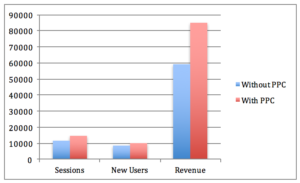
Overall website sessions dropped 20%

New users dropped 20%

Revenue dropped 30%

Effects-of-Paused-PPC-Ads

One theory we wanted to analyze is: WILL MY ORGANIC REVENUE AND TRAFFIC INCREASE WITHOUT PAID SEARCH? The simple answer is yes.

Organic traffic experienced a 43% increase and organic revenue increased 20% compared to the previous period when paid ads were running. The increase, however, was not enough to make up the difference of the lost revenue from paid search alone. So while it definitely helped to bridge the gap, overall there was a sharp decline in our website KPIs across the board.

Since all other channels remained flat in sessions and revenue, it painted a clear picture that the decline in performance was a direct result of the lack of paid search traffic.

So if you were ever wondering if it was worth paying to play on the search engine results page (SERPS) and theorized that paid search ads were essentially just pulling away from your organic traffic and revenue, this case study should give you some conclusive evidence. While paid search campaigns do cannibalize some traffic and revenue that would have come through organically, overall it exponentially drives sessions and revenue that goes above and beyond what would have come through organically.

Although we can’t say with certainty, another theory related to the impact of turning these paid search campaigns off is that the their competitors traffic went up and their cost-per clicks went down as one less advertiser was competing for those keywords, which probably helped them to pocket more revenue then normal.

So, if you’ve ever contemplated just turning off your paid search campaigns and letting organic pick up the slack, you should probably rethink your decision. Paid search is a key component in your hotel’s digital marketing strategy and proves it’s worth time and again as one of the most powerful ways to drive qualified sessions and revenue. It is definitely worth the extra budget to compete.

Why Your Hotel Needs Remarketing Lists for Search Ads

SHARE:

The continued climb in cost per acquisition means your hotel’s digital marketing budget needs to be working harder and more efficiently than ever before. Your digital marketing agency should be obsessed with finding the most cost effective methods to optimize their efforts (and your budget) across all media channels. One of the more exciting and fruitful targeting options to be released by Google this decade comes in the form of retargeting for search campaigns. Officially called remarketing lists for search ads (RLSA for short), creating a remarketing audience list for your hotel’s paid search campaigns is now essential for optimization because it allows you to reengage with previous visitors to your website, which has proven to improve conversion rates and overall return on ad spend for your budget.

First, let’s start with the basics:

How to Set up Custom Audiences for Your Remarketing Lists for Search Ads

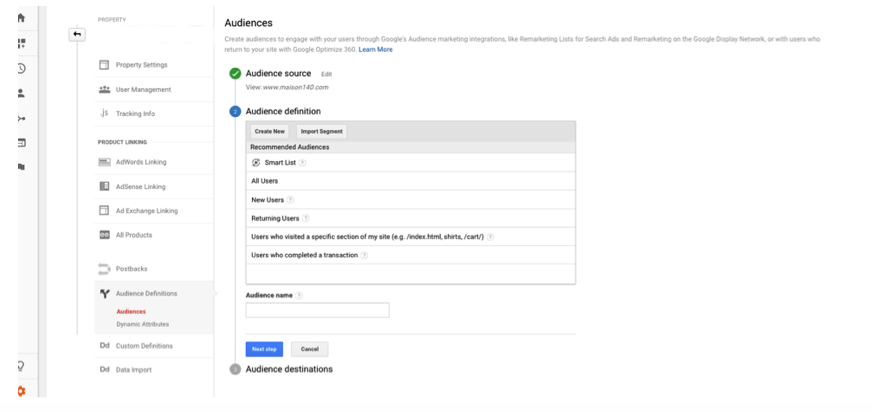
We recommend building audience lists in Google Analytics instead of Google Adwords since it gives you a far greater selection of criteria to choose from when building your audience segments. Once you are logged in, just follow the steps below:

  • Go to the Admin tab and navigate to the property for whom you want to create the audience
  • Click Audience Definitions > Audiences > + New Audience
  • Define Your Audience
    • You can choose from a number of different audience definitions:
      • Smart List
      • All Users
      • New Users
      • Returning Users
      • Users Who have visited a specific section of my site/app
      • Users who completed a transaction
SEM remarketing list

You can create unique audience lists based on user behavior on your site and then use those lists for future remarketing campaigns. Before you get started, there are a few things you should know about remarketing audience lists:

    • Audience List Definition: a collection of people who have visited your site
    • Audience lists are used for remarketing
    • The membership of an audience list has a life span of up to 540 days
    • The List needs to have at least 1000 people to target in paid search campaigns

What Audience Segments Can You Create?

The type of audience list you should set up will depend on your client’s objectives.  The most common audience list is “all users” and if you’re new to retargeting or if you have low website visitors, this is where you should start. This is comprised of any visitor to your website.  The real magic and excitement in RLSA audiences comes when you can refine your audience down to more specific lists. Ideas include:

    • All website visitors that have converted in the past X number of days (exclude them from your campaigns – if they just booked a hotel room, you probably don’t want to spend money continuing to market to them)
    • Website visitors to a specific page on your site (such as a list of only visitors who have navigated to a page about weddings)
    • Visitors who have come to the site a specific number of sessions (pick the session number it usually takes to achieve a booking)
    • Website visitors that match a specific demographic – such as gender or age specific
    • Visitors that are on a specific device – mobile, desktop, tablet
    • Visitors that enter the site from a specific source – for example only visitors that came from Facebook or your latest email campaign

To really target your most qualified users, you can segment this list down even further into specific users over a period of time that has not converted.  Typically the more recently a user has visited your site, the more likely they are to convert.

    • All Users Past 7 Days
    • All Users Past 15 Days
    • Cart Visitors
    • Visitors of a certain page on your website

These lists will also allow you to set bid adjustments or remarket with a specific offer or ad set. For example, if a potential hotel guest made it all the way through the booking process but abandoned their shopping cart just before checking out, you could use your remarketing audience list to serve them a new add with an enticing offer in order to encourage them to book their reservation.

What’s the Best Way To Structure Your Campaigns & Assign Audiences?

How you choose to structure your campaign and assign your audience lists really comes down to your personal preference and how you want to manage your targeting settings.  Below are a couple examples of how to do this.

    • If you have a smaller budget to work with and can’t come up with extra funds for a dedicated campaign just for remarketing, you can attach audiences to campaigns as bid only. This will show your ads to members of your remarketing list in addition to the users who match whatever other targeting you currently have set up on the campaign
    • If budget isn’t a hindering factor and you get a good amount of traffic to your website, then you can create remarketing campaigns for all of your custom remarketing audiences you built in Google Analytics and set bid adjustments based on priority and performance

In the hotel marketing industry, we have seen great results when utilizing remarketing lists for search ads. After reviewing data from multiple clients, we have found that they helped decrease average CPC ‘s by 16% while increasing average CTR’s by 62% and ROAS and Conversion Rates by over 100%. To learn more about our internal findings of the benefits of audience lists read our blog post about it.

Need help getting started with remarketing lists for search ads? Reach out to GCommerce today.

What's The Single Most Important Thing You Can do for SEO in 2018?

SHARE:

Now that you’ve completed all necessary steps to ensure your hotel’s website is well optimized for the shift to mobile-first indexing and you’ve made the upgrade to HTTPS, where should you focus your energy next?

Structured Data.

Gary Illyes, Google’s webmaster trends analyst and one of the most respected voices in the SEO world, spent lots of time focused on structured data during his talks at Pubcon in Las Vegas a few weeks ago. Here’s a direct quote:

“Structured data. This is one of those things that I want you to pay lots of attention to this year.

We launched a bunch of search features that are based on structured data. It was badges on image search, jobs was another thing, job search, recipes, movies, local restaurants, courses and a bunch of other things that rely solely on structure data, schema.org annotations.

It is almost like we started building lots of new features that rely on structured data, kind of like we started caring more and more and more about structured data. That is an important hint for you if you want your sites to appear in search features, implement structured data.” (Reported by The SEM Post)

The SEM Post also reported that Illyes stated “But more importantly, add structure data to your pages because during indexing, we will be able to better understand what your site is about.”

That means Google’s using structured data for ranking and indexing purposes. Right now very few websites are using structured data. By implementing structured data now, your website will get ahead of your competition and it can help boost your rankings and organic traffic results. Don’t believe us? Looking for more answers on what structured data is and how to implement it?  Check out this case study for the impact of structured data. Then contact us to help you implement it before your competition does.

Do your own test with Structured Data:

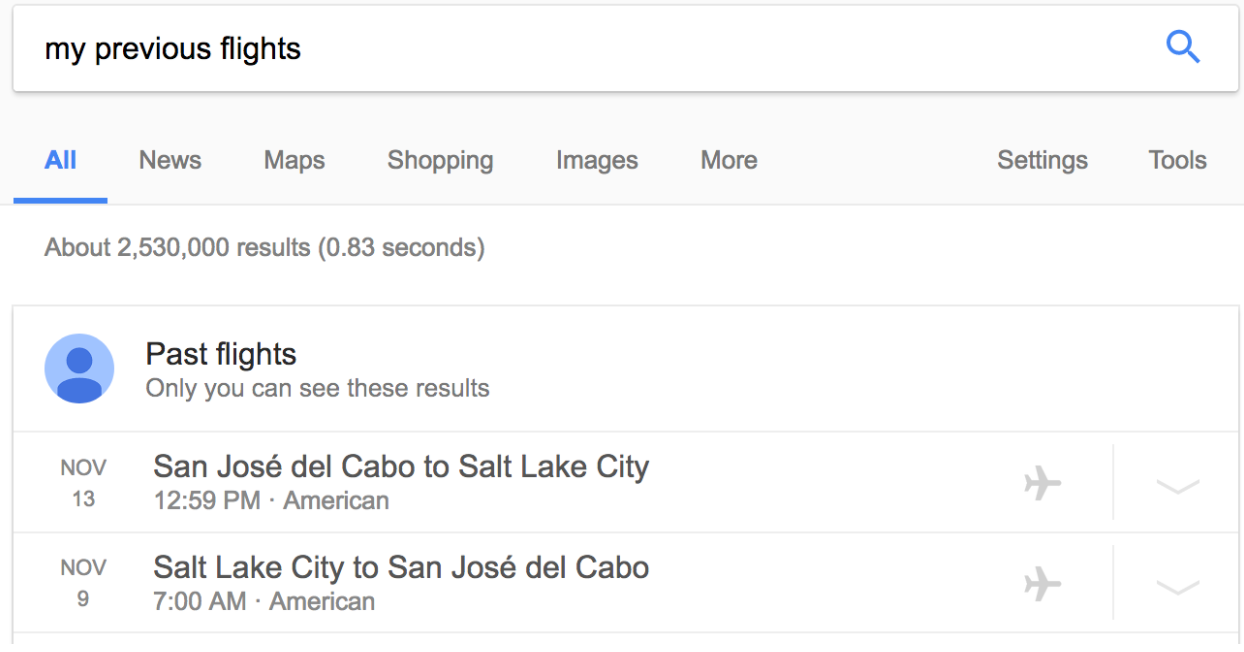
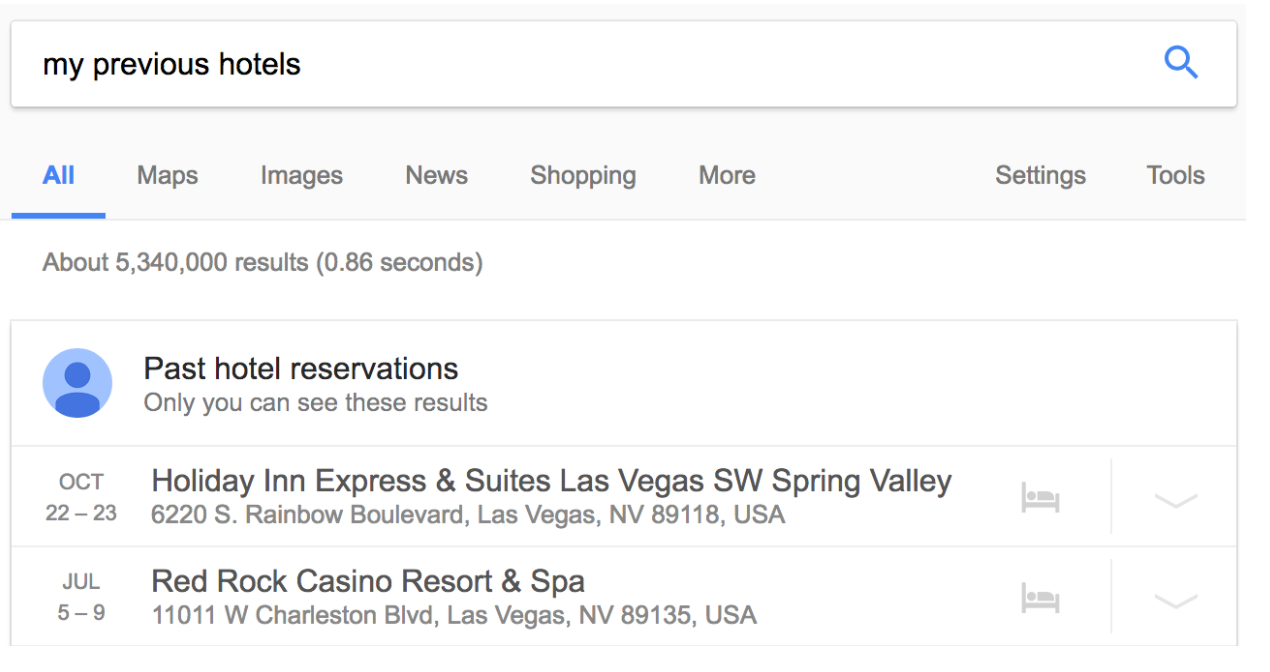
If you are logged into a Gmail account that you have used for hotel reservations or flights, simply search:

“My Previous Flights” to see all flight reservations in your Gmail:

“My Previous Hotels” to see all hotel reservations in your Gmail:

Your Website is a Powerful Storytelling Tool

SHARE:

FOUR WAYS TO TELL YOUR STORY

Creating a website that tells your property’s unique story is critical to staying competitive in today’s marketplace. When guests have their first interaction with your hotel’s website, it’s crucial to start telling them exactly what makes your property unique and what benefits they receive when they stay. A compelling narrative or story builds a lasting impression by creating an emotional response for your online guests. You can tell your story through, photography, copywriting, highlighting key differentiators and by showcasing the local community surrounding your hotel. Once prospective guests understand who you are, they will have enough information to decide whether or not they want to engage with you further. The four points below will not only help you better tell your story to your future guests but will also build credibility and awareness for your hotel.

BIG, BEAUTIFUL PHOTOGRAPHY.Photography is extremely important for travelers when researching where they will be staying. You want them to visualize themselves sipping a margarita by the pool, and the best way to do that is with high-quality photos. An investment in great photography can make all the difference. A study done by Hotels.comfound 70% of respondents agreed that seeing photos of the rooms and property are key to their decision-making process. Videos and virtual tours are other great ways to show every corner of your property. Photos can quickly say a lot which is crucial when people are skimming through a variety of options.

you

SPEAK YOUR CUSTOMER’S LANGUAGE.How you say something can be just as important as what you say. For example, if you’re a small casual hotel consider leaving buzz words suchas “exquisite”, “luxury”, and  “refined” out of your copy deck. Knowing your audience is a crucial element in learning how to write compelling and informative content for them. Authenticity has become increasingly important, matching your language’s tone to the customers you are seeking helps build rapport.

2017.09_Blog_Image_4_4_FourWaysToTellYourStory

HIGHLIGHT YOUR SPECIAL DETAILS.Travelers today are looking for a true experience when they travel. Highlight what makes your hotel unique and different from your competition.Whether you have an award-winning rooftop bar or a traditional English tea, people want to do something special and create moments to last a lifetime. It’s even better if they can do it without having to leave the property, so don’t be afraid to show off a little.

2017.09_Blog_Image_4_3_FourWaysToTellYourStory

KEEP IT LOCAL.Placing yourself within your greater community is becoming a much larger selling point. Not only do people want to know what’s around you but highlighting the places that align with your demographic can become a useful tool. The millennial generation is very big with experiential travel, so taking the time to highlight your neighborhood could really pay off. Showing you are ingrained in what’s happening makes you more of an expert and helps show your personal side. Help curate trips for your guests with area guides and suggested things to do.

2017.09_Blog_Image_2_3_FourWaysToTellYourStory

Let’s bring your story to life!

How Much Should I Spend on Paid Search for my Hotel?

SHARE:

We get this question all the time from prospective clients and new clients and it’s also something we revisit at least once (or more) every year for current clients. The truth is, there’s a lot more to it than picking a number based on the hotel’s location. It’s a complex answer that can only be determined by deep discovery and understanding of the hotel and its goals, the market the property is located within and historical data from the hotel. At GCommerce, every client’s budget recommendations are customized based on the hotel’s specific goals, historical performance and competitive landscape coupled with data from tools provided by Google, Bing and Doubleclick Ad Services.

7 Key Steps to Determining Paid Search Budget Recommendations for your Hotel

  1. Hotel Discovery & Determining Competitive Advantages - this guides our keyword research which helps us determine the estimated cost per click for qualified keywords. We seek answers to questions such as, What adjectives describe the hotel? What are the nearby attractions that drive visitors to the market? What are the top business drivers for the hotel? What are the hotel’s top competitors? What special amenities, services or events does the hotel support? Then we utilize keyword planner tools from Google and Bing to determine keyword CPC and traffic estimates.
  1. Establish business goals - we work closely with the client to determine their top priorities. Do they have a revenue goal they need to achieve? Does the client want to focus on driving more wedding or meeting business? Are they competing with OTAs to capture reservations? What are some of their biggest challenges and how might paid search help them overcome those hurdles?
  1. Complete Competitive Research - paid search pay per click costs are based on a bidding model. Competitive research factors in how many other advertisers are bidding on the same keywords, whether or not other advertisers are bidding on your brand name and also provides an understanding of highly valuable keywords we should be including in our campaigns.
  1. Analyze Historical Performance - the best way to estimate how specific budget recommendations will impact your bottom line or other business goals is to understand historical performance. GCommerce deep dives into website data, looking back multiple years, to gain insight into traffic, production, conversions, seasonality and other performance trends by month.
  2. Market Research - where is the hotel located? does the market experience any seasonality? We gather information from the client directly and utilize Google Trends to follow keyword popularity trends over time. It is important to allocate budgets as it correlates to business goals and seasonality in the market.
  1. Future Predictions - with a solid understanding of the hotel’s market and their previous performance, we can predict with a degree of confidence how much a specific budget might impact a hotel’s paid search marketing efforts. If they previously spent $Y and saw a return of $X, what kind of results would we expect if we increased or decreased their budget? Using this predictive modeling, we can find the optimal budget to ensure each has a healthy budget that reflects a positive Return On Ad Spend within their stated goals.
  2. Finalization of Target Keywords and Presentation to Client - last, we will prioritize these keywords based on relative competition, traffic, and the hotel’s goals. We will work closely with the client to ensure that all keywords are relevant to their business and end goals. Organizing these keywords into the most relevant Adgroups based on what is most likely to convert provides us with the best opportunity for success in starting with a new budget.


At GCommerce, we believe in a customized approach for every client. This is true for all aspects of the overall marketing strategy and is how we approach each client’s budget recommendations. We utilize the vast amount of historical data and experience we have from working with clients in markets all over the country and combine that with a custom analysis to provide the best hotel paid search budget recommendations possible.

If you’re interested in learning what you should spend on paid search for your hotel, please reach out to your Account Executive or Account Manager today. Not a GCommerce client? Not a problem. Contact us and we can help you get started with strategic paid search marketing solutions today!

Keep Reading