Why A Mobile-First Approach Matters For Your Hotel’s Ads

SHARE:

We’re living in a mobile world—it’s 2020 after all! So why don’t all our digital marketing efforts reflect that? How often do you see a Facebook ad on your smartphone with the text cut off because it’s too long? Have you ever scrolled right past a text-heavy display ad where you had to squint your eyes to read? How about a video that didn’t have subtitles or just seemed to drag on and on? These are examples of ads that were not made with a mobile-first approach in mind.

What is a Mobile-First Approach to Ad Messaging?

A mobile-first approach to ad messaging is exactly what it sounds like, ads that take mobile users into account first. If you’re a seasoned digital marketer you know that many years ago there was a huge push to go digital with all marketing efforts (hence, digital marketing). Enter Facebook advertising, display advertising, PPC, email marketing, etc. 

A few years ago, another major shift happened: mobile-friendly advertising. With smartphones being more accessible than ever, the landscape changed again. Suddenly marketers started seeing dramatic shifts in numbers where mobile traffic was outweighing or equaling desktop. Now, in 2020, we continue to see mobile traffic growing, but only recently have marketers really started focusing on mobile-friendly and mobile-first messaging.

Smartphones and tablets have smaller screens than desktops, so it’s no shock that ads need to be tailored around that. This means more concise ad copy, shorter videos with subtitles, large text on display ads, and even one-column email templates. While many of these practices may seem like good marketing in general (and they definitely are), some marketers are still slow to adopt them. 

At GCommerce, we’ve been making a huge push toward mobile-first messaging and have compiled a few “best practices” and tips for making the shift.

How to Make Your Facebook Ads Mobile Friendly

Facebook ads are arguably the easiest of the bunch when it comes to the mobile shift, especially since marketers have the ability to see ad previews across all placements before hitting publish. Creating mobile-friendly ads for Facebook is especially important because a recent report from Facebook stated that 94% of Facebook ad revenue comes from, you guessed it, mobile. 
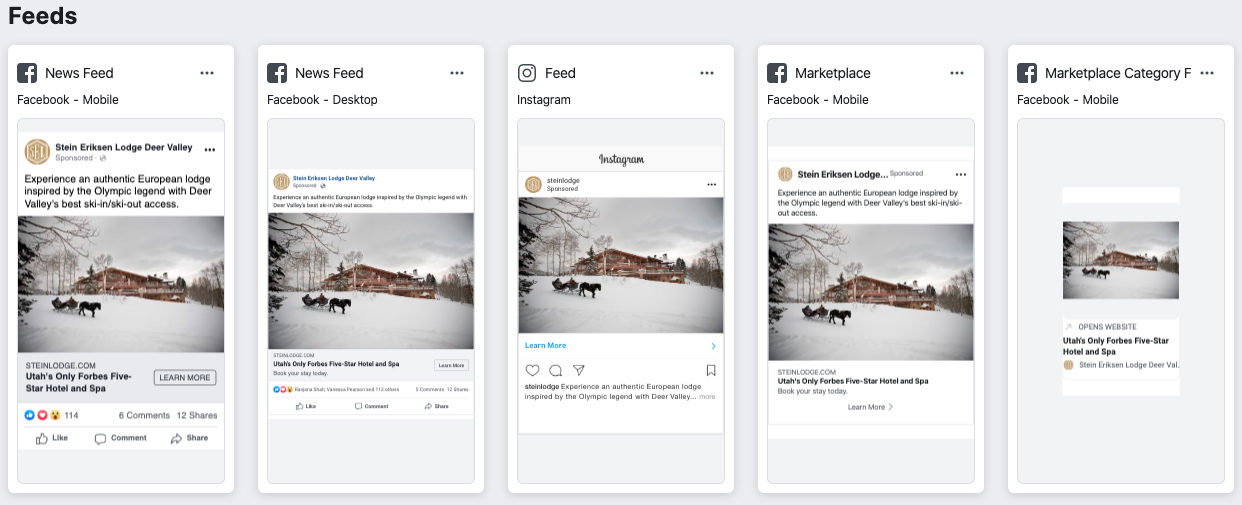
At GCommerce, our best practice for ad copy is to make everything mobile-friendly. This means that if it’s in any way cut off or too long for the mobile view, we don’t use it at all. Facebook recommends that all primary text copies be 90 characters or less, which equates to about three mobile lines of copy. 
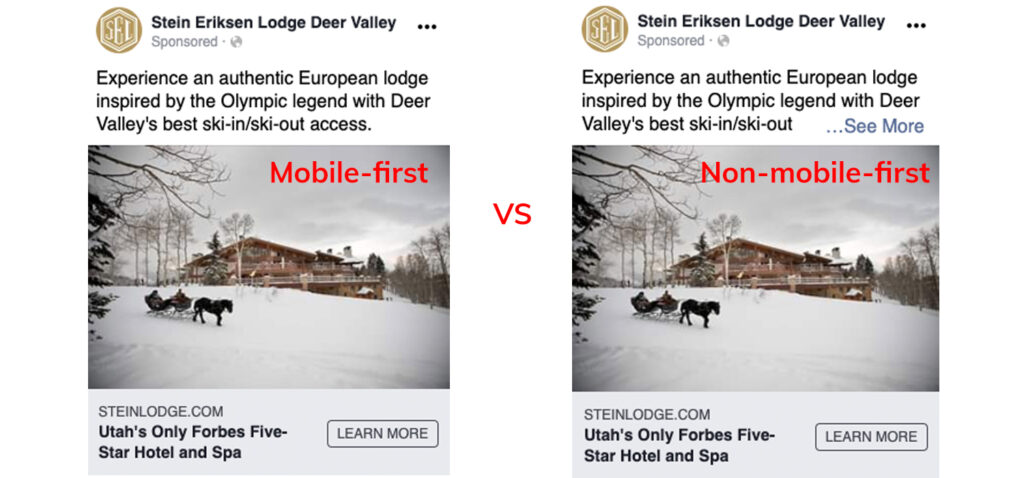
This same theory goes for the headline. You want it to be short, but eye-catching. Because Facebook also recently announced that the description section (under the headline) will only be shown if it’s proven useful to any particular user, we think it’s okay to let your headline run onto the second line and use more ad space.

How to Make Your Display Ads Mobile Friendly

Although not as quick to alter as Facebook ads, making your display ads mobile-friendly can be just as easy. Similar to the billboard effect (using seven words or less), you want your display ads to be easy to read on a smaller device. This means packing your ad space with a paragraph of text that looks okay on a desktop but absolutely minuscule on mobile is a big no-no. 

Put it this way, if a user has to zoom in to read your display ad, it’s not mobile-first.

How to Make Your Video Ads Mobile Friendly

Compared to other mediums, video ads are relatively “new” on the marketing scene, but we are already learning new ways to optimize them for mobile users. Long videos with sound definitely have their place in the marketing landscape, but in a mobile world, they need to act differently. Videos made for mobile marketing must be shorter and always include subtitles. 

A report from Verizon Media stated that 83% of consumers surveyed watch videos with the sound off on mobile and that users are 80% more likely to finish a video when captions are available. If your videos use sound, don’t worry, the report also stated that when captions are available, 37% of viewers were more encouraged to turn the sound on because the video appeared more interesting.

Using a mobile-first approach in digital advertising will help improve performance across the board, whether your goal is to increase bookings or inspire engagement with your users. We’ve already begun to see the effects here at GCommerce and are confident that tailoring your ads to be mobile friendly is the next step in launching your ad efforts into the new decade.

Please reach out to GCommerce with any questions regarding how to ensure your hotel has a mobile-friendly approach to digital marketing.

Top 5 Ways Your Hotel Can Drive More Wedding Leads This Proposal Season

SHARE:

According to TheKnot.com, 37% of wedding proposals happen from November to February. Once they answer “yes”, the next step the newly engaged couple takes is to start researching and planning their big day. Is your hotel positioned to capture new wedding leads during this peak season? Now is the time to start planning and launching your hotel’s wedding lead campaigns to capitalize on this year’s proposal season. Here are our top tips to best position your hotel to capture more wedding leads during this busy time of year:

1. Launching Wedding Lead Campaigns on Facebook

Facebook’s lead generation campaigns offer the ability to drive more wedding RFPs by capturing lead information without having the user leave the Facebook platform. It offers an easier, frictionless experience by keeping the user on Facebook instead of directing them away and potentially losing them during the process. You are able to customize the questions you ask to qualify the lead. We recommend limiting this to your most critical fields, keeping it short and sweet.

2. Use Facebook Instant Experience Ads

Facebook Instant Experience Ads allow you to showcase your hotel’s compelling imagery and messaging in a beautiful, engaging full-screen format. It gives you more real estate for imagery, messaging and video to enhance your wedding venue’s storytelling ability within a Facebook ad. These ads are mobile optimized and “designed to capture the complete attention of your audience”. You’re able to deliver your hotel’s story with videos, photos, swipe through carousels, tilt to pan and more. This can help drive more interest, engagement and leads.

3. Update, Refresh & Expand Wedding Content on Your Hotel Website

Does your hotel website’s wedding content provide important, easy to find information a user needs to help decide on a wedding location? Is imagery compelling and does it showcase your property’s venues effectively? Many hotel websites don’t provide essential venue information that brides-to-be need to make a decision and compel them to submit an RFP. We recommend building out your website’s wedding focused pages to speak to your target audience for weddings and provide them with information that drives them to plan their big day at your hotel. Incorporating additional pages to focus on weddings also provides more real estate to expand on content for SEO keywords and optimization to help you rank higher in the search results.

4. Launch Wedding-Focused Paid Search Campaigns

Search engines serve an important role during the wedding planning and research phase. Make sure your hotel wedding venues are front and center when users are searching for keyword phrases related to wedding venues in your hotel’s location. Discover keywords with search volume through using Google Ad’s or SEM Rush’s keyword planning tools and narrow your focus on your target geographic markets. Incorporate key competitive advantages and feature them in your paid search ad copy like the ad below:

5. Increase Budgets During Peak Proposal and Post Peak Proposal Season

Do your current budget allocations give room for the peak interest in wedding venue searches and planning during proposal season? Make sure your budgets are adjusted to capitalize on the increase in wedding-related interest and newly engaged couples. Google Ad’s keyword planner tool shows a historic peak in searches for “wedding venues” during this time of year, especially in January.

Wedding proposal season is already upon us! Reach out to GCommerce today to inquire about ways we can help you drive more wedding leads this time of year.

5 Reasons Your Hotel’s Direct Booking Campaigns Fail (And How To Avoid Them)

SHARE:

You already know that driving more direct bookings for your hotel is the key to long term financial health and success for your hospitality business. You’re ready to maximize your direct bookings with a robust digital marketing strategy. You’ve hired a hotel digital marketing agency to help you reach your goals. But alas, your campaigns are not producing the results or ROAS you need to achieve your revenue goals. How can you fix this? GCommerce is here to help. Here are the top 5 reasons your hotel’s direct booking marketing campaigns are not producing better results.

1. Your Hotel’s Rates Are Getting Undercut By the OTAs

You’re spending thousands of dollars to drive qualified traffic to your website but reservation contributions from OTAs keep going up. You’re running marketing campaigns that are well-targeted and focus on all parts of the consumer journey, including bottom of the funnel branded terms and retargeting campaigns. Your website is well optimized, easy to navigate and provides a great user experience. After reviewing your hotel’s revenue management you find the culprit. You’re selling rooms for lower rates on the OTA channels than on your own website. Today’s consumers are intelligent and use a variety of websites and tools to ensure they are securing the best price for their hotel stay. If you’re selling the same room for a lower rate on the OTAs, guests are not going to book directly through your website. Make sure you are monitoring the OTAs and offering the lowest rate only through your website. 

2. You’re Targeting the Wrong Audience

You dive into your hotel website’s Google Analytics and find high bounce rates, low conversion rates, and your ads just aren’t getting engagement. The cause may be that you’re targeting the wrong audience. Maybe your paid search keywords are too broad, maybe your demographics aren’t right or maybe your interest targeting on Facebook doesn’t correlate to your brand or product offering. 

How can you fix this? At GCommerce, we approach every client campaign with a customized approach. We create audience recommendations based on the client’s first-party data and brand strategy. Google Analytics and your hotel’s PMS is a great place to start to identify geotargets, demographics and other campaign targeting ideas. There are many different types of audiences and targeting across platforms. Here are a few of our favorite audience creation examples:

  • Create a targeted Facebook look-a-like audience off of your Facebook page followers to find new potential fans/guests to target with prospecting ads
  • Create a Google Ads segmented customer match audience of your top revenue-generating guests and target them across Google’s network
  • Target a customer audience list of website visitors that have included children in their search for date availability on your site

Make sure you are using data to guide your decisions and adjust your targeting as you discover what works and what doesn’t. 

3. Your Hotel’s Campaign Budget Needs to Be Adjusted

Maybe your direct booking campaigns are failing to hit your goals because your budget is not well allocated. Maybe your current budget is too low to drive the sufficient awareness, traffic and conversions you need in order to drive enough revenue or leads. Or maybe you have too much of your budget allocated to awareness campaigns when you need to be pushing some budget to campaigns and media platforms that drive more ROAS. At GCommerce we calculate recommended budgets based off of your hotel’s historical analytics and campaign data as well as estimates provided by each platform’s tools. Since these calculations utilize estimates, it’s important to re-evaluate campaign targets on an ongoing basis. We recommend reviewing campaign performance each month to understand what channels are helping you achieve your KPIs and which ones are not. Depending on your results, you can adjust budget between channels accordingly. 

4. Your Campaign’s Messaging Doesn’t Speak to Your Audience

You’ve created a well-crafted set of customer personas based on your target guests. You’ve carefully selected the best audiences based on these personas. You’ve created great content and your website is well optimized. You launch your campaigns but engagement metrics are low and underperforming. 

How can you fix this to drive more qualified traffic to your hotel’s website? Focus on your ad messaging. Have you created messages that speak to your target persona and how your hotel solves all of their problems, eases their worries, or provides the exact type of experience they desire? Many times ad messaging is too broad and generic. Craft targeted messaging that speaks to each of your target personas to improve your campaign performance. Some example strategies:

  • Targeting mothers who are in charge of planning their family vacations? What matters most to them while they are searching for a family vacation? See the below example for a luxury guest ranch targeting parents searching for their next family vacation:
  • This ad for Dollywood’s DreamMore Resort & Spa targets parents of young children with Dollywood interests. The messaging focuses on the magic of the new Wildwood Grove park:
  • Targeting couples looking for a unique romantic escape? How can you address their concerns and desires? See the below example for a luxury guest ranch targeting couples during a shoulder season need period:
  • This ad for Sunset Marquis West Hollywood aims to target those uber-luxury guests like celebrities and the elite. The messaging is coy and focuses on privacy and comfort:
  • Targeting fans coming to town for a sports event? Try something like this Hotel 43 Ad that speaks to BSU fans traveling to Boise and offers them a special fan rate:

5. Your Website Isn’t Built to Convert

Your marketing teams have built data-driven audiences, strategies, and ads. They’ve optimized campaigns repeatedly but your website traffic isn’t converting. Across all of your hotel’s website traffic channels, the bounce rate is high, conversion rates are low and website visitors aren’t engaging with your site content. The reason could be that your website needs to be updated for better conversions. Here are a few questions to ask yourself:

  1. Does the design and style of my hotel’s website accurately portray the hotel brand and on-property experience? 
  2. Is the imagery and media on my hotel’s website appealing and allow the visitor to experience the hotel’s rooms, amenities, and ambiance before they even step foot on property?
  3. Is important information about my hotel easy to find on my website? Can a visitor easily navigate around the website?
  4. Is there a clear path for the visitor to take action and book a reservation or contact the hotel?

If you answer “no” to any of these questions you probably need to revamp your website or consider launching a new one. Your hotel’s website is your online storefront and if it doesn’t look good, is outdated or doesn’t provide the information and imagery a consumer needs in order to feel confident in booking, they aren’t going to make a reservation at your hotel. As a result, your direct booking campaigns won’t convert and your ROAS will suffer greatly.

Looking for additional ways, beyond launching a new website, to enhance your hotel website’s conversion rate? Here are some of our favorites: 

  1. Incorporate direct booking tools such as The Hotels Network to personalize messaging and content on your site depending on the visitor and audience type
  2. The Guestbook cashback and guest rewards/loyalty program allows you to build loyalty and drive more conversions
  3. Custom packaging and special offers targeted to your desired audience segments

GCommerce is dedicated to helping hotels succeed with their direct booking strategy. If this is something your hotel needs assistance with please reach out to our sales team today.

Should "Official Site" Be In Your Hotel's Paid Search Ad Copy?

SHARE:

Often times on SERPs you will see "official site" next to a brand's site name. We wanted to know if this made a real difference, so we put it to the test with several of our clients. So far, we have seen various results. Some clients are in favor of using the phrase in their paid search ad copy and some had the opposite conclusion. My tests using the phrase “official site” within client paid search ad copy has made a positive impact on many of my clients' campaigns.

One of the first hotel client accounts I tested this on had a small budget in a heavily competitive market and was very seasonal. When tested with "official site," it resulted in an increase in conversions. The results of the test are below:

As we had expected, the experiment of using “official site” in the ad copy resulted in an increase in conversions along with a slight increase in CTR. What we also saw across most of the properties was the average CPC decreasing, which in return either lowered our costs or allowed us to drive more clicks to for the same budget.

Here are the results from two more tests that performed similarly:

While most of the tests resulted in positive increases, there were a few who didn’t see any major changes in conversions, positive or negative. They did, however, see the decreasing of the CPC and cost.

After our testing was done, we did decide we would implement “official site” language in the headlines in our branded terms campaigns across multiple hotels' paid search accounts.

GCommerce recently pulled our top converting ads from a sampling of our hotel client accounts across our entire portfolio. We found that a majority of them had “official site” within the title, once again confirming that having it in the ad copy can be effective for improving campaign performance and conversion rate optimization.

Conclusion

I recommend testing the inclusion of “official site” in your account’s ad copy to see if it has a positive impact before adding it in permanently. Still have questions about how you can test this in your hotel’s paid search account? Reach out to GCommerce today.

How to Increase Your Hotel’s Midweek Stays with Facebook Advertising

SHARE:

Does your hotel or property suffer from high o accupancy on the weekends but low demand during the week? Maybe this only happens during specific seasons or months, but whatever the cause, you are not alone! In fact, many hoteliers find themselves stuck in the rut of minimal midweek stays. While there are many different approaches to alleviating this issue, we’re going to focus on how you can increase midweek stays through Facebook advertising for hotels. Not only is Facebook easy to use, but it’s also cost-effective because you can run campaigns for only a few dollars per day and enjoy lower CPCs and higher engagement than other ad platforms.

Take a look below for a few tips and tricks when it comes to advertising midweek campaigns for hotels on Facebook.

It All Starts with A Facebook Audience

Exact Match Facebook Audience

The first step to creating any Facebook advertising campaign is to create your audience. While you could continue focusing on the audiences you use for your hotel's regular Facebook campaigns, a more focused approach might prove better in the long run. After all, if those same Facebook audiences were good enough for your hotel's midweek campaigns, they’d already be converting that way.

Instead, we suggest creating an exact match list on Facebook of customers who have stayed midweek at your hotel in the past. Whether you want to target all midweek guests within the past two years or by season, using this targeted approach will be a great starting point for getting your message in front of the right audience on Facebook.

An example of this concept could be uploading a list for everyone who stayed at your hotel midweek last summer and targeting them with a summer midweek promotion.

Lookalike Facebook Audience List

Once you have your exact match Facebook audience created, you can take it to the next level and make a lookalike Facebook audience based on that list. By creating a lookalike audience, you’ll be able to target a fresh pool of potential hotel guests who are similar to those on your hotel's exact match list. This also allows your booking funnel to be continually refreshed and lessens the likelihood that your retargeting list gets stale.

Once you’ve got your new adset loaded with this lookalike audience, dial it down further by utilizing interests, behaviors, and demographics. Is your midweek hotel guest a parent? Married? Do they have a certain education level or work in a particular industry? Maybe they are frequent travelers or have interest in your metro area and its big attractions. Whatever your midweek persona is, using detailed targeting helps narrow your audience even further to ensure your impressions and clicks are more qualified than a general audience.

At GCommerce, we like to target business travelers in particular for these campaigns, as they are typically an audience that stays midweek. How do you target business travelers for your hotel? You could start by filtering through demographic targeting such as specific industries, employers, and even job titles. From there you can dive more into behaviors, such as frequent travelers and frequent international travelers and then narrow it further by interests that business travelers might have.

Creating Midweek Ads For Your Hotel

Your hotel's midweek Facebook audiences are set up and ready to run, great! But now comes the part of actually drawing them in and getting that click-through to the website. When your hotel is struggling with midweek occupancy, running a midweek offer or promotion is a great way to encourage bookings. However, a midweek offer doesn’t always have to be a percentage off or a free night. 

Here are a few of our favorite “offers” for increasing midweek stays:

  • Stay Longer, Save More – give 10% off for booking three-plus nights
  • Complimentary Midweek Happy Hours – provide a free drink or a glass of wine in the lobby or bar after 5 PM during the week (this is great for business travelers!)
  • Free Breakfast – complimentary breakfast for midweek stays (again, great for business travel)
  • Book 3 Nights, Get 1 Free – this is a great way to extend your hotel's midweek audience
  • Free Upgrades During Midweek – why not offer to upgrade that standard hotel room to a deluxe, or deluxe hotel rooms to suites (based on availability)?
  • Host Meetings and Events – offer up meeting and event packages or free stays for hosting at your property
  • Rewards Program – if you don’t already have a rewards program in place, offering rewards for midweek stays is another great ploy for both frequent and business travelers

Alternatively, though not technically an offer, hosting midweek events and activities such as live music or other performances is also a great draw to use in your hotel's Facebook ads.

Use Creative Messaging That Speaks to Your Audience

So now we’ve got our Facebook midweek audience and formulated an offer; the next step is to tie everything together through creative messaging. Your hotel's Facebook ad messaging should align with your audience and offer, but should also be fun and eye-catching.

Below we came up with a few examples that could tug on potential guests’ heartstrings:

  •  Are you trying to get your weekend guests to book an additional day?
    • Play hooky
    • Extend your weekend getaway
    • Stay longer and get an additional night on us
  • Are you targeting people to visit during off-season?
    • Avoid the crowds
    • Save more when you travel during non-peak months
  • Are you targeting corporate travel?
    • Travel for work doesn’t need to be boring!
    • Long day at the office? Get everything you need right here!

Now that you’ve got the tools for success, it’s time to start strategizing and getting your hotel's own midweek Facebook campaigns into place. Facebook might be a small and relatively easy way to start boosting your midweek activity, but in the long run, it can prove to be extremely effective when it comes to engaging your past customers and improving your hotel's current marketing audience lists.

How We Use Google Ads Max Click Bid Strategy to Improve Brand Awareness

SHARE:

At GCommerce, we are always testing new features across the platforms we use for our clients.  Recently Google Ads introduced automated bid strategies for Paid Search that uses machine learning to adjust bids based on the specific objective you choose. For clients that either don’t have conversion tracking or not enough conversion data for the platform’s conversion-based bid strategy algorithm, we decided to test Google Ads’ Max Click Bid Strategy.

The first client we transitioned from manually managed bids to a max click automated bid strategy was chosen because their main goal was to drive awareness and increase website sessions. I decided they would be a perfect fit for a bid strategy set with an objective to drive max clicks within the set budget.

Here are our results comparing YOY data:

Paid Search KPIs YOY:

  • Impression share increased by 9%
  • Clicks increased by 25%
  • CTR increased by 15%
  • CPC’s decreased by 11%

Overall website performance increased. More notably, their paid search campaigns had significant improvements, including a 12% decrease in bounce rate and a 22% increase in sessions.

Overall, the Google Ads Max Click bid strategy structure resulted in positive improvements in performance and has helped the client improve on their awareness goal.

Another client's paid search account that I placed on the same bid strategy saw similar improvements. Their main goal was also to increase awareness.

Paid search results YOY:

  • Impressions share increased by 4%
  • Clicks increased by 119%
  • CTRs increased by 97%
  • CPC’s decreased by 55%

Google Analytics showed the client’s sessions and average duration increased and their bounce rates decreased.

Once again, we saw positive increases in the accounts that support our properties' awareness goals by using Google Ads Max Click bid strategies.

If you are not using paid search bid strategies, you’re not only being less efficient with your budget, but you are also wasting time manually adjusting bids when the time could be better spent focused on high-level strategizing, audience targeting, keyword expansion, refining your ad copy, and more.

GCommerce recommends selecting a bid strategy for your campaigns that matches the business objective. Conversion based bid strategies are preferred but if you don’t have conversion tracking or you don’t have enough conversions, start with max clicks bids strategies.

Keep Reading