How To Avoid Costly Website Performance Issues Within Google Tag Manager

SHARE:

What Is Google Tag Manager?

Tag managers have become increasingly commonplace on modern websites for many reasons. They provide ease of access for placing scripts and light applications onto websites, without having to lean heavily on a developer and allow these additions to be placed without interrupting the website’s base functionality.  As time has passed however, some concerns have arisen about using tag managers, such as Google Tag Manager, one of which is overcrowding.

Website Performance Contributors

Your website is set up with a number of assets (Pictures, Videos, Graphics, Apps etc) that all contribute to the load time and overall site performance.  Other factors might include your site host service, outdated code/low functioning coding, or the number of people accessing your site at the same time without adequate scaling.  Most of these issues are within your control to manage and can be handled by your development team.

Tag Managers Effect on Website Performance

Typically, a tag manager such as Google Tag Manager will not affect site performance that much.  With well regulated use, a typical tag manager will serve a limited number of marketing and analytics tags and some of these tags can be loaded after the website pages have already loaded completely. A well regulated Google tag management container should have a minimal to unnoticeable effect on website performance.  When a tag manager is mismanaged it can present a number of problems that will have a varying degree of impact on the websites performance and the operation of the tag management container itself.

When Tag Managers Are the Problem

Too Many Tags

How many tags is too many tags to have within your Google tag manager?  If a tag manager has ten to twenty basic marketing tags, that amount of additional script will indeed add an additional load to the website’s performance.  If all ten to twenty tags are loading inline with the rest of the website, it might see a difference of a few hundred nanoseconds, so unless the website sees a few hundred thousand users per hour or each of these tags has a thousand lines of code, the website’s speed is in no danger of being reduced to a crawl. However if a tag manager container has been accumulating tags over the years, maybe from trying out different publishers or asset integrations and now has 300 or more tags inside, it’s very possible that your tag management container is impeding your website performance to a more noticeable level.

There are very few reasons why any tag management container would need to have tags numbering in the multiple hundreds on any individual site or even multiple websites sharing the same tag manager container.  In addition to flirting with website performance issues, letting a container fill up to the point where there are that many tags, will make it somewhat difficult to manage.  Think of it like acculating items in your office over the span of multiple years of service.  Eventually figuring out what does what and goes where becomes a sizable task in itself and that’s before you consider what you want to remove. A better way to handle your tag management container, and avoid costly website performance issues, is to progressively update and evaluate your tag manager container’s status in regular intervals.

Multiple Tag Manager Containers Running On One Website

Implementing a tag management container, such as Google tag manager, is a relatively easy process in most cases. That ease of implementation can spawn another issue with multiple tag manager containers being placed on a website adversely.  Running multiple tag management containers is not always a bad thing. Leveraging two or more containers where both are monitored and their use is openly discussed can work with great efficiency.  On the other hand, it’s very possible to lose sight of multiple tag manager container operations as well.  A prime example of this is one tag manager container is used for years but the administrator in charge of said tag manager container is the sole owner and has now separated from the organization.  Now nobody knows what is inside of the tag management container or how to get inside of it. Without support from the tag manager container product developer, that container is now essentially a ghost ship ‘dead’ on the site. 

All too often, the website owner will simply install a new tag manager and continue to  operate with two containers installed, not giving it a second thought. A potential nightmare scenario has now been created. The website now potentially has multiple scripts running on that can no longer be verified, and there is an unsecure access point to the site where someone might be able to make major modifications to it or potentially add some form of malware. It may be a little bit of a process, but whatever can be done to recreate the useful instruments from the ‘dead’ tag manager container in the newly created container, and then the ‘dead’ container should be removed as soon as possible.

Conclusion 

Tag Management container ownership at first glance is a relatively simple concept, but it has lasting implications and consequences to website operations.  Maintaining a well organized and well run tag manager container overtime should be a process similar to housekeeping. Too many tags accumulating and running unchecked in a container without proper oversight, can be a hindrance to website performance and leveraging the container with proficiency.  Similarly, operating more than one tag management container on a site, where full utilization transparency does not exist, can present as many if not more problems as a single unkempt container.  It is in the best interest of website owners/administrators who have opted to use tagging containers to adopt or create rules and policy around their placement and long term use. 

Have questions about how to use Google tag manager properly to avoid website performance issues? Reach out to the tag management experts at GCommerce today.

Better Understand Booking Patterns Through Your Hotel Website

SHARE:

Most hotel booking engines have parameters within the URL that include the check-in and check-out dates that are being viewed by the user:

booking URL

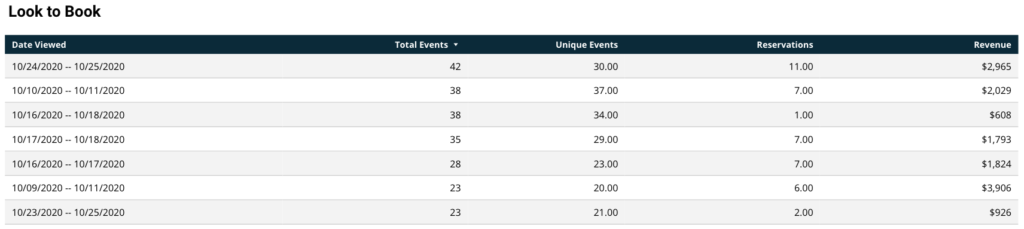
But how can we use this information to help provide deeper insights for hotel’s and their Revenue Managers? Using custom parameters, we can isolate those dates from the hotel’s booking engine in order to see how many times people are viewing those dates, how many times they are being viewed uniquely, the number of reservations and the revenue generated.

Booking window dates

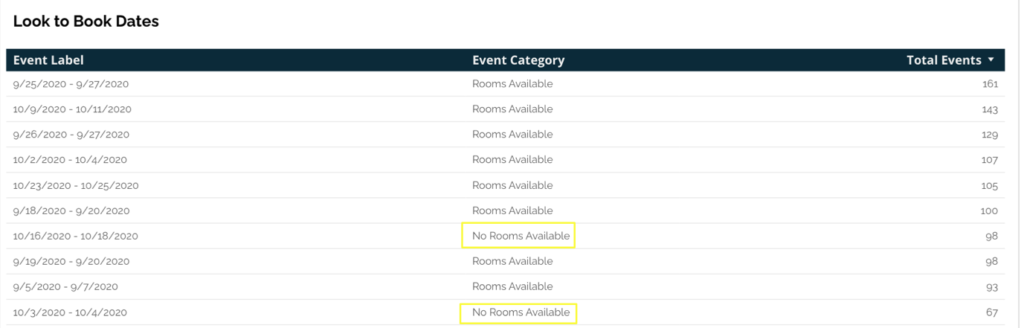
We can also combine other variables from the hotel’s booking engine, such as which dates are being viewed where rooms are not available:

Table showing no rooms available

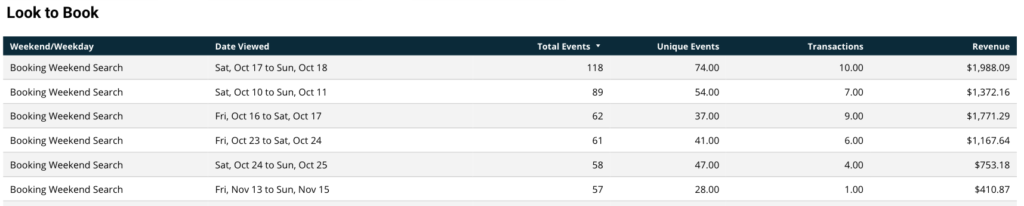
Dates being viewed within the hotel’s booking engine between weekdays and weekends:

Visual showing searches for weekdays
Visual showing searches for weekends

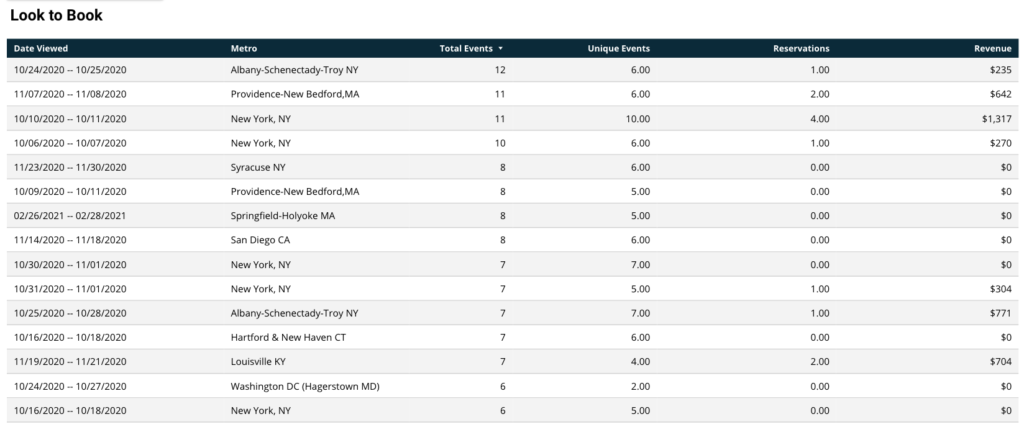
Insights on which geographic areas people are connecting from to view dates within the booking engine can also be provided.

Visual showing weekend bookings by metro

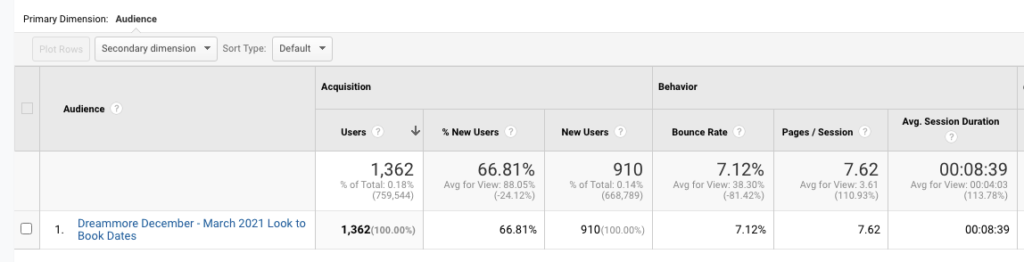
Within Google Analytics, we can isolate this audience by date ranges to view specific demographic data and we can retarget specific advertisements to those individual users through Google Ads:

Google analytics report

By utilizing this data, GCommerce Solutions clients have gained valuable insight into which dates are being viewed more or less, especially during times of fluctuating demand. Knowing which dates are showing potentially more or less demand and who that demand is being shown to you can help guide direction for room rates, marketing initiatives, packages or promotions and capacity planning.

Contact GCommerce Solutions today to add look-to-book tracking or other customs insights on to your hotel booking engine website.

COVID-19 | How To Use Data To Relaunch Your Marketing Campaigns

SHARE:

The coronavirus pandemic has pushed us all into uncertain times and with it paused media campaigns leaving unspent marketing dollars. Now that we’re beginning to see a light at the end of a long and dark tunnel, it’s time to start prepping your hotel’s marketing campaigns with a returning strategy. 

If the thought of relaunching your hotel’s marketing campaigns scares you or has you reeling on where to even start, don’t worry, you’re absolutely not alone! As experts in the digital marketing space, we’re here to guide you through this new phase and how to use data to create the best re-launch plan for your property.

Use Data to Drive Your Hotel's Marketing Decisions

At GCommerce, it’s no secret that we love data and use it as the backbone of all our marketing strategies. Whether it’s determining a monthly budget or deciding which audiences to target, your data should drive all marketing decisions. In fact, this could not be more important in the current climate given that many properties will be starting out with limited budgets, which means you’ll want your campaigns to provide as much value as possible. The big question is...where do you even start when it comes to analyzing your data?

A great place to begin is by looking at your on-site data using Analytics or other direct marketing platforms. For our clients that use The Hotels Network, we’re able to monitor real-time user searches on their website and determine current user behavior. For example, we can see if users are interacting with the onsite products (pop-ups, price checks, etc.), the searcher conversion rate of your hotel versus global benchmarks, where these direct bookers are coming from, which check-in dates they are looking at, conversion rates based on lead time, and your property’s rate parity health. 

Based on the available data through The Hotels Network we have a much clearer picture of how audiences are interacting with your website and if they are even ready to convert. For example, we monitor the status of one of our clients on a weekly basis. Two weeks ago we were seeing that the majority of guests were looking to travel 30-59 days out and converting at a rate of 3.10%. When we looked at data for this past week we saw a dramatic shift in that the majority of searchers were looking to book 8-14 days out with a conversion rate of 7.34% and 30-59 days out with a conversion rate of 5.70%. Even more interesting was that the next big search period was for 7 days or less and converting at a rate of 5.54%!

Using this data we could easily recommend marketing campaigns aimed at traveling and booking now and in the next month, whether it was a paid search campaign with a limited time offer or a Facebook ad welcoming guests back to the resort. We could also set up a nudge on The Hotels Network urging users looking at the selected lead times to book with special offers or risk-free reservations.

However, what if you don’t utilize The Hotels Network? Much of this data can still be found by using Google Analytics and searching through your site traffic pages, e-commerce goals, and product performance. Another great resource is the Adara Travel Trends Tracker which is updated daily. Adara is providing valuable data on flights, hotels, and other travel trends that include booking windows and travel types. These charts are a great indicator of travel as a whole.

Creating Your First Marketing Campaigns During COVID

Once you have gathered a good chunk of information, you need to figure out what types of marketing campaigns should launch first. For those limited by budget, we suggest a tiered approach to campaign creation.

1. Staycations / Local Audience

When launching your first campaign in this COVID-19 driven climate, we recommend starting local. Target your drive market with staycation offers or romantic weekends away. If you are able to open your pool or other outdoor amenities, call this out and offer your locals the chance to enjoy summer vacation even if they aren’t far from home. Even if your property isn’t hindered by travel restrictions at the moment, most people still aren’t willing to travel long distances to get away.

2. Loyal Guests/Passholders

After taking care of your local market, create campaigns targeting your loyal guests. This could be people that participate in your loyalty programs, pass holders, email subscribers, past guests, etc. This is a great audience to re-engage quickly because you know they are already familiar with your property and more willing to stay with you over other hotels or properties. On top of that, this audience is also more likely to share your brand with their friends, families, and followers.

3. Regional Guests

When travel restrictions start to fizzle out and more states begin opening up it’ll be time to start bringing in that regional audience. These are the people who will be coming from adjacent states who are looking to travel short distances. The majority of this audience will be your road tripper guests who aren’t quite ready to fly yet. You may even consider a wider radius for your drive market targeting than before, people may be willing to drive further for an escape. Make sure you consult your hotel’s data to figure out the ideal targeting.

4. Destination Guests

At the very end of this tier, we have our destination guests. These are people who will be flying in or taking long road trips and staying for more than a couple of days. Targeting these further destinations won’t really be useful until the general population is ready to start air travel again. Although this group will take longer to recover from COVID-19 impacts than other audiences, they will be key because they tend to stay longer and spend more.

How to Measure and Analyze General Campaign Metrics

Once you’ve launched your initial hotel marketing campaigns you will also need to monitor them and continually check performance. With a plethora of data to look at, it’s useful to identify key metrics to make marketing decisions. These metrics will be important to look at once campaigns have been created in order to further optimize and make sure each marketing dollar is spent wisely.

Here are a few metrics we look at consistently and how to determine the next steps.

Impressions. Impressions serve as a performance indicator at a very basic level and are great for top-of-funnel decisions. They show us a good reach estimate and help determine whether certain dimensions are worth pushing more or less budget behind. However, large impression sums don’t mean a campaign will convert well and begs the question of quality over quantity. For the current climate, we would use impressions to judge where a certain market or target audience is worth pushing budget behind or not.

Clicks. Measuring clicks is perhaps one of the greatest indicators of campaign performance, behind actual conversions. Clicks actually prove whether or not users are interested in what you are offering as a click is generally a direct action and indication of interest. If a campaign is receiving below-average clicks we know to scale back or change up the ads. 

As a general rule in the marketing space, we aim for a Click Through Rate (CTR) of 1% for more easily engaging ads (Facebook) and .05% for ads that rely more on view-through conversions (Display).

Conversions. As mentioned earlier, conversions are one of the most telling metrics. Unless you are running a brand awareness campaign, you’re most likely promoting your ad for the objective of conversions. If your marketing campaigns are displaying high numbers of bookings, that’s a great indication that you can push more budget or that you can look at expanding into different markets and interests. Low conversions at this time might tell us that your property or location is either not ready for travel or that you might be hitting maximum occupancy for the desired time frames. 

Conversion Value. Getting conversions is only one piece of the puzzle. Another important metric to analyze is your conversion value. For example, high conversions with a low value could tell us a number of things. Perhaps you are offering a large discount offer, lowering your ADR, or maybe your ADR is lower than normal because of current circumstances. It could also mean that people are booking for shorter lengths of stay. 

Conversion value helps complete the puzzle by giving us more insight into consumer behavior. If we see users are booking more weekend trips, we can adjust our ad copy and push more weekend offers. Similarly, if we see that conversion values are high it could mean an increase in ADR or longer lengths of stay. 

It’s Time To Seize the Day

Making data-driven decisions for your hotel’s marketing campaigns doesn’t need to be hard or complicated. With warmer weather arriving across the country and a temporarily unsaturated advertising market at your fingertips, now is absolutely the time to turn your marketing campaigns back on.

Don’t hesitate to reach out to our team of hotel digital marketing experts if you’re looking for guidance with your campaigns. Contact us now.

6 Very Convincing Signals That Prove It’s Time To Restart Your Hotel Marketing In May

SHARE:

*May 11th Update*

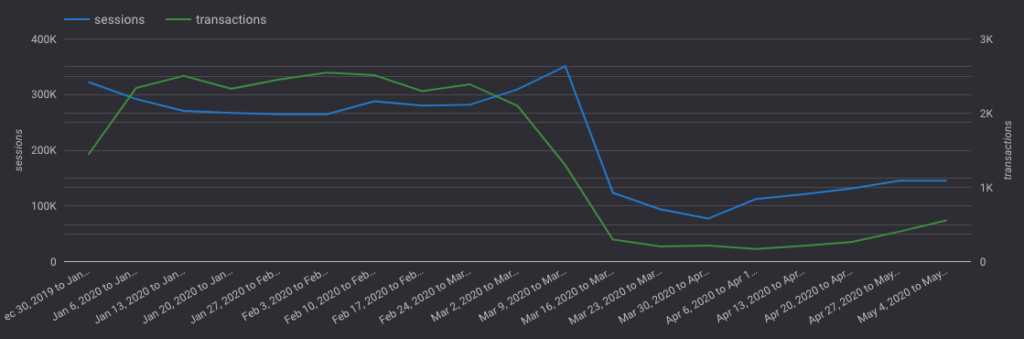
  • Online transactions have increased 37% week over week while sessions have remained flat
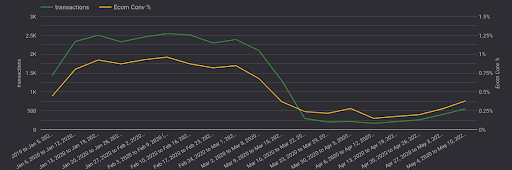
  • ECommerce rate has increased 36% week over week
  • Paid search ROAS increased from $3:1 in April to to $10.50:1 in May month to date
  • Google trends have show an increase in search interest for some locations and a decline in others
  • Client reports are confirming that OTAs are bidding on market terms in most markets and branded terms for only some hotels
  • Local organic impressions and traffic are maintaining the increase reported last week

Travelers have been confined to their homes for over a month or more due to coronavirus. They are constantly consuming travel-focused content, dreaming of future vacations, and ready to jump on the next chance to escape once it feels safe enough to do so. We’re seeing indicators in certain markets that traveler confidence is starting to return, and May looks to be the ideal time for hotels to start actively marketing again to ensure they are poised to capture the most market share. Here are 6 signals that prove why your hotel should start marketing again in May.

1. Website Sessions Are Increasing For Hotels

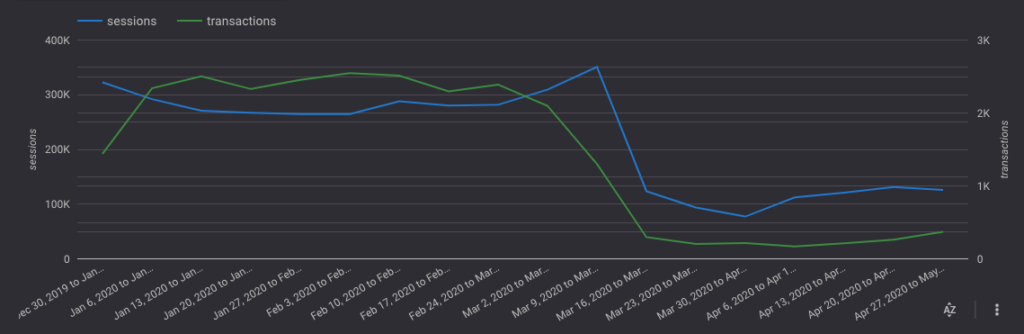
Looking across our portfolio of hotels we see that website sessions bottomed out at the end of March and have been steadily climbing since the week of April 6th. Chances are your hotel’s website visitors are returning and traffic is increasing indicating that consumers are in-market to research and book their next trip. Now is the time to make sure your hotel’s plan for reopening is present across your website including any new procedures and flexible cancellation policies to make travelers feel safe and secure with booking at your property.

*May 11th Update*

We continue to see transactions increase week over week while sessions have remained flat. Transactions increased by 37% for our clients week over week while sessions only increased by 0.09%.

2. Online Transactions & ECommerce Rates are Increasing

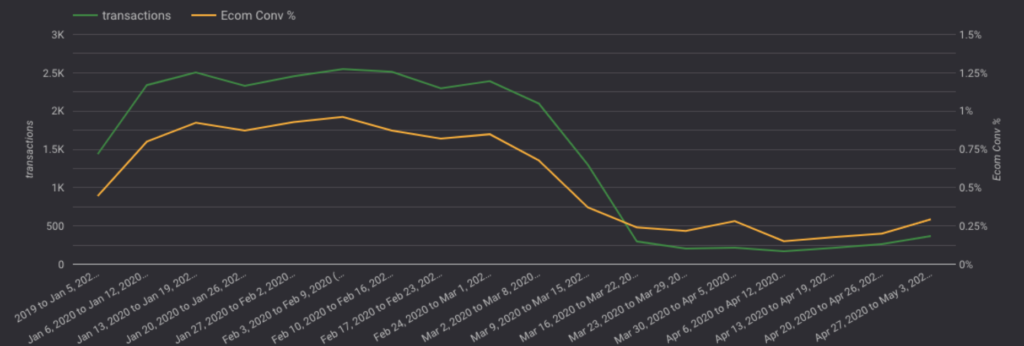
Many states have announced plans to slowly reopen, and some consumers are starting to see the rainbow at the end of the storm. The pot of gold for many people is that chance to reconnect with loved ones and revive their souls with travel. For most of our clients, transactions flatlined from the middle of March to early April. Once stimulus checks started to arrive in mid-April our hotel clients started to see transitions trickle in and they have been steadily increasing ever since. If your state is poised to reopen in the near future, now is the time to start advertising for your hotel again to capitalize on demand. Week-over-week we’re seeing a 25% increase in online transactions and a 30% increase in E-commerce conversion rates across our portfolio of clients.

*May 11 Update*

Week-over-week we’re seeing a 37% increase in online transactions and, since sessions remained relatively flat, a 36% increase in Ecommerce conversion rates across our portfolio of clients.

3. Our Clients Paid Search Averaged $3:1 ROAS in April

Although ROAS averages are still very low (down more than 50%) compared to pre-COVID-19 days, the majority of clients that are currently running paid search advertising are seeing transactions resulting in a portfolio-wide average of $3:1 for April. It is important to keep in mind that most conversions are for stays that are 60+ days out. As more states announce and solidify plans for reopening we expect to see this increase even more.

Now is the time to find the best deals on advertising platforms including Google Ads. Paid Search CPCs are at a low (down 15% on average YOY for our hotels' clients) as competition has declined significantly. Advertisers that relaunch now will be rewarded with lower CPCs to help drive more traffic for lower costs.

Although accommodations specific search volume has declined from pre-COVID levels, it is still present for branded and non-branded terms for hotels across different markets. Get in front of these potential guests now to influence bookings.

*May 11th Update*

Paid search ROAS has increased to an average of $6.30:1 from April 1st through May 12th, with a $10.50:1 for just the month of May. CPCs continue to show declines year over year, down 25% indicating that competition in the paid search ad space is still much lower than last year and presents a great value opportunity for advertisers right now.

4. Search Interest is Increasing For Some Markets

In March we witnessed the largest decline in search interest for accommodations terms that we can recall in the history of our company. Using Google Trends we can get a better understanding of current search interest for accommodation terms vs historical and pre-COVID-19 interest. It is important to note that some markets that have been hit the hardest will take longer to recover, as stay at home restrictions will last longer and travelers may still feel unsafe in traveling to those locations.

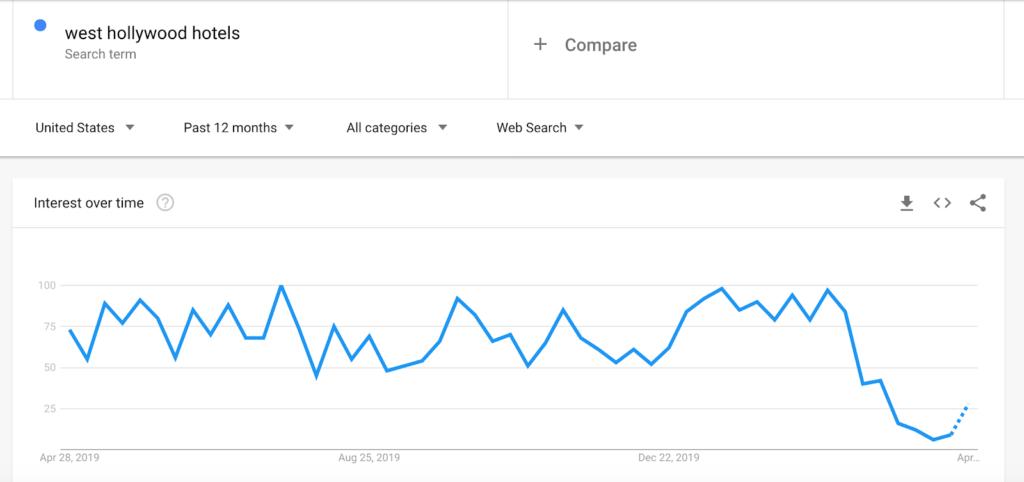
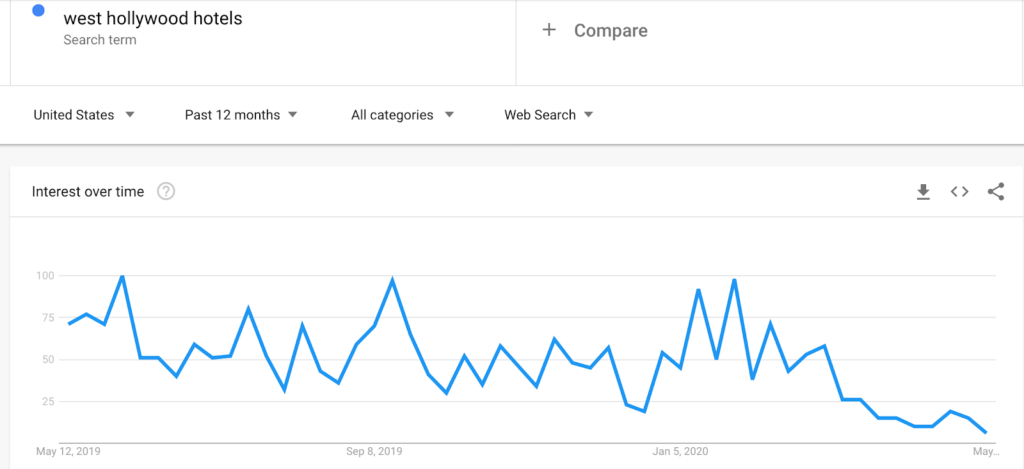
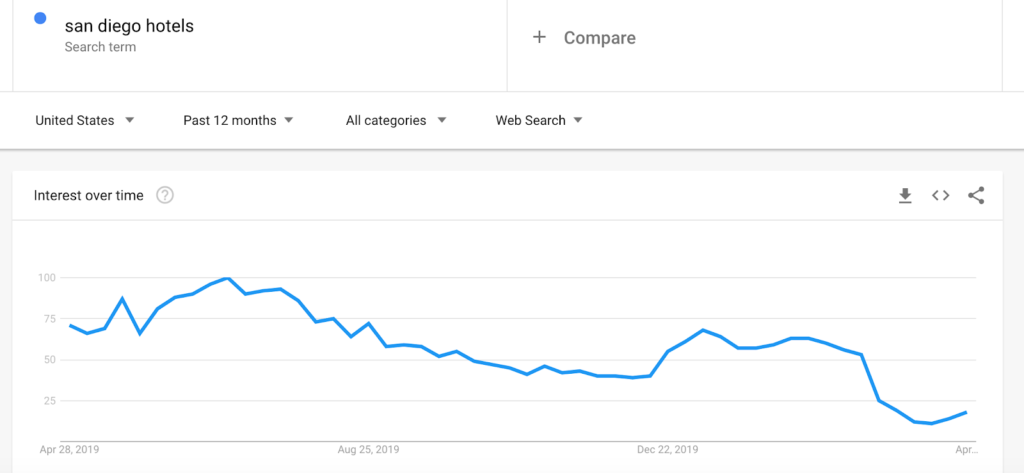
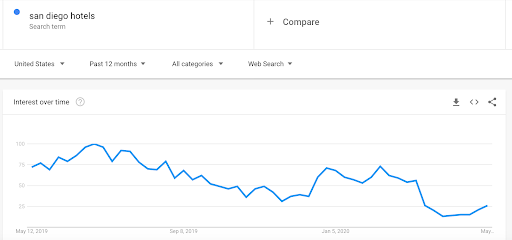
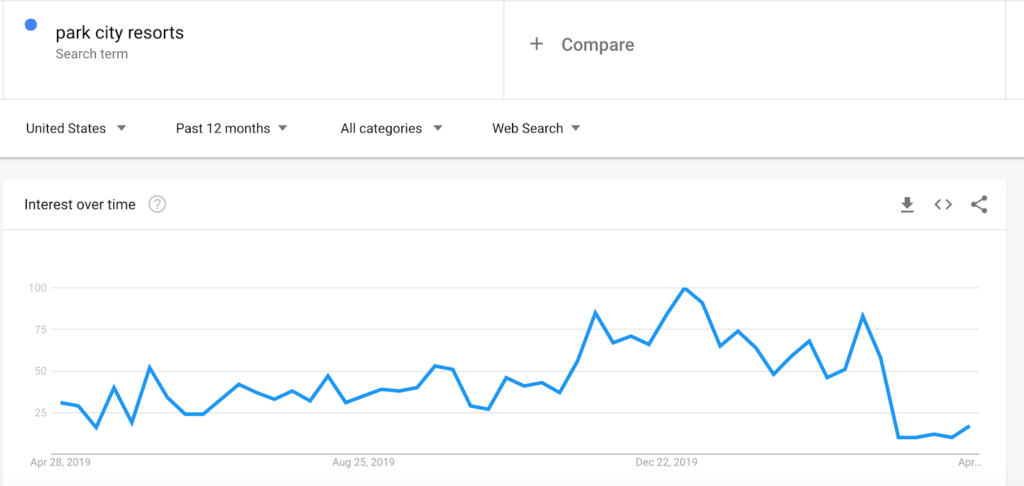
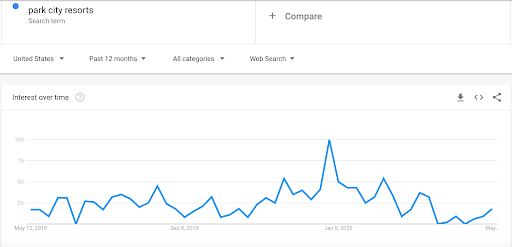
Here are a few examples showcasing search interest across different geographic markets. You’ll notice that after bottoming out in late March/early April, search interest for these accommodations terms has continued to increase steadily throughout the month.

*May 11th Update*

Google trends reporting a week over week search interest decline for “West Hollywood hotels”, going from 15/100 to 6/100.

*May 11th Update*

Week over week search interest increases on “San Diego hotels” from 19/100 to 26/100 - roughly 50% of where search interest was the same time last year.

*May 11th Update*

Week over week search interest increases on “Park City resorts” from 9/100 to 18/100 - in line to where search interest was at this time last year.

5. OTAs Have Started Paid Search Advertising Again

This week, Search Engine Land noted that several OTAs have resumed their paid search advertising, including Trivago, Booking.com, and Priceline. This may indicate that these travel companies are starting to see granular improvements and signs of increased interest from their own data. 

*May 11th Update*

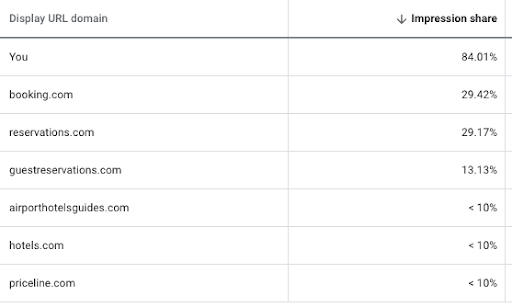
Clients running auction insights reports show OTAs (Booking.com, Priceline.com, Hotels.com) bidding on market terms for all markets but only branded terms for some clients. See example Auction Insights report below.

6. Local & Organic Impressions and Traffic are Increasing

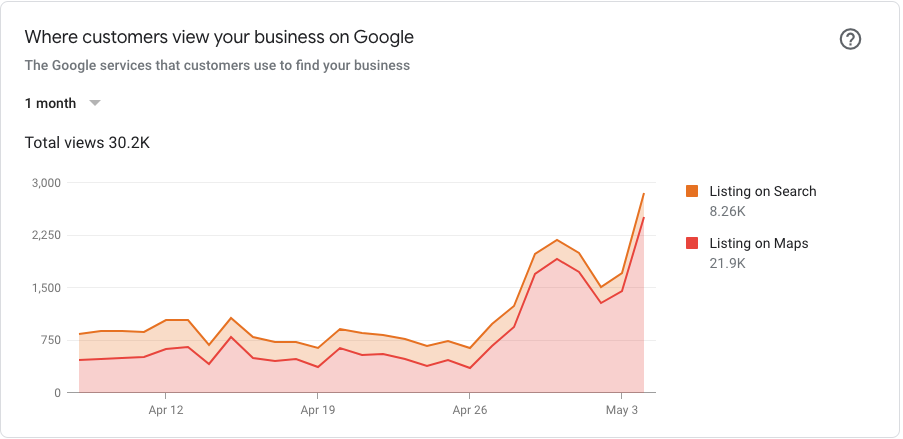
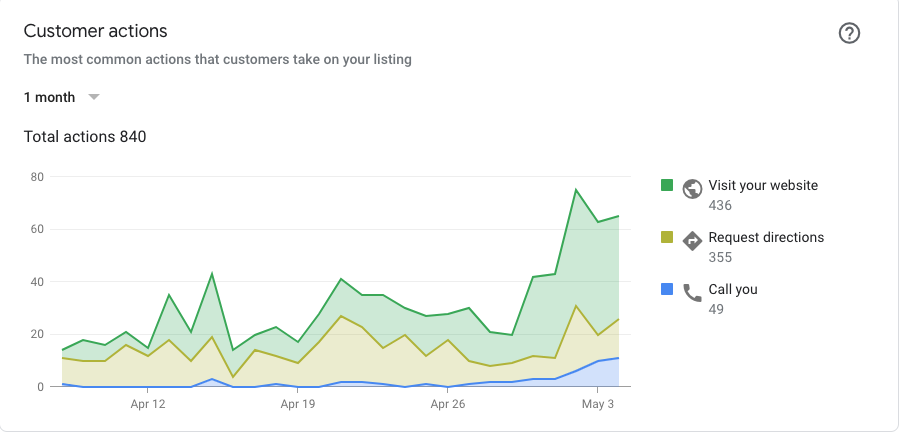
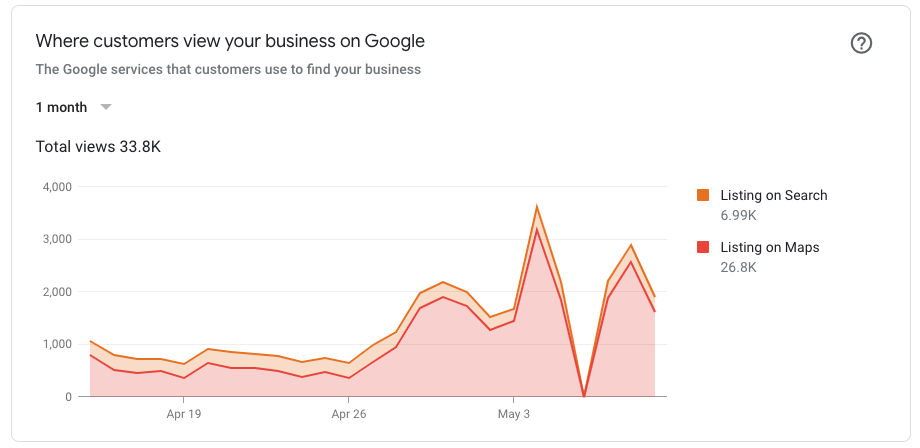
Towards the end of April, many of our clients started to see an uptick in local organic impressions across search and maps.

This increase in search impressions on Google has also resulted in increased traffic and other customer actions such as calls through their Google My Business listings.

*May 11th Update*

Reports show that some clients are maintaining the increased local organic views and customer actions reported last week. The steep decline on May 6th appears to be a glitch in Google My Business data available for that date.

We’ve also seen many clients' total organic sessions increase by at least 15% week over week, indicating an increased search interest in a combination of branded and market terms for these hotels.

As we start to see search volume increase for accommodations terms and governments relaxing stay at home orders in the next few weeks, pent up travel demand will evolve into bookings. Since total demand will still be much lower than pre-coronavirus days, hotels need to be ready and act quickly in order to capture the available demand. GCommerce strongly recommends that hotels in markets that show signs of opportunity prepare to go live with paid media in May. It will be extremely important that hotels clearly message their new cleaning policies, cancellation or change policies and more to make consumers feel secure enough to book at their property. 

If your hotel needs guidance on how or when to prepare to re-launch marketing please reach out to our hotel digital marketing specialists today.

The Rise of Data Regulation & The Impact on Hotel Marketing

SHARE:

The rise of digital advertising grew from an era of limited tracking capabilities to an era of almost unlimited access to tracking user data across the web. This advancement in tracking has provided amazing opportunities to enhance campaign targeting options, narrowing targets based on user behavior and tying that tracking back to direct online booked revenue. This wild west atmosphere of digital tracking reached an apex that finally had governments and citizens around the world taking notice and growing concerned. Concepts around privacy and data took hold with the general public and political scandals, such as the ones documented in Netflix's The Great Hack. This drew attention to the need for the government to step in and help protect citizens from how their data was tracked, used and sold across the web. 

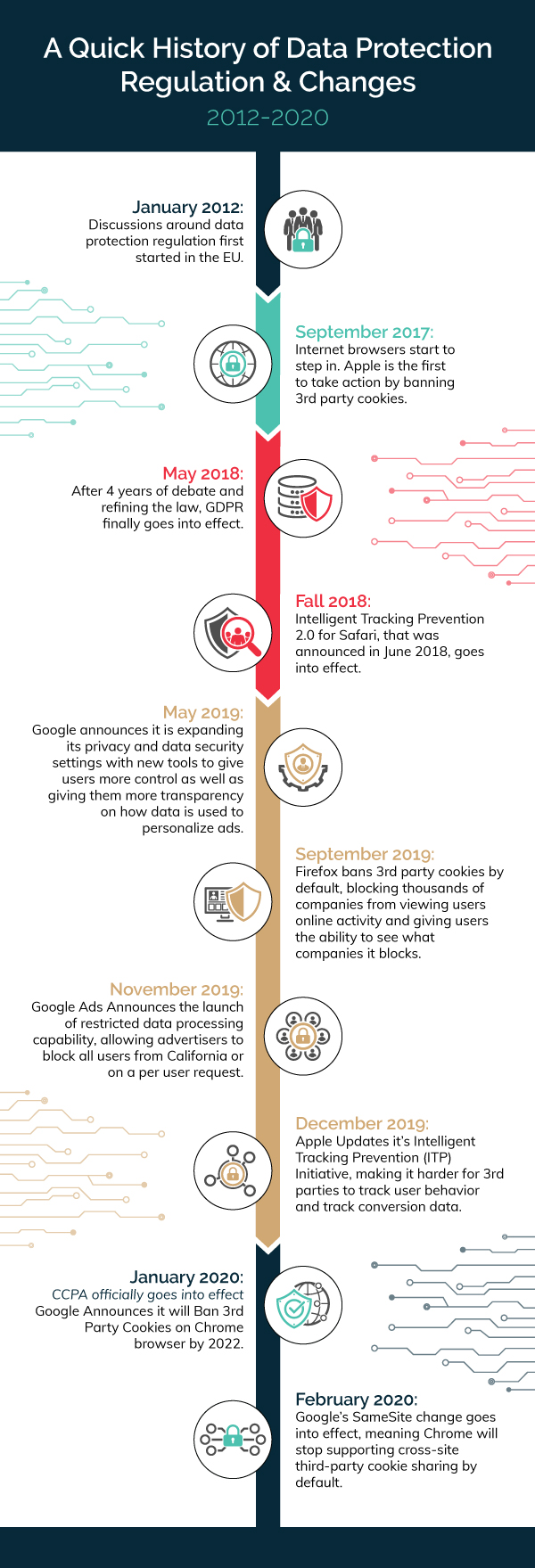
To better understand where we are and what it means for hotel marketing, let’s look back at a brief timeline of changes and regulations surrounding online data over the past decade.


What Do These Changes Mean?

September 2017: Internet browsers start to step in. Apple, whose revenues don’t rely on advertisements, was the first to take action by banning 3rd party cookies in September 2017.

https://www.theverge.com/2017/9/14/16308138/apple-safari-11-advertiser-groups-cookie-tracking-letter

May 2018: After 4 years of debate and refining the law, GDPR finally goes into effect. The first set of regulations aimed at protecting citizens from how their data is tracked, used, stored and sold.

Fall 2018: Intelligent Tracking Prevention 2.0 for Safari, which was announced in June 2018, goes into effect.

https://webkit.org/blog/8311/intelligent-tracking-prevention-2-0/

May 2019: Google announces during Google Marketing Live that it is expanding its privacy and data security settings with new tools to give users more control as well as giving them more transparency on how data is used to personalize ads.

September 2019: Firefox bans 3rd party cookies by default, blocking thousands of companies from viewing users' online activity and giving users the ability to see what companies it blocks.

November 2019: Google Ads Announces Data Processing Restriction Setting. The launch of restricted data processing capability allows advertisers to block all users from California or on a per-user request. Applying this setting turns off the ability to build and use remarketing lists for these users.

December 2019: Apple’s Update to It’s Intelligent Tracking Prevention (ITP) Initiative made it harder for 3rd parties to track user behavior and track conversion data. 

January 2020: CCPA officially goes into effect. Google Announces it will Ban 3rd Party Cookies on Chrome browser by 2022.

https://www.vox.com/recode/2020/1/16/21065641/google-chrome-cookie-ban-advertisers

February 2020: Google’s SameSite change goes into effect, meaning Chrome will stop supporting cross-site third-party cookie sharing by default.

In addition to CCPA, there are new laws and regulations on state legislature dockets across the country. How or when the U.S. federal government will take action in the form of data regulation law is unknown. The question remains, how will your hotel marketing evolve and change based on current and future changes coming to data regulation. We’ve taken some time to outline how we are viewing data regulation changes and evolving our hotel marketing to address them.

What Do These Changes in Data Regulation and Tracking Mean for Hotel Marketing?

  1. You should have already consulted your lawyer. The topics and laws surrounding data regulation and technology changes can easily get confusing. GCommerce recommends that you consult with your hotel’s consumer privacy lawyer immediately if you haven’t done so already to make sure your business is in compliance with these laws. Please feel free to check out our GDPR and CCPA guides for hotels, but understand that these are not to be used in any way as legal advice.
  2. Audience lists, such as remarketing lists, will be impacted. As more people take control of their privacy and restrict sites from using cookies to track their actions and behavior, the data behind audience lists will decline and so will remarketing audience list sizes. While we’re not seeing a huge impact on our clients yet, this might result in the decline in size for these types of audience lists which can directly impact ROAS tracked.
  3. Lean into 1st party data for audience and campaign targeting. While companies that rely on 3rd party cookies to track user behavior across the web and develop audiences will suffer, companies that hold 1st party data such as Google and Facebook stand to gain the most benefit. Since Google has so much 1st party user data through its various platforms, it can continue to offer rich in-market and affinity audience targeting opportunities through its ad platforms. GCommerce already uses these audiences to drive targeting campaigns and will continue to use audiences that provide favorable results for our clients.
  4. Our ability to track conversions will suffer. It will continue to get harder to track conversions to the same level of detail we have been used to through some browsers and platforms. The changes implemented by Firefox, Safari, and Chrome can all have an impact on this tracking. The industry is having to pivot and changes in technology that move away from cookie tracking are being worked on by large tech companies including Google. GCommerce is on the pulse of changes to pivot how we implement tracking across sites like Google Analytics to mitigate as much interruption to tracking as possible.
  5. Contextual targeting will become a greater asset. Contextual targeting options on Google and DV360 offer an alternative to audience-based targeting. Using keywords and topics allows us to craft ads and messaging to match content the user is viewing. This will continue to be a method for us to effectively market our clients and drive performance.
  6. Automation and machine learning tools can help. When cookies are blocked, it also prevents the ability to control certain campaign aspects like ad frequency. Google is investing heavily in ways to ensure the user experience isn’t impacted. One way is using machine learning within DV360, GCommerce’s programmatic solution of choice, to help prevent users from seeing your ad too many times.

The digital environment will continue to evolve as more data protection regulation emerges, forcing platforms and advertisers to adjust accordingly. While this does provide uncertainty in areas like audiences and tracking, it does provide the hope of a more secure web for us all. Please reach out to GCommerce with any questions you have in regards to our stance and preparation for these changes to the hotel digital marketing landscape.

Tropicana Inn & Suites' New Website Increases Conversion Rate and Revenue

SHARE:

Have you ever wondered just how important a website is to a business?

GCommerce launched a beautiful new website for Tropicana Inn & Suites in Anaheim, CA in October 2017. A deep focus on branding, user experience and design with a focus on conversion rate optimization had a dramatic impact on the hotel’s digital presence and bottom line.

Functionality plays a huge part in the overall user experience and performance for any website. The creative and design team at GCommerce Solutions understands this and makes sure to implement hospitality specific best practices to all of our website builds and designs.

In the case of Tropicana Inn & Suites, it was a Design Ready Architecture (DRA) build that was put together with their new branding and content initiatives. The Tropicana specific DRA that was used took into consideration keeping a user on the website and giving them all the information needed right at their fingertips.

The most important factors considered for Tropicana’s layout & design was:

  • Having a testimonial section right on the website.
    • This keeps a user on the page and provides transparency; keeping them from having to search for another website’s reviews helping to ultimately keep the user on the property’s website.
    • This shows success in the 6% increase in average session duration since the launch of the new website.
  • Highlighting the most visited pages right on the homepage to help keep the user engaged and easy navigation to find the information they require.
  • High quality and professional photography. Per Hospitality Net, after price, photography is the most important factor for travelers and prospects.

LET’S TAKE A LOOK AT THE ACTUAL NUMBERS AND HOW THE NEW WEBSITE HAS IMPACTED DIFFERENT MARKETING CHANNELS

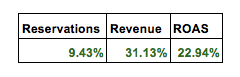
The following results were found after comparing data from the old website vs. the new website post launch.

OVERALL WEBSITE PERFORMANCE

Overall website Performance

Lets delve deeper and review how the new website helped the individual digital marketing efforts.

PAID SEARCH ADVERTISING

Paid Search

FACEBOOK ADVERTISING

Facebook Advertisement

Well designed with user experience and conversion rate best practices in mind, a new website can make a dramatic difference in your hotel’s performance and bottom line. Your website is your online storefront, You want it to be welcoming and portray a true representation of the property’s experience. The user experience should be easy to navigate and help lead your user through the booking funnel. Such as the snap navigation and booking widget used for Tropicana Inn & Suites that affixes to the top of the browser and follows the user down the page. You want the user to be able to navigate your site from anywhere and allow them to book their room from any point of their journey.

GCommerce Solutions would be happy to help with your new website. You can submit a request for more information here or give us a call at 435-214-5301.

Keep Reading