What is structured data for hotels? A simple guide to winning more Google visibility
Picture this: two hotels show up in Google search. One listing shows a star rating, a nightly rate, and a note that the property is pet-friendly. The other is just a plain blue link with a short description. Which one gets clicked?
The first one wins almost every time. And the secret behind that richer listing isn't a bigger marketing budget. It's structured data.
If that term sounds technical, don't worry. This guide breaks it down in plain language, explains why it matters for your property, and tells you exactly where to start.
What is structured data, and why should hotel marketers care?
Structured data, including schema, is a small piece of code added to your hotel website that tells traditional search engines and Large Language Models, including Google, exactly what your property is, what it offers, how guests rate it, and more.
Here's the simplest way to think about it:
- Without structured data, Google has to guess what your page is about.
- With structured data, you hand Google a clear, organized fact sheet that it can read instantly.
- Google uses that fact sheet to build richer, more informative search listings.
When you get it right, information such as contact details, amenities, review ratings, and more can all show up directly in search results.
Does structured data help with AI search, too?
Yes, and this is becoming more important every year. Structured data is arguably one of the most important factors behind AI visibility. And as travelers increasingly use AI tools like Google's AI Overviews, ChatGPT, and Perplexity to research hotels, AI visibility plays a bigger role in driving both awareness and bookings.
Here's why structured data is so important to AI search visibility:
- AI tools, particularly Large Language Models, prefer content that's clearly organized and easy to extract.
- Properties with a complete, accurate schema are more likely to be cited in AI-generated answers.
- The same practices that earn rich results in traditional Google search also help you show up when someone asks an AI model for hotel recommendations.
This is where Answer Engine Optimization (AEO) connects directly to structured data. AEO is about formatting your content so AI systems can pull clear, accurate answers from it quickly, and structured data is a core part of that foundation.
What does structured data actually look like?
On Google, structured data is used to build features known as “rich results,” an enhanced Google listing with expanded information about a website or business. Instead of just a title and brief description like a traditional organic search result, rich results pull in additional details from your structured data and visually display an expanded card of information about your website and hotel.
Rich results for hotels can include:
- Star ratings from guest reviews
- Information about on-property establishments such as dining options, spas, or golf courses
- Available offers, packages, and specials
- Upcoming and recurring events at the property
- FAQ callouts like free WiFi, check-in and check-out times, pools, or pet-friendly status
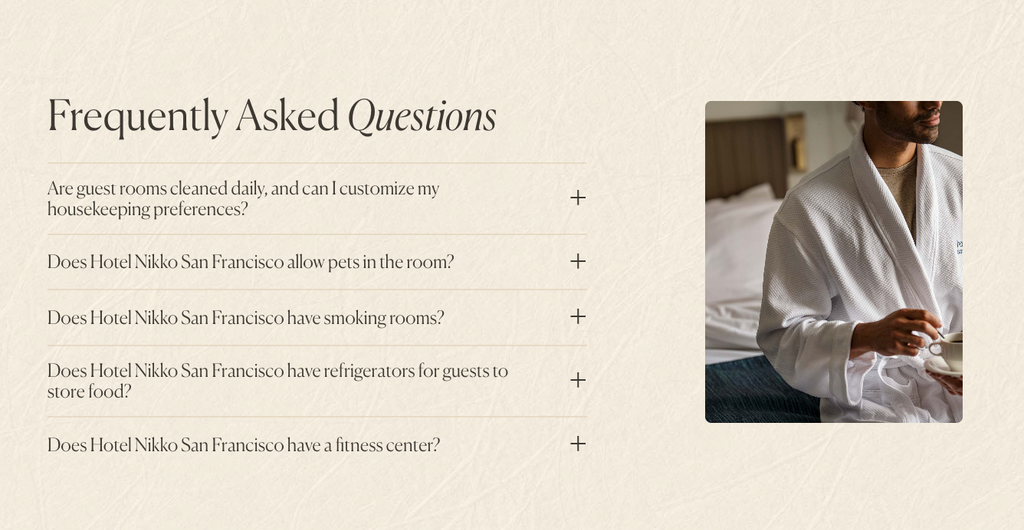
For every extra detail you display in search, there’s one less reason for a traveler to book through an Online Travel Agent (OTA) instead of coming to you directly.
What types of structured data matter most for hotels?
All structured data types and variables come from schema.org, which defines the shared vocabulary that Google, other traditional search engines, and even Large Language Models use to understand web content. For hotels and resorts, these are the types that do the most work:
- Hotel schema: Your starting point. Communicates basic business information, including your property name, address, phone number, general price range, images, and associated social media accounts.
- AggregateRating schema: Aggregates/combines your guest review score and displays it as a consolidated star rating in search results, building instant trust with travelers before they visit your site.
- FAQPage schema:Google ended FAQ rich results, but GCommerce and other sources still reccommend including FAQS.
- Offers schema: Provides additional visibility for specials and packages offered by your hotel.
- Restaurant, BarOrPub, and other FoodEstablishment schema: Helps your dining outlets appear in food-related searches independently of the hotel, and makes it clear to search engines that these businesses are associated with your hotel.
- Other LocalBusiness schema: Useful for spas, fitness centers, golf courses, and other amenities you want to surface in their own relevant searches or more clearly associate with your hotel.
- Event schema: Helps your upcoming or recurring events gain visibility in search results, particularly for searches around events, activities, and things to do.
While each of these types is beneficial, you don't need to add everything on day one. Start with the Hotel schema and work out from there. Hotel schema alone can meaningfully change how your listing looks in search and greatly improve your visibility. In addition, frequently adding and updating schema variables signals to search engines that your website is high-quality and credible, further improving your visibility within both traditional and AI search results.
Why do so many hotel websites get this wrong?
Most hotel websites either have no structured data at all or have it set up incorrectly. The tricky part is that schema errors are completely invisible to your website visitors but still affect search results. These errors are very visible to Google, other search engines, and LLMs, all of which will quietly ignore bad markup without any public indication. Consequently, missing variables or schema errors, even small ones, may prevent your hotel’s information from appearing in search results.
Here are the three most common problems we see with structured data:
- No structured data at all: Many hotel websites are built on content management systems that don't add schema by default. Though the site looks great, Google and other platforms see a blank fact sheet. No schema, or incorrectly implemented schema, means no rich results and lower search visibility as a whole.
- Incomplete schema: A Hotel schema block missing required fields, such as an address, phone number, or website URL, won't qualify for rich results. Partial markup gets treated almost the same as no markup, drastically impacting your hotel’s search visibility.
- Outdated information: If your schema includes one phone number, but your webpage and Google Business Profile list another, Google can flag that. Regular audits matter, especially after large changes like a website redesign or property rebrand.
- Stopping at metadata: Webpage metadata, such as page title and description, tells search engines about a specific webpage and its content. Structured data goes beyond metadata, expanding information about all aspects of your business.
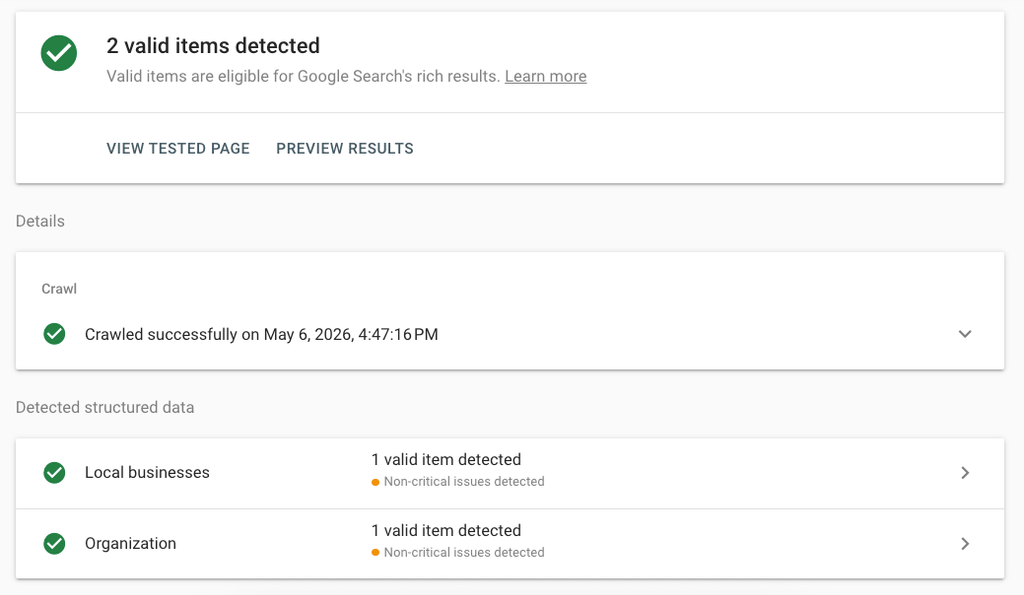
The fastest way to check the status of your current schema is running your homepage, or any other page with implemented schema, through Google's Rich Results Test. This test shows you exactly what Google sees, helping you identify missing schema variables and flagging any errors in your markup.
How do you add structured data to a hotel website?
Typically, structured data implementation will fall onto a web developer, a digital marketing partner, or someone else with access to your website’s backend. Some content management systems have plugins, built-in templates, or other tools that simplify the process, but structured data is implemented through code and therefore requires technical expertise.
Regardless of method, structured data is added through a block of JSON-LD code. When implemented correctly, schema code lives entirely in the background with no change in how anything looks to visitors. Using Google’s recommended format for schema variables and including all relevant information will maximize the chances of your schema working as intended.
As just one example, here’s the information that a complete Hotel schema block should include:
- Schema type- in this case, “Hotel”
- Property name
- Property address
- Phone number
- Hours- in this case, 24 hours
- Website URL
- Optional details, including, but not limited to:
- Price range
- Property image
- Geographic coordinates (latitude and longitude)
- Social media profiles
- Availability of amenities such as dining, pet-friendly accommodations, parking, etc.
How do you know if your structured data is working?
Once your schema code has been implemented, here's how to confirm it's working and up-to-date:
- Run your homepage through Google's Rich Results Test.
- Look for and click into the appropriate “type” in the list. Hotel schema will be under “Local businesses.”
- Note that schema types often overlap, and schema may be present for categories that you don’t expect. For example, “Breadcrumbs” are included by default within most CMS types, and the “Organization” schema is often created automatically using information from Hotel or Dining-related code.
- Expand the relevant schema details and check for accuracy.
What happens after my hotel implements structured data?
While structured data itself won’t directly impact your visibility on search engines or AI search platforms, the following improvements are common:
- Structured data may help with rankings by improving the digestibility and credibility of your website and content.
- Schema can make your presence in search more complete and compelling, improving click-through rate and other engagement metrics. Better engagement can also positively affect overall search performance.
- The more content that exists about your hotel online, the more likely it is that your information is picked up and used by search engines and Large Language Models.
Google typically crawls and processes new structured data within a few weeks, and rich results can start appearing in search shortly after. You can expect to see movement within 30 to 60 days.
Implementing schema also carries very little risk. Incorrect schema won’t break your site or hurt your current rankings, and the worst outcome is that your code is simply ignored.
Structured data is an easy, effective way to improve search visibility on both traditional search engines, such as Google, as well as AI-powered platforms. Ready to add structured data, or unsure if your current schema is set up correctly? GCommerce audits hotel and resort websites for schema gaps, validates your markup, and builds a comprehensive strategy that connects structured data with your broader direct booking goals. Let's take a look together.
Frequently asked questions about structured data
No. Structured data makes your hotel eligible for rich results, but Google decides when and how to display them. Accurate, complete markup that matches the content visible on your page gives you the best chance. Running your pages through Google’s Rich Results Test and fixing any errors or missing fields is the most reliable way to stay eligible.
Update your schema whenever key property information changes, such as your phone number, price range, amenities, offers, or upcoming events. Beyond that, a quarterly audit is a smart habit, along with a full review after any website redesign, rebrand, or CMS migration. Keeping your schema current also signals to search engines and AI platforms that your information is reliable.
No, but the two work together. Your Google Business Profile is managed within Google and powers your listing in Maps and local search. Structured data lives on your own website and describes your property to Google, other search engines, and AI platforms. Your name, address, phone number, and other details should match across both, since inconsistencies can weaken trust in your information.