Drive market hotel marketing: How to win regional travelers in 2026
Regional drive distance markets are not new to the hotel digital marketing playbook and 2026’s economic and travel reports are highlighting the resurgence of this important target audience to revenue success. As budgets tighten, travelers are trading the long flight and international travel for the short trip they can drive to within a day. That shift is already showing up in the data, and it's quietly redrawing the map of where properties should spend their marketing dollars this year.
2026 Drive market hotel marketing takeaways:
- Travelers are choosing shorter, closer-to-home stays as the economy cools and flight prices remain high.
- Drive markets, the regions within a few hours' drive of your property, are where demand is concentrated.
- Your own geo data provides the ideal target markets to capitalize on with drive market strategies
- Geo-targeting and personalization let you speak to those travelers by where they are located - target promotions, callouts and more help you speak to them personally
- Properties that hold or grow marketing spend in a downturn tend to gain share, not lose it.
What is a drive market, and why does it matter now?
A drive market is any region close enough that travelers reach your property by car instead of by plane, usually within a one to four hour radius. In a soft economy, those markets carry more weight, because a tank of gas feels like a smaller commitment than airfare for a family of four.
The numbers back it up. Lighthouse hotel search data across the G20 shows the share of consumers searching for properties in their own country rose from 54.1% to 57.5% year over year in the first quarter of 2026. By April, 60% of searches were domestic, and the US led the shift with a 7% jump.
Consumer surveys tell the same story. PwC's 2026 summer spending poll found that among travelers cutting back, 45% are taking shorter trips and 42% are traveling closer to home. The guest who once flew across the country is now looking for a reason to stay regional.
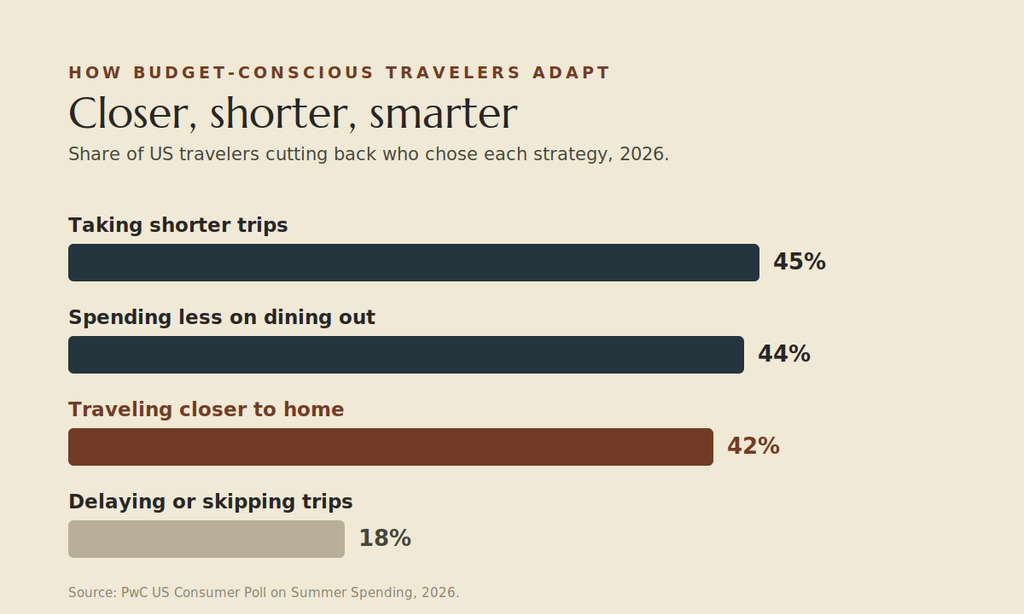
Image: How budget-conscious travelers are adapting in 2026 (source: PwC US Consumer Poll on Summer Spending).
The counterintuitive move: Spend more when others spend less
When bookings get soft, the reflex is to trim your hotel’s marketing budget. The research points the other way.
Kantar's review of the long-running Profit Impact of Market Strategy (PIMS) database found that brands that raised advertising during recessions gained more market share than brands that raised it during good times, roughly +0.9 points versus +0.5. The brands that went quiet had to rebuild recognition from scratch once demand returned. You can read the full Kantar analysis here.
There's a simple reason this works for hotel marketing. It takes more effort to fill a property in a soft economy driving higher marketing costs per booking, and your competitors make it easier by reducing their own budgets and media spend. Media costs tend to drop, the feed gets less crowded, and there’s an opportunity for your hotel’s brand to stand out and gain recognition.
Use your hotel’s data draw your drive market targeting map
Before you spend a dollar, find out where your guests already are. Your Google Analytics 4 (GA4) and your booking engine (BE) holds the key to discovering the most lucrativ markets that book your property. Pull the geographic data from both, and a pattern appears: a handful of metros and ZIP codes drive a large share of your hotel’s revenue and market demand.
Once you can see which regions are your historically top producers, you know exactly where to point your budget.
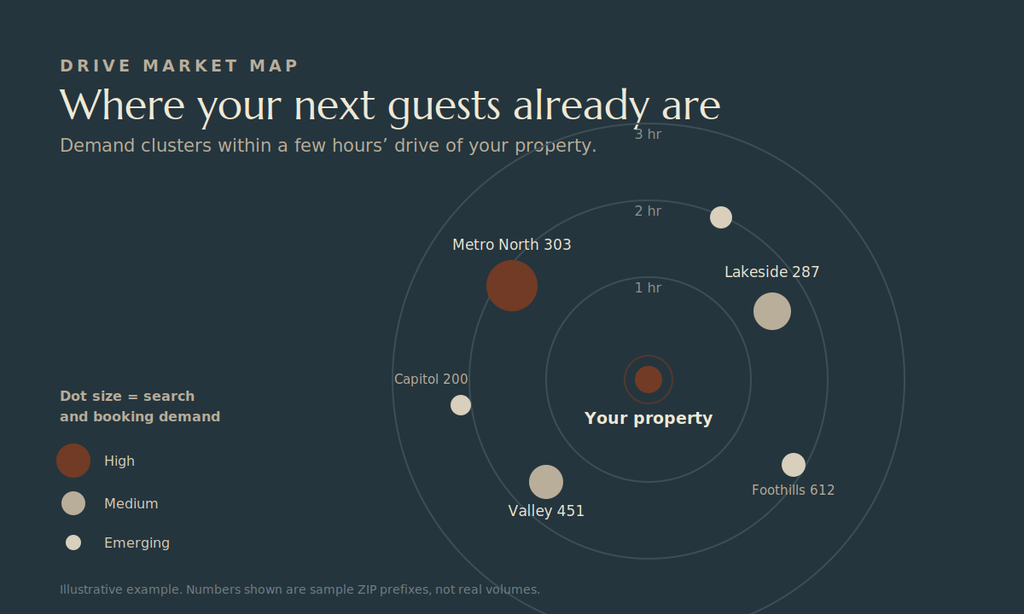
Image: A drive market map ranks nearby feeder regions by real search and booking demand.
Customize your hotel’s messaging to the drive market
Dive into what motivates your local drive market audience - from custom packages for local residents to packages that include parking - lean into messaging that capitalizes on your property’s experience and makes the stay sweeter for those driving from nearby markets. Travelers have even been conditioned to search for local state resident offers, make your hotel eligible for these searches by providing one and building a promotional strategy to amplify it.
Acknowledgment is the most affordable loyalty tool you have. In past downturns, properties handed out gas cards to soften the cost of the drive, and the gesture worked because it met guests where they were. The modern version is the same idea in fresh packaging.
Build offers that speak to the regional guest and make them feel seen:
- a fuel or travel credit that offsets the drive
- a resident or neighbor rate for guests from your top feeder ZIP codes
- a midweek package built for the short, two-night escape
- perks like late checkout or free parking that lower the friction of a quick trip
An important component to these offers, they don’t focus on simply reducing your average rate. They build on value and packages while courting the local drive market audience with offers that are geared towards them.
Let GCommerce help build your hotel’s custom drive market strategy
The economy is rewriting travel habits in real time, and the properties that listen to their data will fill rooms while others wait for the old patterns to return. The job now is to meet them there, with the right offer, in the right ZIP code, at the right moment.
Start the conversation with GCommerce, to build a customized digital marketing strategy around your drive market.
Frequently asked questions about drive markets
Most properties define a drive market as anywhere within a one to four hour drive, though the right radius depends on your location and the pull of nearby metros. Use your booking engine data to confirm where guests actually come from.
The evidence says no. Brands that maintain or grow spend in a downturn tend to gain market share and recover faster, while those that go quiet lose visibility that is expensive to rebuild.
Start with your own geo data. Your website analytics and booking engine show which regions and ZIP codes search for and book your property, so you can rank feeder markets by demand and value before spending a cent.